



BY MOHAMMAD TARIQUE SALEEM
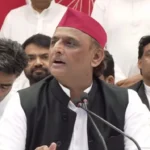
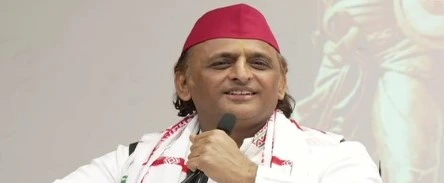
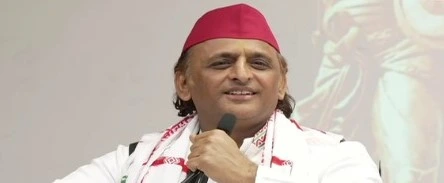
Samajwadi Party National President Akhilesh Yadav addressed a press conference in Lucknow on June 24, 2026, blending a tribute to the valour and sacrifice of Maharani Durgavati with a sharp political critique of the BJP government. He focused on issues concerning tribal welfare, social justice, and governance, while outlining key policy commitments aimed at empowering marginalized communities. Yadav also highlighted the contributions of Bahujan icons and reaffirmed the Samajwadi Party’s commitment to its PDA (Pichhda, Dalit, Alpsankhyak) social alliance.
Positioning the coalition as a decisive political force, he sought to strengthen its relevance and mobilization ahead of the 2027 Uttar Pradesh Assembly elections. Yadav opened with heartfelt tributes to Maharani Durgavati, the valiant Gaur tribal queen renowned for her administrative prowess and fearless defense of her realm against invaders. He painted a vivid picture of India’s rich heritage of courageous women, citing figures like Rani Lakshmibai and brave women from the Pasi community and other sections of society.
“This land of India has given birth to very brave women,” he declared, urging society to draw inspiration from their sacrifices. To etch her legacy into the collective memory, Yadav announced the installation of a grand golden statue of Maharani Durgavati on Lucknow’s developing riverfront, one of the city’s most anticipated landmarks. This initiative, he envisioned, would transform the riverfront into a grand tribute to all great personalities from PDA backgrounds who have fought for social justice.
A cornerstone of the address was the explicit inclusion of Adivasi (tribal) communities under the “A” in PDA, alongside minorities such as Muslims, Christians, and Parsis. Yadav emphasized that “A means where half the population is,” highlighting the need for proportional rights and respect. He criticized the current disparity and pledged that a Samajwadi government would conduct a comprehensive census to determine the exact population of tribal brothers and sisters, ensuring representation and opportunities commensurate with their numbers.
The promises for tribal empowerment were detailed and people-centric. Yadav vowed door-to-door issuance of tribal certificates by government officials in villages, bypassing middlemen and bureaucratic red tape. For families affected by the murder of tribal members, he assured CBI inquiries and financial assistance. Full implementation of the Forest Rights Act would secure rights over water, forests, and land. Under the Lohia Awas Yojana, tribals would receive permanent, free housing complete with solar panels, fans, LED bulbs, and charging facilities, at no cost to the beneficiaries.
Further commitments included establishing a separate Scheduled Tribe Commission in Uttar Pradesh, allocating 2% reservation for tribals in all government tenders, skill training and employment linkages for youth, and the creation of a grand PDA building in Lucknow featuring a free hostel for students from remote areas, providing education, accommodation, and meals. Yadav also spoke of political empowerment, free education from KG to PG (including laptops), opportunities for meritorious students to study abroad, and dedicated police stations in tribal areas manned by officers from the same community to ensure swift justice and safeguard land rights.
The tone shifted to sharp political critique as Yadav addressed the everyday struggles of the people. He lambasted the BJP government for rampant unemployment among educated youth, promising direct recruitment and the scrapping of schemes like Agniveer. Teachers, he noted, face salary deductions for minor delays, turning their noble profession into a source of anxiety. Farmers grapple with low crop prices, inadequate seeds, fertilizers, irrigation, and the menace of stray animals. Healthcare facilities were described as “sick” themselves, lacking doctors, medicines, and basic infrastructure.
Inflation, he argued, stems from the government’s profiteering, burdening the poor who struggle to meet daily needs. Repeatedly invoking the mantra of change, Yadav urged unity: “We will form our own government in 2027… We will bring the PDA government.” He contrasted the current regime’s failures with the Samajwadi Party’s people-centric legacy, including efficient emergency services. His message blended cultural pride, welfare commitments, and accountability, calling on citizens to reject a government that exploits religion for financial gain and neglects the marginalized.
Akhilesh Yadav’s press conference stands as a compelling blueprint for inclusive governance. By honoring icons like Maharani Durgavati while addressing contemporary woes, he has energized PDA supporters and party workers. As Uttar Pradesh approaches a pivotal electoral crossroads, this event underscores the Samajwadi Party’s vision of social justice, empowerment, and a golden future for all sections of society.