





BY MOHAMMAD TARIQUE SALEEM
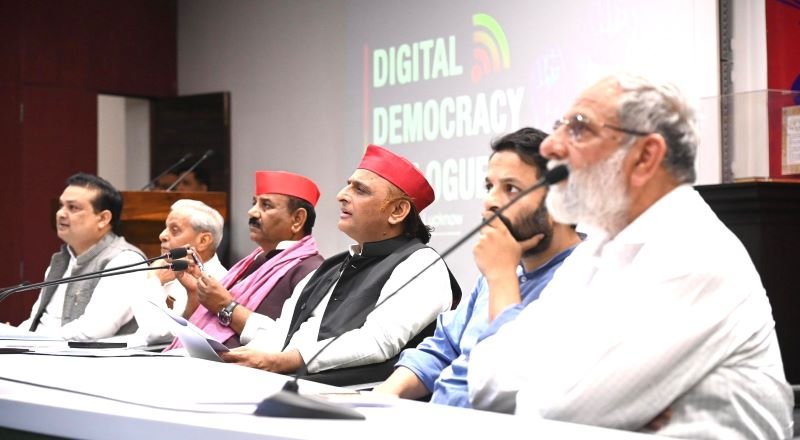
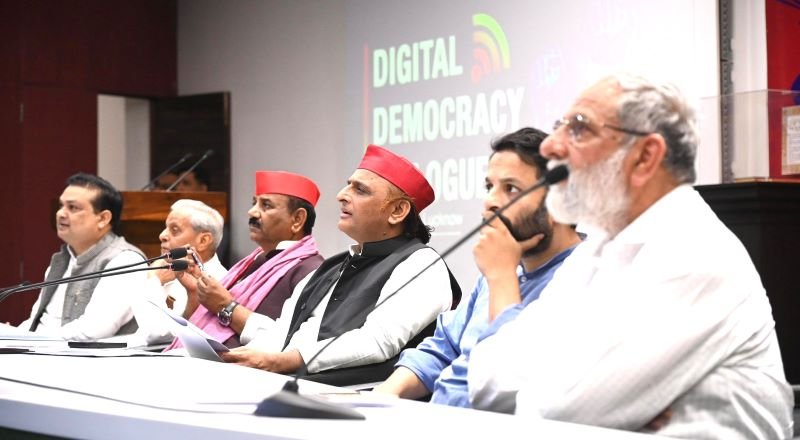
The “Digital Democracy Dialogue” held on March 18, 2026, at the state headquarters of the Samajwadi Party emerged as a timely and thought-provoking discussion on the evolving relationship between technology and democratic governance. At a moment when digital platforms are reshaping not only communication but also the very foundations of public participation, the meeting underscored the urgency of adapting politics to the demands of the digital age.
The session brought together senior party leaders, IT experts, social media strategists, and a large number of young party workers. The core objective was clear: to explore how digital tools can deepen public engagement, enhance transparency, and strengthen democratic dialogue. Addressing the gathering, Akhilesh Yadav emphasized that in today’s rapidly changing landscape, digital platforms are no longer mere instruments of political promotion, they have become powerful channels for amplifying the voice of the people.
In his address, Akhilesh Yadav highlighted the need for political accountability in the digital sphere. He stressed that while social media offers unprecedented reach, it also demands a high degree of responsibility. Misuse, misinformation, and manipulative narratives can weaken democratic institutions if left unchecked. Therefore, he called upon political stakeholders to adopt ethical digital practices that foster trust rather than division. He also described youth participation as the backbone of a vibrant democracy, noting that digital platforms have empowered young citizens to engage, question, and influence policymaking like never before.
A significant part of the dialogue focused on critical issues such as data protection, online privacy, and cybersecurity. Experts cautioned that the success of digital democracy hinges on how securely citizens’ data is handled and how confidently they can navigate online spaces. Without robust safeguards, the digital ecosystem risks becoming vulnerable to breaches, surveillance concerns, and exploitation. The discussion also addressed the growing challenges of fake news and online trolling, with participants urging the development of concrete strategies to combat misinformation and maintain the integrity of public discourse.
Young participants shared their on-ground experiences, illustrating how digital platforms have enabled them to raise local issues, mobilize communities, and connect directly with leadership. They advocated for the creation of a stronger, decentralized digital network within the party, one that reaches grassroots levels and ensures that public grievances are heard and addressed promptly.
The dialogue concluded with a clear and compelling message: digital democracy is not merely a technological shift, but a profound social and political transformation. It requires collective responsibility, from political parties, institutions, and citizens alike, to build a transparent, inclusive, and accountable digital ecosystem. Ultimately, the “Digital Democracy Dialogue” reinforced a crucial reality: the future of politics is inextricably linked with digital platforms. The steps taken today to harness this transformation will not only redefine governance but also strengthen the bond of trust between the people and those who represent them.