







ARABIAN TIMES NEWS NETWORK
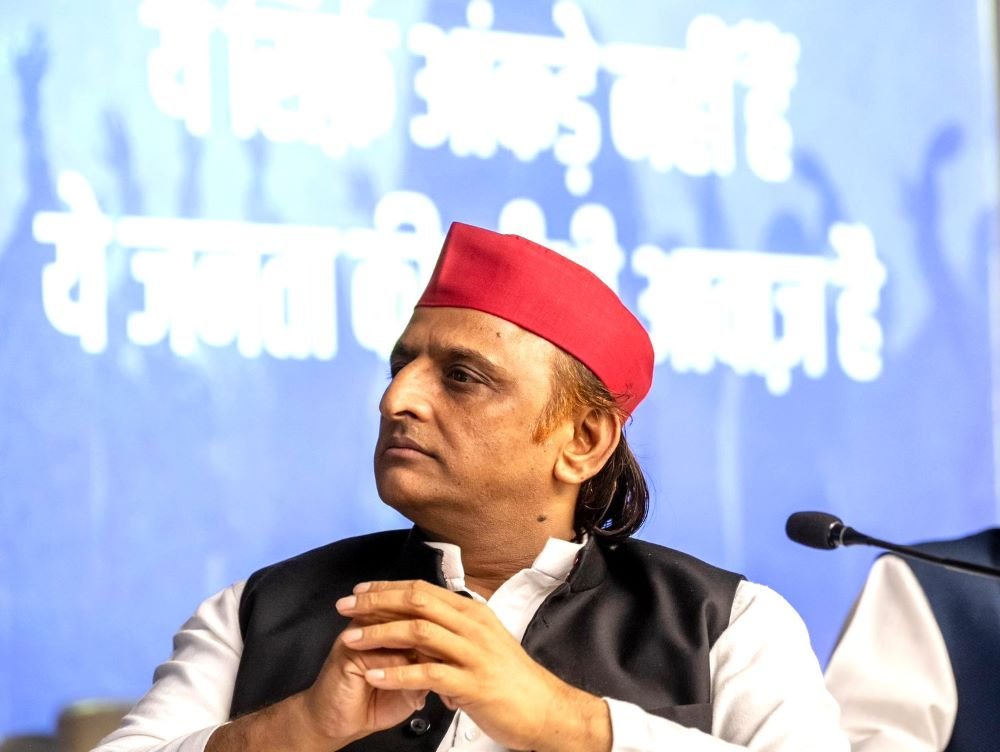
Akhilesh Yadav, the Samajwadi Party Chief said to the partyworkers at Samajwadi Party’s headquarter today, stated that the policies of the BJP government have led to the emergence of a new category of victims in the state, which he termed as “prepaid victims.” He explained that these are individuals who have installed prepaid electricity meters but are being forced to endure power outages, darkness, and extreme heat due to technical flaws in smart meters.
He questioned the rationale behind such hardships, noting that consumers deposit money in advance before using electricity. Despite this, he alleged that both the government and electricity companies continue to harass the public. Since companies receive payments upfront, he asked why there is a lack of accountability and concern for consumers. He further claimed that ordinary citizens are left running from one place to another without any resolution, as there is no effective grievance redressal, allegedly due to collusion between the authorities and private companies.
Yadav also remarked that under the current regime, people have ceased to be “consumers” and have instead become “sufferers,” as they are compelled to bear the consequences of governance failures. He linked this situation to the growing relevance of PDA (Pichhda, Dalit, Alpsankhyak, Backward, Dalit, Minority), reiterating his party’s stance: “Those who are oppressed belong to PDA.” He added that these newly affected “prepaid victims” are increasingly aligning with this broader social grouping and expressing hope for change, asserting that difficult times will soon pass and that a people-centric government will ensure reliable electricity for all.
Addressing the issue of women’s reservation, Yadav emphasized that accurate data is fundamental to fair policy-making. He argued that if the underlying data is flawed, the resulting reservation framework cannot be just or effective. Referring to the Women’s Reservation Bill, he stated that its foundation is weak if it relies on outdated figures. Since reservation is calculated as one-third of total seats, it is inherently a matter of precise numbers, which must be based on current population data derived from a proper census.
He criticized the use of 2011 census data for determining women’s representation, stating that such an approach undermines the integrity of the policy. “If the foundation itself is flawed, the outcome cannot be sound,” he remarked. He reiterated his demand that a fresh census must be conducted before implementing or even debating women’s reservation. He questioned the government’s intent, stating that a government unwilling to accurately count women cannot be expected to ensure their rightful representation. He affirmed that his party would oppose any measures that, in their view, mislead or disadvantage women.