





ARABIAN TIMES NEWS NETWORK
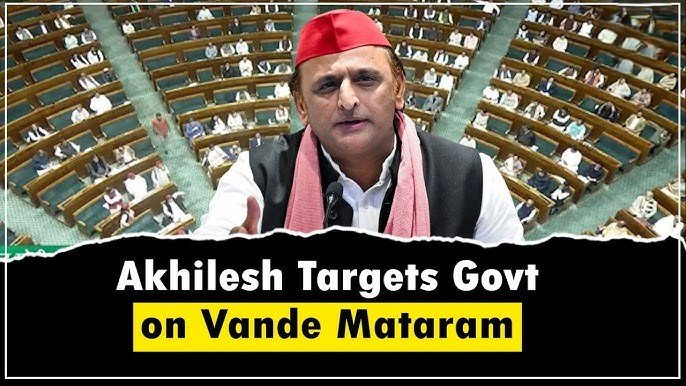
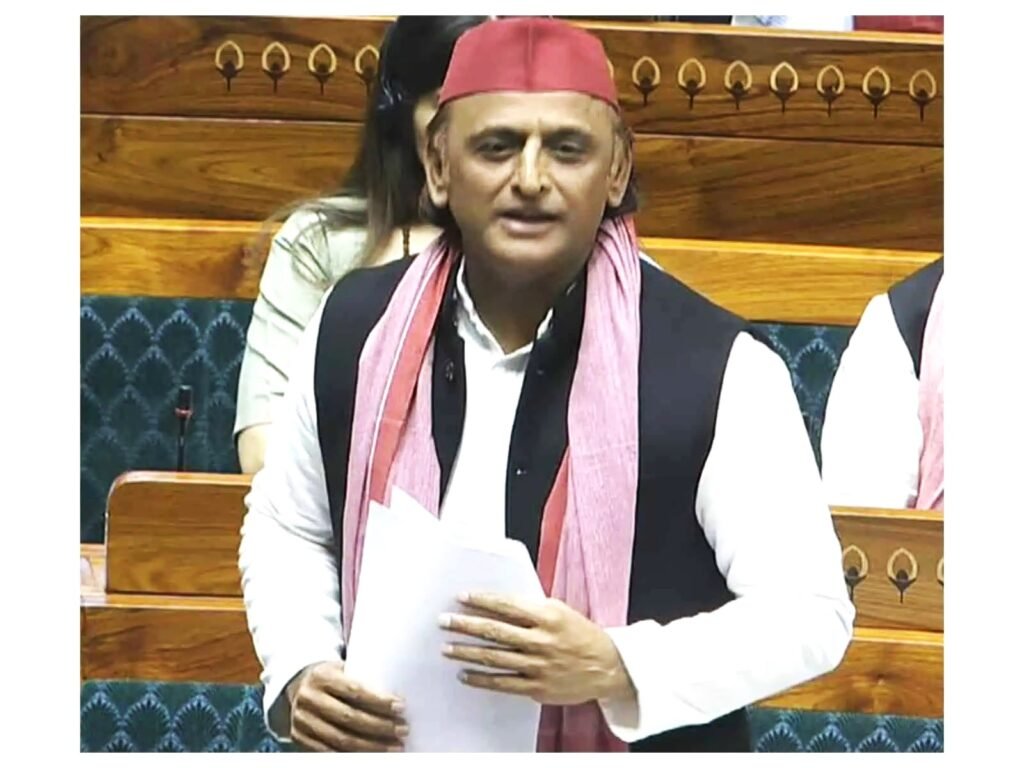
The Lok Sabha witnessed a moment filled with emotion, sharpness, and reflection when Akhilesh Yadav rose to speak about something far deeper than just a political slogan. In a voice that carried both pride and pain, the Samajwadi Party chief said, “Vande Mataram once united the people of this country, but under the BJP’s rule, it has sadly become a tool to divide.” His words did not merely criticise a policy or a party, they touched upon the soul of India’s identity.
For many Indians, Vande Mataram is not just a line from a song. It is a memory of the freedom struggle, the sacrifices of revolutionaries, and the hope of a nation breaking its chains. Akhilesh reminded the House that the slogan belonged to everyone, Hindus, Muslims, Sikhs, Christians, the poor, the privileged, the young, and the old. “It was a heartbeat of unity,” he said. “It never demanded to know your religion before inspiring you.” but, he argued, something has changed.
Yadav said, the BJP’s approach has turned a unifying national symbol into a political pressure point. Instead of inspiring pride, it is now used to question people’s loyalty. “You either shout it loudly with the ruling party,” he said, “or you are branded anti-national.” He added that patriotism cannot be measured by decibel levels or by how quickly a slogan is recited. “True love for the country is seen in service, compassion, and justice, never in intimidation.”
His speech brought a noticeable silence inside the House for a moment. For some, it felt like a reminder of the India they grew up loving, a place where chanting Vande Mataram was a matter of joy, not fear. For others, it reflected the intensity of the current political atmosphere, where even national symbols have become battlegrounds. Leaders from the ruling party, however, immediately pushed back. They accused Yadav of “twisting facts” and claimed that the BJP only encourages national pride. But the opposition benches stood firm behind him, insisting that the ruling party has blurred the line between nationalism and political allegiance.
The heart of Yadav’s message was simple: national symbols must uplift us, not be used as weapons against each other. He criticised the government for building emotional narratives around slogans to distract from unemployment, farmer distress, price rise, and growing fear in society. “A country cannot run on slogans,” he said. “It runs on opportunities, peace, and trust.” Outside Parliament, his words struck a chord with many ordinary citizens who feel the growing pressure to prove their patriotism.
Teachers, students, shopkeepers, retired officers, people from different walks of life echoed the sentiment that unity is becoming conditional, and dissent is misunderstood as disloyalty. Akhilesh Yadav ended his speech with a gentle yet powerful reminder: “My fight is not with Vande Mataram. It is with those who misuse it. This song belongs to India, not to a party.” In a time when India stands at a crossroads of identity and politics, his words revived an old truth: unity must be felt, not forced. The debate he sparked will continue, but the message remains clear, national pride is strongest when it includes every voice, not just the loudest one.