



BY MOHAMMAD TARIQUE SALEEM
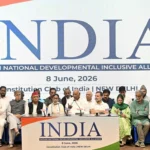
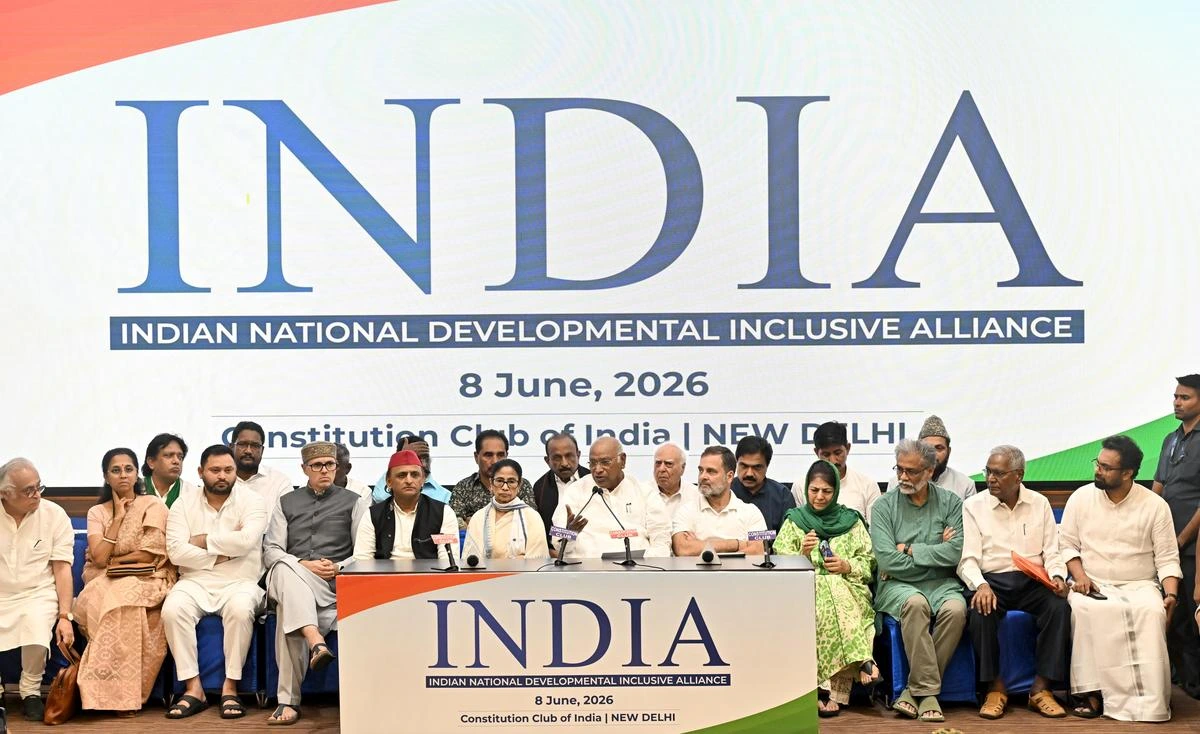
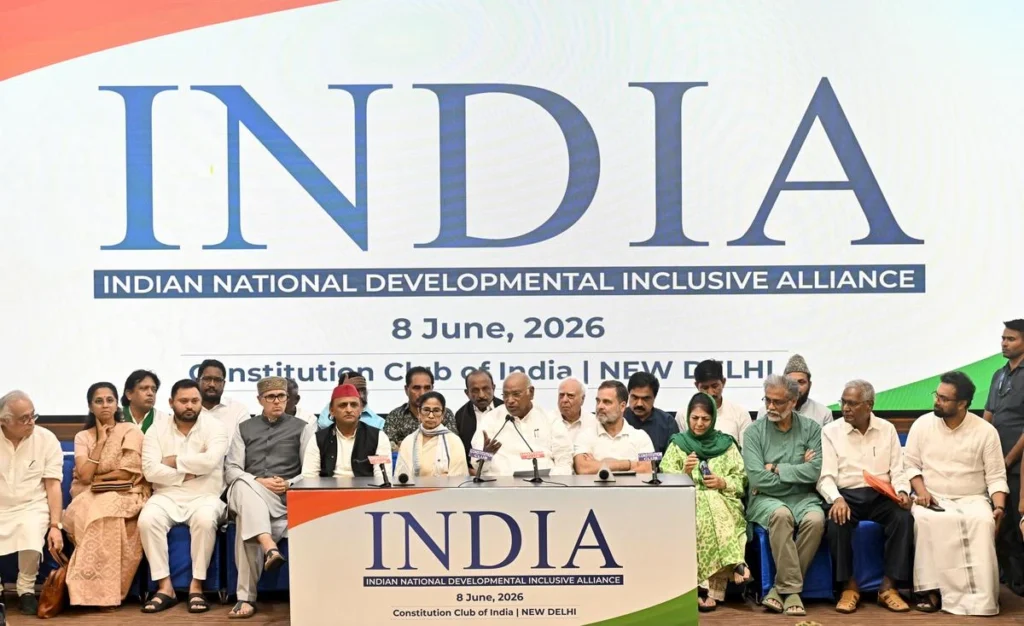
The INDIA Alliance meeting held in New Delhi on June 8 marked more than a routine gathering of opposition parties. At a time when the Bharatiya Janata Party (BJP) continues to dominate India’s political landscape through its control of government institutions and narrative-setting mechanisms, the opposition sought to demonstrate that an alternative political discourse remains alive and relevant. The meeting reflected a growing determination among alliance partners to challenge what they view as the increasing centralization of power under the BJP government and to place issues affecting ordinary citizens back at the center of national politics.
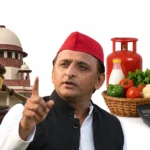
Among the most prominent voices at the meeting was Akhilesh Yadav, whose intervention resonated strongly with several opposition leaders. Akhilesh argued that the ruling establishment has increasingly relied on publicity and perception management while failing to address pressing concerns such as unemployment, inflation, rural distress, and the erosion of democratic accountability. His remarks underscored a broader sentiment within the alliance that governance must be measured by the everyday experiences of citizens rather than by political messaging alone.
Akhilesh Yadav emphasized that opposition parties must remain united not merely for electoral purposes but to safeguard democratic institutions. He stressed the importance of protecting the Constitution, ensuring fair electoral practices, and defending the federal structure of the country. His intervention reflected concerns frequently expressed by opposition parties regarding the relationship between the Centre and state governments and the need to preserve the autonomy of constitutional institutions.
One of the key outcomes of the meeting was the decision to strengthen coordination among alliance partners both inside and outside Parliament. Leaders agreed to raise issues of public concern collectively and to ensure that the opposition speaks with greater coherence on matters affecting citizens. Discussions reportedly focused on employment opportunities for youth, rising living costs, farmers’ concerns, educational challenges, and the need for greater transparency in governance.
Akhilesh Yadav also highlighted the growing aspirations of young Indians, arguing that employment and economic opportunity should dominate the national agenda. According to opposition leaders, despite repeated promises, many young people continue to face uncertainty regarding jobs and recruitment processes. This concern found broad support among alliance partners, who believe that economic issues are increasingly overshadowing the BJP’s political narratives.
The INDIA Alliance meeting also sought to counter the BJP’s longstanding argument that the opposition lacks unity and purpose. While ideological differences among alliance partners remain, the gathering demonstrated a willingness to engage in dialogue and accommodate diverse regional perspectives. Akhilesh Yadav emphasized that regional parties play a crucial role in representing local aspirations and that a strong federal democracy depends upon respecting regional voices rather than concentrating authority in a single political center.
Critics of the BJP government argue that major policy decisions are increasingly taken without adequate consultation with opposition parties, civil society, or state governments. The alliance meeting reflected a collective view that democratic governance requires debate, scrutiny, and accountability. Opposition leaders maintained that a healthy democracy depends not only on strong governments but also on strong institutions capable of questioning those in power.
Another significant aspect of the meeting was the emphasis on sustained engagement rather than symbolic politics. Alliance leaders discussed regular consultations and coordinated strategies for future parliamentary sessions and public campaigns. The objective, participants suggested, is to build a durable political platform capable of addressing national concerns beyond election cycles.
For Akhilesh Yadav, the meeting offered an opportunity to reinforce a message he has consistently advanced: that politics must focus on employment, social justice, constitutional values, and the welfare of ordinary citizens. His intervention helped frame the alliance’s broader argument that the country needs greater attention to governance challenges and less emphasis on political spectacle.
Whether the INDIA Alliance can translate this renewed unity into electoral gains remains uncertain. However, the June 8 meeting demonstrated that opposition politics is increasingly centered on issues of livelihood, democracy, and institutional accountability. With leaders such as Akhilesh Yadav playing an active role in shaping the alliance’s agenda, the opposition hopes to present itself as a credible alternative to the BJP’s model of governance and political dominance.