




BY MOHAMMAD TARIQUE SALEEM
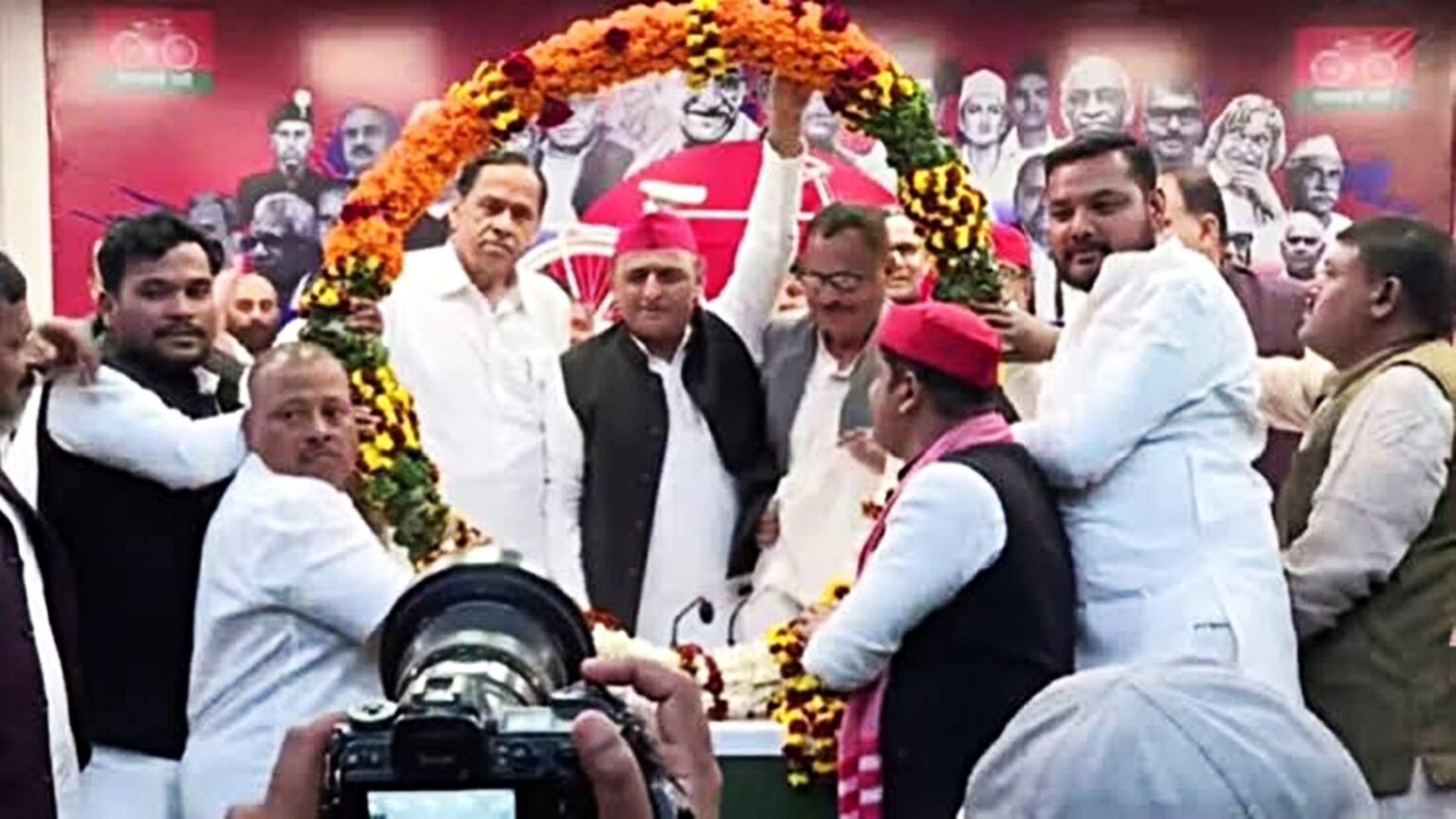
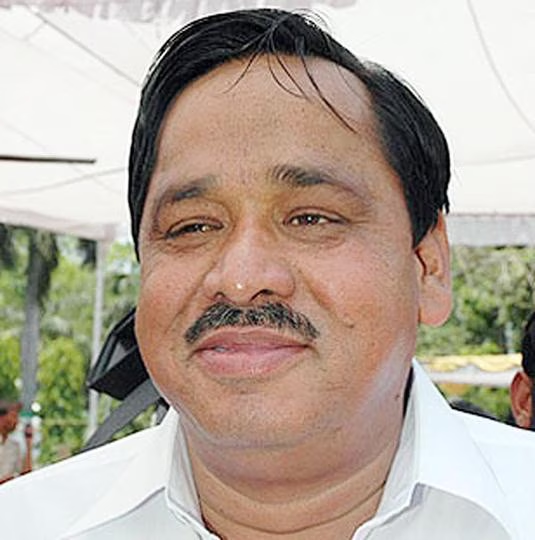
The recent induction of Naseemuddin Siddiqui into the Samajwadi Party has triggered intense political discussion across Uttar Pradesh. For many observers, this move by Akhilesh Yadav is nothing short of a calculated master stroke, an attempt to recalibrate political equations ahead of crucial electoral battles. For others, it signals a significant U-turn in the party’s approach toward Muslim leadership and representation.
Naseemuddin Siddiqui, once a powerful face of the Bahujan Samaj Party, carries decades of political experience, organizational understanding, and deep grassroots networks, particularly among sections of Muslim voters in Uttar Pradesh. Though his political journey has seen ups and downs in recent years, his ability to mobilize communities and navigate caste-community dynamics remains noteworthy. By bringing him into the Samajwadi fold, Akhilesh Yadav appears to be sending a clear signal: the party is ready to consolidate every possible anti-BJP vote bank and re-energize its traditional support base.
For years, the Samajwadi Party has positioned itself as a principal claimant of Muslim support in Uttar Pradesh. However, shifting ground realities, fragmentation of votes, and the emergence of smaller players in Muslim politics have made that support less automatic than before. In this context, Siddiqui’s entry can be seen as a strategic effort to prevent vote division and reinforce the perception that the Samajwadi Party remains the most viable platform for Muslim political aspirations.
At the same time, this move represents a subtle but significant course correction. The Samajwadi Party, under Akhilesh Yadav’s leadership, had in recent years attempted to broaden its appeal beyond identity-based politics, focusing on development, youth engagement, and governance narratives. By inducting a seasoned Muslim leader with a strong community identity, the party appears to be balancing that broader narrative with a renewed emphasis on social coalition politics, an approach deeply rooted in Uttar Pradesh’s electoral history.
Critics may argue that Siddiqui’s political influence is not what it once was. After leaving the Bahujan Samaj Party, his attempts to carve out an independent political identity did not yield substantial electoral success. However, politics is often about timing and alignment. Within the framework of a larger party like the Samajwadi Party, his organizational skills and community outreach could find renewed relevance. For Akhilesh Yadav, the decision is layered. On one level, it strengthens booth-level management and local mobilization in sensitive constituencies.
On another, it sends a psychological message to Muslim voters who may have felt politically uncertain or fragmented. It reassures them that experienced leadership remains within a party that has historically positioned itself as their primary political voice.The larger question, however, is whether this “master stroke” will translate into tangible electoral gains. Uttar Pradesh politics is complex, shaped by caste arithmetic, regional loyalties, and evolving voter expectations. Symbolic moves must ultimately be backed by organizational discipline and a compelling development agenda.
Still, there is little doubt that the inclusion of Naseemuddin Siddiqui has altered the political conversation. It underscores Akhilesh Yadav’s willingness to adapt, recalibrate, and take calculated risks. In a state where margins are thin and perceptions matter immensely, such moves can shift momentum. Whether this strategic U-turn consolidates Muslim voters firmly behind the Samajwadi Party or merely stirs debate will become clear in the next electoral test. For now, it stands as a bold and deliberate political maneuver, one that has once again placed Akhilesh Yadav at the center of Uttar Pradesh’s evolving political chessboard.