



MOHAMMAD TARIQUE SALEEM
The growing tensions from the ongoing U.S.–Israeli war with Iran are not only raising political and security concerns, but also sparking serious warnings from environmental experts. Scientists and officials fear that the conflict could cause lasting damage to the fragile marine ecosystems of the Persian Gulf and the Sea of Oman, two waters that support rich biodiversity and the livelihoods of millions of people.
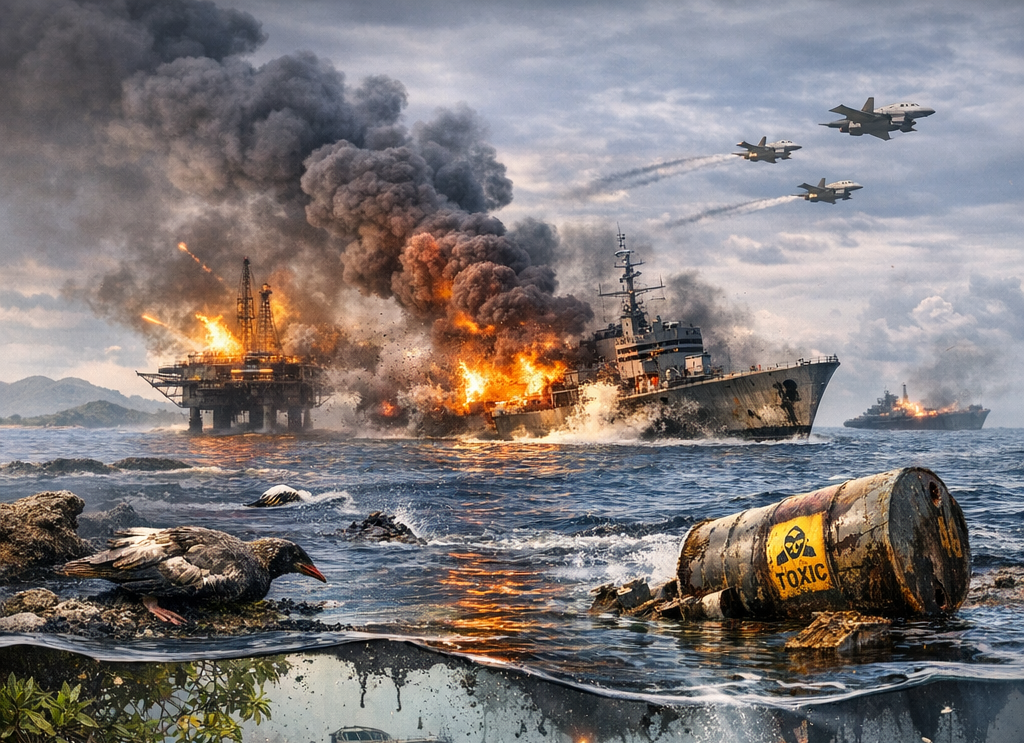
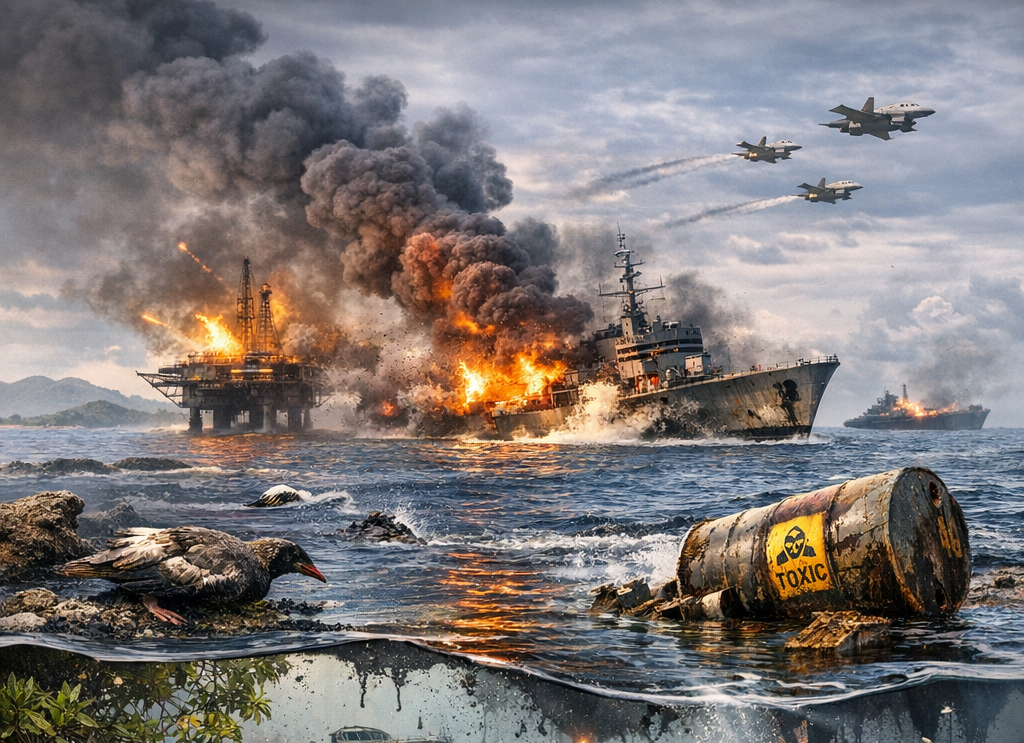
Ahmadreza Lahijanzadeh, deputy head for marine environment and wetlands at Iran’s Department of Environment, has warned that military activity in the region could lead to dangerous pollution in these waters. Explosions involving ships, oil facilities, or coastal installations could release large quantities of oil, toxic chemicals, and hazardous cargo into the sea.
According to Lahijanzadeh, such incidents can unleash a wide range of pollutants. Oil spills from damaged tankers or offshore facilities are a major concern, but they are not the only risk. Ships often carry chemicals, industrial materials, and other hazardous cargo that can contaminate the water if explosions occur. Even debris from damaged vessels—such as heavy metals, paints, and insulation materials, can slowly poison marine ecosystems.
The warning comes at a time when the Persian Gulf and the Sea of Oman are already under increasing environmental pressure. Together, these waters form a vast marine region that stretches across hundreds of thousands of square kilometers. Within this area lie delicate ecosystems such as coral reefs, mangrove forests, seagrass beds, and estuaries—each playing a crucial role in maintaining marine life.
Scientists estimate that more than 5,000 marine species live in these waters. The region is home to over 1,600 species of fish, as well as sea turtles, marine mammals, shrimp, seabirds, and countless microscopic organisms that support the entire marine food chain. Some endangered species, including the dugong and the green sea turtle, depend heavily on the region’s seagrass meadows for survival.
However, these ecosystems are already struggling due to climate change, pollution from industry, heavy shipping traffic, and rapid coastal development. Experts say the addition of military conflict could create a new and unpredictable layer of damage. Beyond chemical pollution, military operations also generate intense underwater noise. Powerful explosions and naval activity can produce shock waves that disturb marine animals that rely on sound to communicate, navigate, and find food.
Dolphins, whales, and other sea creatures can become disoriented, while coral structures and fish populations may also be harmed. The Persian Gulf is particularly vulnerable to environmental damage because of its natural characteristics. It is a shallow, semi-enclosed body of water with limited circulation with the open ocean. This means that pollutants can remain trapped for long periods, increasing their harmful effects.
During the summer, water temperatures can rise above 35°C, making it one of the warmest marine environments on Earth. Mangrove forests and coral reefs are among the habitats most at risk. Mangroves protect coastlines, store carbon, and serve as breeding grounds for many marine species. Coral reefs, meanwhile, support diverse marine life but are extremely sensitive to pollution and environmental changes.
Environmental experts warn that if pollution from military activity spreads through these waters, the damage could affect not only marine life but also fisheries, food security, and the economies of coastal communities.
For this reason, officials are calling on international organizations and environmental bodies to pay attention to the environmental consequences of warfare. Protecting these waters, they say, is essential, not just for the region today, but for future generations who depend on a healthy marine environment.