







Arabian Times Special Analysis / Mohammad Tarique Saleem
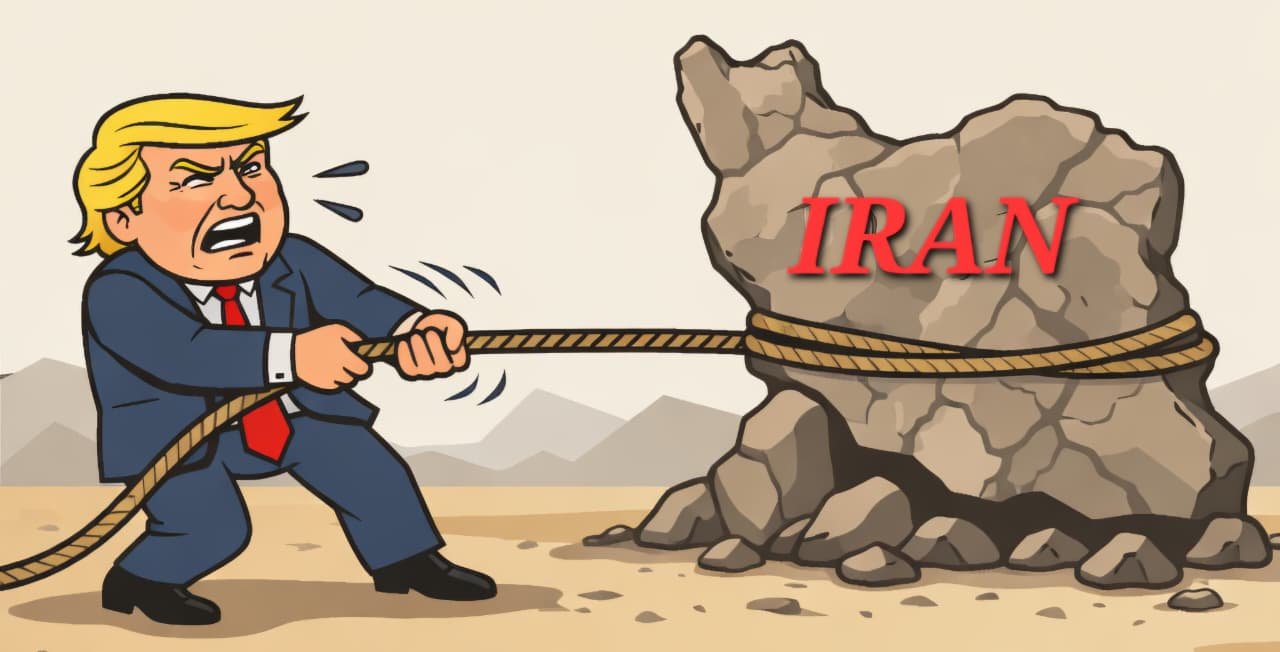
The story of how the United States is loosing Iran goes beyond geopolitics and Cold War strategy, revealing a deeper failure to understand a nation’s identity and aspirations. What began as a strong alliance gradually eroded due to widening gaps between leadership and public sentiment. While Washington focused on strategic gains, many Iranians saw growing external interference. In today’s context, the issue gains added complexity, as figures like Donald Trump face pressure linked to Jeffrey Epstein files, highlighting how domestic controversies can intersect with global political narratives and influence international perceptions.
The story of how the United States loosing Iran is often framed through the lens of geopolitics, Cold War rivalries, and strategic alliances. However, a deeper survey of historical patterns and public sentiment reveals a more complex reality, one rooted not merely in policy decisions, but in a failure to understand the social, cultural, and emotional fabric of a nation. In today’s context, this narrative gains an added layer of complexity as global politics once again intersect with domestic controversies, with figures like Donald Trump reportedly facing pressure linked to the Epstein files, reflecting how internal challenges can influence external postures.
During the mid-20th century, Iran under Mohammad Reza Pahlavi stood as one of Washington’s most trusted allies in the Middle East. Positioned as a bulwark against Soviet expansion, Iran received extensive military and economic backing from the United States. On the surface, the partnership appeared robust, marked by rapid modernization, infrastructural growth, and strong diplomatic ties. However, surveys of public opinion and historical accounts indicate a widening gap between state-level cooperation and grassroots sentiment. While the Shah pursued ambitious modernization programs, his governance increasingly took on authoritarian characteristics.
Political dissent was curtailed, civil liberties were restricted, and traditional values were often sidelined in favor of Western-oriented reforms. Crucially, many Iranians began to perceive the United States not as a neutral ally, but as an enabler of this tightening grip on power. This perception marked the beginning of a profound emotional and ideological disconnect. For ordinary citizens, the alliance symbolized not progress, but external interference. Over time, this sentiment crystallized into widespread resentment, an undercurrent that would eventually shape the course of history. The tipping point arrived with the Iranian Revolution, a transformative moment that redefined Iran’s political and social identity. Far from being a sudden upheaval, the revolution was the culmination of years of public dissatisfaction.
It brought to prominence Ruhollah Khomeini, whose message of Islamic governance and independence from Western influence resonated deeply with the masses. From Washington’s perspective, the fall of the Shah represented a strategic shock. A key ally had been replaced by a regime openly critical of U.S. policies. Yet, survey-based interpretations suggest that for many Iranians, this transition was viewed as a restoration of dignity and sovereignty, a reclaiming of national identity after decades of perceived external dominance.
The subsequent Iran hostage crisis further entrenched hostilities. When Iranian students seized the U.S. Embassy in Tehran and held American diplomats hostage, the act reverberated globally. While it was widely condemned in the United States as a violation of international norms, within Iran, it was interpreted by segments of society as a symbolic stand against foreign intervention. This divergence in perception underscored the depth of misunderstanding between the two nations. A critical takeaway from this analysis is the evident failure on both sides to engage with each other’s perspectives.
U.S. policy largely operated within a framework of strategic imperatives, prioritizing alliances, military positioning, and geopolitical advantage. In doing so, it underestimated the influence of cultural identity, religious values, and national pride in shaping Iran’s internal dynamics. Over the decades, the consequences of this miscalculation have extended far beyond bilateral relations. Iran has emerged as a significant regional power, often positioning itself in opposition to Western interests. The resulting tensions have contributed to a complex web of conflicts and rivalries across the Middle East, where mistrust continues to define interactions.
From an Arabian Times perspective, this episode serves as a case study in the limitations of power-centric diplomacy. Surveying both historical data and public sentiment, it becomes evident that sustainable international relationships cannot be built solely on strategic interests. They require a nuanced understanding of societal aspirations, cultural sensitivities, and the voices of ordinary people. Ultimately, the United States did not merely lose an ally; it lost the trust of a nation. And as history repeatedly demonstrates, once such trust is eroded, its restoration becomes an arduous, if not elusive, endeavor.


