



BY MOHAMMAD TARIQUE SALEEM
On the global stage of the 56th Annual Meeting of the World Economic Forum in Davos, Kuwait’s senior officials used the moment to underline a clear national priority: building a stronger, more resilient economy rooted in reform and openness. Engaging with global investors, policymakers, and media on the sidelines of the summit, they emphasized Kuwait’s determination to strengthen confidence, accelerate economic transformation, and position the country as a trusted destination for high-quality international investment.
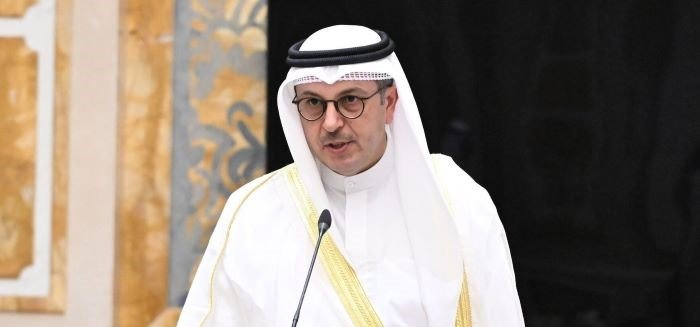
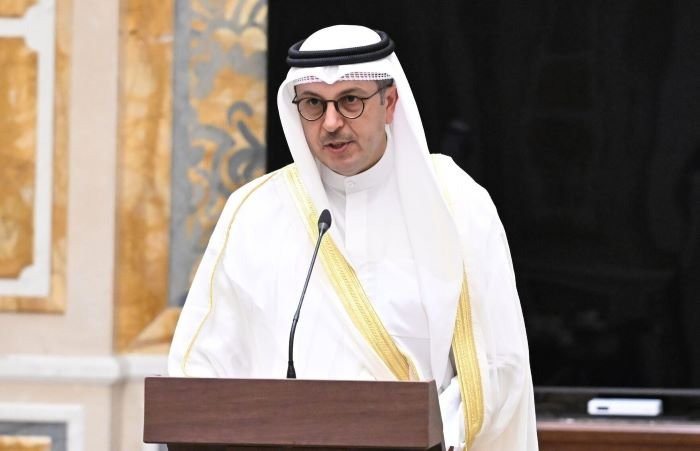
Minister of Finance, Minister of Electricity, Water and Renewable Energy, and Acting Minister of State for Economic Affairs and Investment Dr. Subaih Al-Mukhaizeem, along with Minister of Commerce and Industry Khalifa Al-Ajil, used the global platform of Davos to highlight how Kuwait is steadily strengthening its economic foundations. Their remarks reflected a government focused on improving the business climate, encouraging both local and foreign investment, and ensuring that public spending delivers real value to citizens and the economy.
In an interview with Bloomberg, Dr. Al-Mukhaizeem emphasized that Kuwait’s reform journey is already showing results. He explained that economic diversification is no longer just an aspiration but a process underway, with measurable gains in non-oil revenues. While oil continues to account for around 58 percent of GDP, non-oil income has been growing at an annual rate of about 3 percent, a sign that recent fiscal and structural reforms are beginning to take root.
Looking ahead, he said the next phase will place greater emphasis on comprehensive development, expanding the economic base, and strengthening financial sustainability in line with Kuwait’s long-term strategic vision. Housing emerged as one of the key sectors in focus. Dr. Al-Mukhaizeem revealed that an ambitious plan has been announced to double the residential real estate market within seven to ten years. The goal is not only to meet rising demand, but also to improve quality of life by accelerating housing projects, upgrading infrastructure, and deepening cooperation with the private sector.
Minister Khalifa Al-Ajil echoed this forward-looking tone, stressing that Kuwait’s growing appeal to foreign investors rests on an integrated reform path. He explained that legislative updates, financial market development, and regulatory clarity are moving together to create a more transparent and efficient investment environment. After meetings with global financial giants such as Goldman Sachs, BlackRock, Franklin Templeton, and Investcorp, he noted strong international interest in Kuwait’s reform trajectory.
The progress of the Kuwait Stock Exchange stood out as a concrete example. Market capitalization has risen sharply, from $131 billion in 2023 to about $175 billion in 2025, alongside a strong increase in trading values and foreign ownership. These trends, Al-Ajil said, reflect growing confidence in Kuwait’s regulatory framework. He also pointed to recent infrastructure reforms and the introduction of the Digital Trade Law as clear signals of Kuwait’s commitment to a modern, diversified, and digitally enabled economy.
Together, the ministers reaffirmed Kuwait’s intent to keep engaging with global investors and building strategic partnerships. Against the backdrop of Davos, where world leaders and business executives gather to debate the future of growth and development, Kuwait positioned itself as a country looking ahead, reforming with purpose and inviting the world to be part of its next chapter.