





BY MOHAMMAD TARIQUE SALEEM
In the noise of Uttar Pradesh’s high-stakes politics, the lives of women like Mamta Gautam and Sunaina Devi unfold quietly, far from television debates, yet deeply connected to the state’s political pulse. Mamta Gautam spends her days working as a domestic help. But beyond that, she is also a Dalit farmer and a determined voice resisting the acquisition of her land linked to the Adani Group. Her struggle is not framed in big slogans; it is rooted in the everyday fear of losing one’s home and identity.
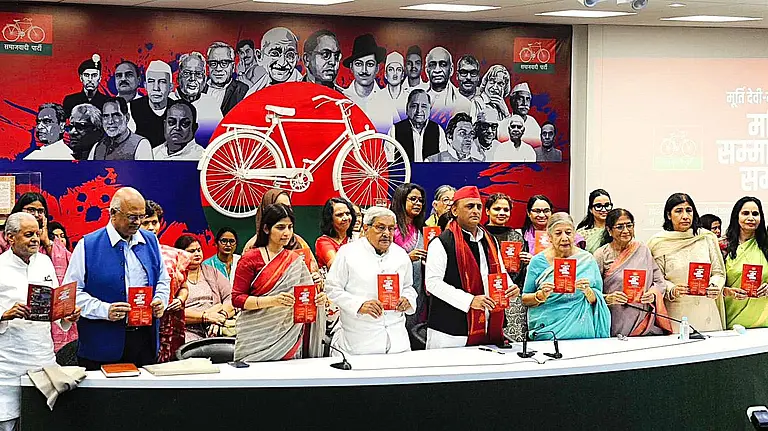
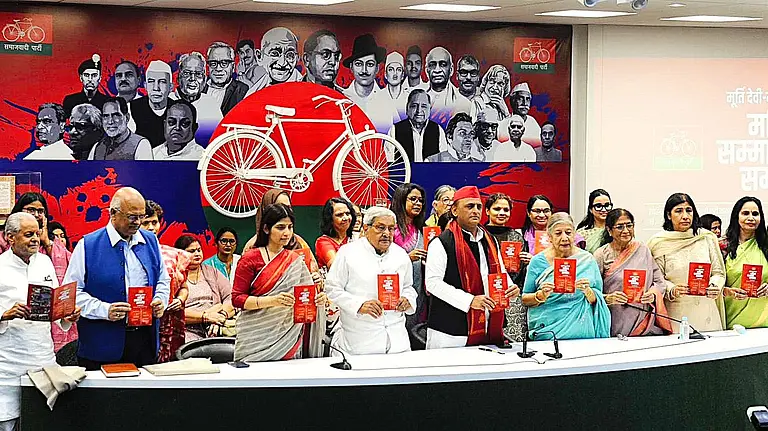
On March 22, Mamta stood among 26 women at the Samajwadi Party headquarters in Lucknow, receiving the Murti Devi–Malti Devi Samman, a moment that briefly brought her story into the public eye. Sunaina Devi’s journey is equally powerful, though shaped by different hardships. Born into the Musahar community and married off as a child, she never had the chance to attend school. Today, she is ensuring that hundreds of children from her community do.
Her path has been marked by violence and resistance, but she refused to step back. For many in her village, she is not just an activist, she is proof that change, however slow, is possible. For Akhilesh Yadav, these stories carry political meaning. As Uttar Pradesh looks ahead to the 2027 Assembly elections, he is trying to build a connection with women, especially those from backward, Dalit, and minority communities, through what he calls the PDA coalition. The idea is simple: bring forward voices that have long remained unheard.
Leaders like Uday Pratap Singh often remind audiences that this outreach is rooted in the party’s past, going back to Mulayam Singh Yadav’s early struggles for social justice. The effort today is to turn that legacy into a more visible and inclusive political strategy. The numbers, however, tell a complicated story. Women voters in recent elections have shown strong support for the BJP, often influenced by welfare schemes that directly impact their daily lives. This creates a challenge for the Samajwadi Party: how to connect emotional narratives of injustice with tangible benefits that matter in everyday life.
As social activist Rooprekha Verma points out, women experience social inequality in layered ways, through caste, class, and gender all at once. That reality cannot be addressed by symbolism alone. Yet, there is something quietly powerful about the recognition of women like Mamta and Sunaina. Their stories may not dominate headlines, but they reflect a ground reality that politics cannot ignore for long. As 2027 approaches, the real question is whether these voices will remain symbolic, or finally become central to the state’s political conversation.