






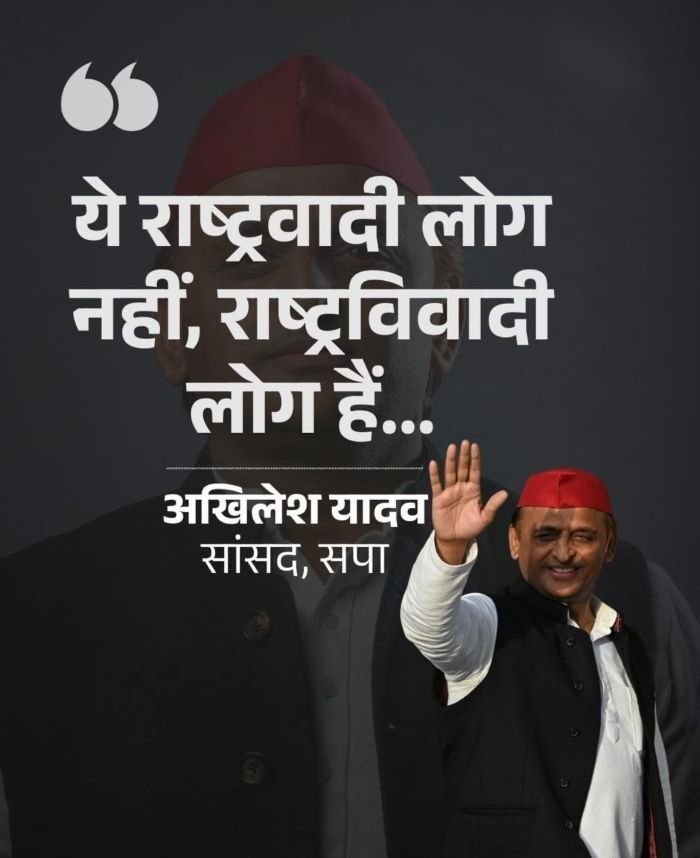
Recently, a picture posted on X (formerly Twitter) by the President of the Samajwadi Party, who is also a Member of Parliament, has sparked intense debate across social media and political circles. The image shows him waving his hand, accompanied by a caption that indirectly criticizes the RSS and BJP. This seemingly simple gesture has ignited discussions about nationalism, patriotism, and the distinction between genuine national interest and political opportunism.
The phrase, “These are not nationalists; they are anti-national,” has been widely circulated in response to this post. It strikes at the heart of a growing sentiment among many citizens who feel that certain political entities, despite claiming to uphold nationalism, often pursue agendas that undermine the very unity and democratic principles of the country. Critics argue that such rhetoric and actions expose a contradiction between public statements and political practices, leading to polarization and distrust.
Social media, especially platforms like X, has become a powerful stage for political expression. A simple photograph, accompanied by a few words, can convey strong opinions, challenge narratives, and spark nationwide debates. In this case, the MP’s post has triggered conversations not only about the intentions of political parties but also about what true nationalism means in the 21st century. Genuine nationalism, observers note, is about prioritizing the country’s welfare, upholding democratic values, and respecting diversity, principles that are often overshadowed by power politics and ideological battles.
The ongoing discourse highlights a crucial point: political symbolism, gestures, and social media activity can influence public perception as much as official statements and legislative actions. While supporters of the Samajwadi Party view the post as a necessary critique of policies and attitudes they see as detrimental to national unity, opponents interpret it as provocative and divisive. This incident serves as a reminder of the responsibilities leaders have, both in action and in communication, to foster constructive dialogue rather than inflame tensions.
Ultimately, the statement “These are not nationalists; they are anti-national” is more than a critique, it is a call for citizens and leaders alike to examine the real meaning of nationalism. It urges a reflection on whether actions and policies genuinely serve the nation or merely political interests under the guise of patriotism. In a democratic society, such debates, though heated, are essential for ensuring accountability and keeping the spirit of the nation alive.