





By Mohammad Tarique Saleem
Across villages, small towns, and densely populated city neighborhoods, everyday conversations have begun to carry a different tone, one marked by concern and quiet apprehension. Many citizens feel they are witnessing the emergence of a new “vote-bandi,” an exercise that starkly recalls the disruption and uncertainty experienced during demonetization. Though officially described as a routine correction of voter lists, for many it feels far more consequential. It feels deeply personal. It feels unsettling.
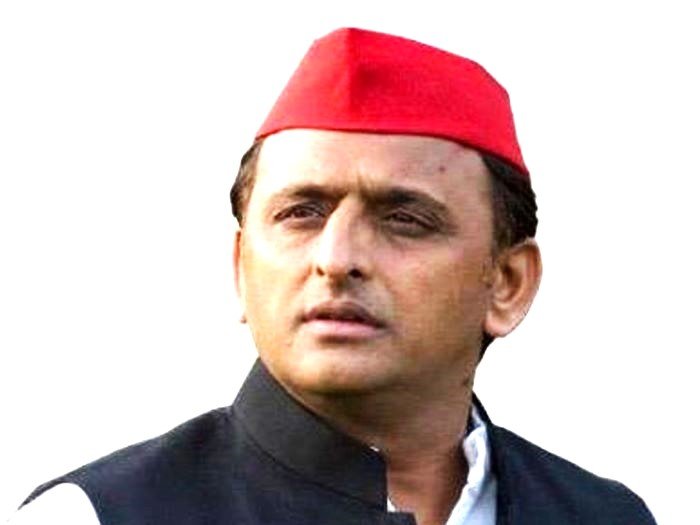
This sharp criticism was recently voiced by Akhilesh Yadav, the chief of the Samajwadi Party, in a post on Twitter (now X). He alleged that what is being presented as a routine correction of voter lists is, in reality, a targeted campaign that could undermine democratic rights. For countless ordinary Indians, this is not merely an administrative update. It is about identity, belonging, and the security of their most fundamental democratic right.
When people begin to fear that their names could vanish from voter rolls due to paperwork disputes, the issue stops being technical and becomes deeply emotional. It raises a troubling thought: if the right to vote can become uncertain, what else might one day be questioned?
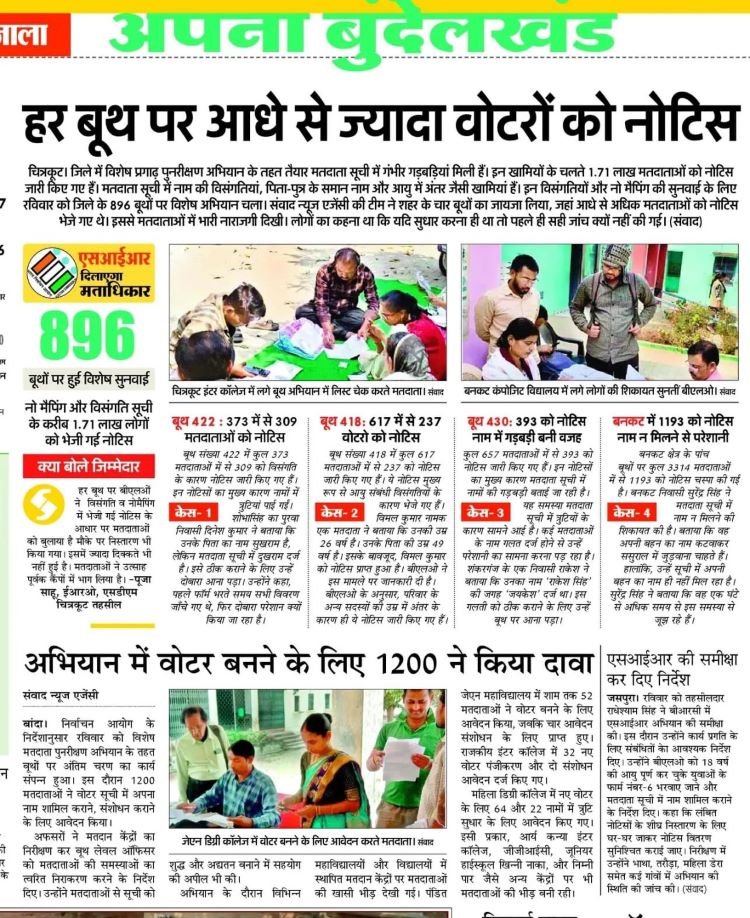
There was a time, critics say, when only certain communities, particularly Muslims, were repeatedly asked to produce documents to prove their identity. Now, they argue, the anxiety has spread further. Notices are reaching Hindu families as well. In villages and towns, people are whispering the same question: why are we being asked again and again to prove who we are?
The fear becomes deeper when political statements about “wrong votes” and detention centers are recalled. For an ordinary farmer, a daily wage worker, or a small shopkeeper, documentation is not a minor issue. It is directly connected to land, inheritance, pensions, and access to government schemes. The voter card is not just a piece of paper; it is proof of belonging. If that proof becomes uncertain, everything else feels uncertain too.
People point out that the very same documents now being demanded to “correct” names and ages were already submitted in the past. If there were mistakes, how did they happen? And if they happened once, what guarantee is there they won’t happen again? Many feel frustrated that instead of authorities taking responsibility for errors, citizens are forced to leave their work, travel long distances, and stand in lines to fix problems they did not create.
The issue has also taken on a political tone. Opposition voices argue that after facing economic challenges such as inflation and unemployment, the ruling party has lost significant public support. According to them, this new verification drive is less about accuracy and more about strategy, about quietly cutting votes where support may be weak. Whether this perception is fully accurate or not, it is undeniably powerful among sections of the public.
Grassroots political workers themselves are said to be feeling the pressure. In some places, local party representatives reportedly find it difficult to defend policies within their own communities. Rising costs of living and job scarcity have already strained public patience. Adding uncertainty about voting rights only increases the emotional burden.
Yet amid all this tension, there are also stories of resilience. Vigilant political volunteers and honest Booth Level Officers (BLOs) are helping people understand the process, guiding them to submit forms correctly, and ensuring that genuine voters are not left out. Their efforts reflect another side of India’s democracy, one where institutions and individuals still work sincerely to protect the system.
At its heart, this controversy is not just about politics. It is about trust. Democracy depends on the belief that every citizen’s voice matters equally. When people begin to fear that their name might quietly disappear from the voter list, that trust weakens. For millions of Indians, voting is more than a right; it is dignity. Any process that touches this right must be transparent, fair, and sensitive. Because in the end, democracy survives not only on laws and procedures, but on the confidence people have in them.