

BY MOHAMMAD TARIQUE SALEEM
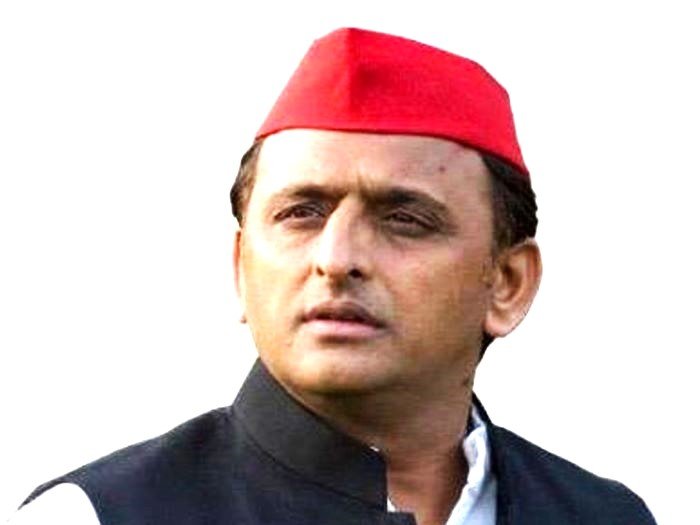
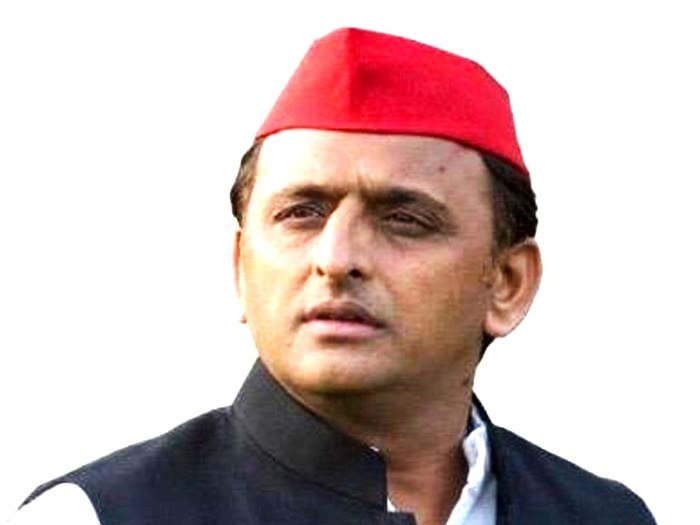
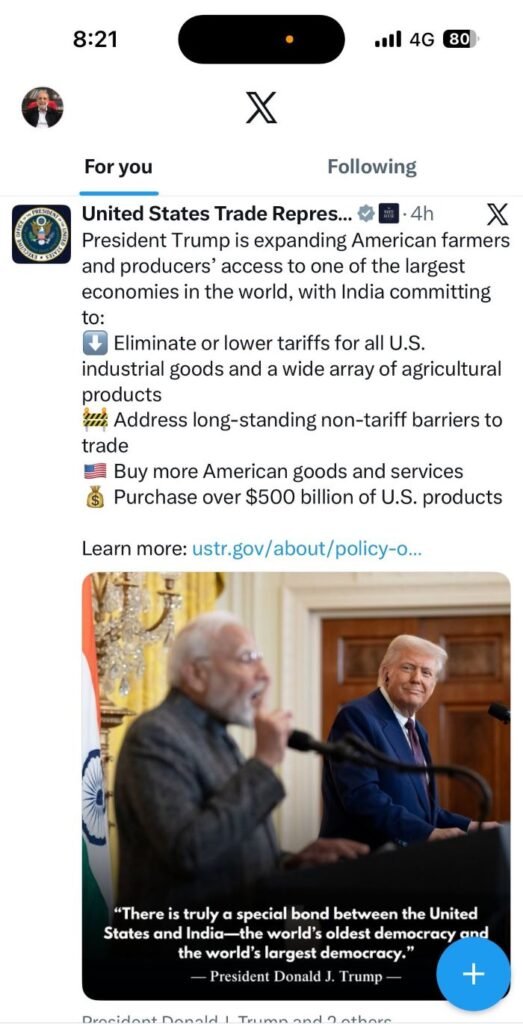
In a country where farming is not merely an occupation but a way of life, even the smallest policy shift can send ripples through millions of households. Samajwadi Party President Akhilesh Yadav’s recent message on X, which has gone viral, struck a powerful chord as he questioned the narrative surrounding India’s expanding trade engagement with the United States. His words were simple yet sharply pointed: America is congratulating its farmers for gaining India as a new market, while India is assuring its own people that the interests of farmers are being safeguarded.
“What kind of deal is this? What kind of leadership is this ?” he asked, capturing a growing sense of unease and skepticism across the country. These questions resonate far beyond political debate. For Indian farmers, markets are not abstract economic concepts; they determine crop prices, household income, and the ability to survive another season. When a powerful country like the United States openly celebrates access to Indian markets, it naturally raises concern among those who already struggle with rising costs, uncertain weather, and shrinking profits.
Akhilesh Yadav’s criticism reflects this ground reality. American farmers operate with strong government subsidies, advanced technology, and large-scale infrastructure. Indian farmers, on the other hand, are mostly small and marginal, heavily dependent on monsoons and local markets. In such an uneven playing field, assurances alone are not enough. Farmers want to know: who truly benefits when markets open, and at what cost?
The issue is not opposition to global trade, but the absence of clarity and confidence. Yadav’s remarks underline a growing distrust toward policy decisions that are announced with grand claims but explained with vague details. If Indian farmers are being protected, why is there no visible sense of relief or optimism among them? Why do celebrations seem louder in foreign capitals than in Indian villages?
Leadership, especially in a democracy, is measured by the ability to protect the most vulnerable while engaging with the world. Akhilesh Yadav’s questions force the government to look beyond press statements and confront the lived experiences of farmers. Deals that appear successful on paper must also pass the test of fairness on the ground. In giving voice to these concerns, Yadav has reminded the nation that true progress cannot be one-sided. When farmers feel secure, informed, and respected, only then can any trade agreement be called a success.he silhouette of Mirani stood against the setting sun, a blend of Portuguese foundations, Omani resilience and the spirit of a nation that has always found strength in its history.