





ARABIAN TIMES NEWS NETWORK
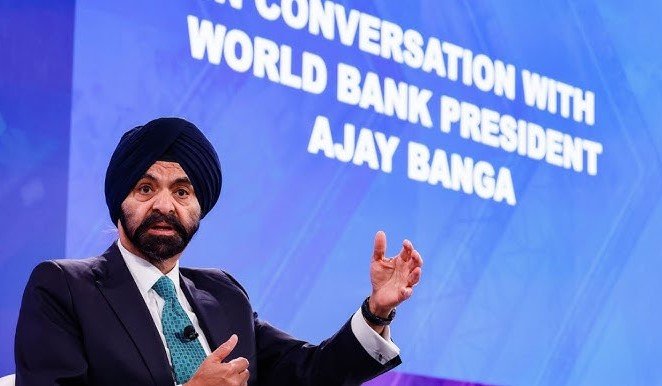
The ongoing conflict in the Middle East is emerging as a major threat to the fragile stability of the global economy, with far-reaching consequences that could persist even if a temporary ceasefire holds. According to Ajay Banga, the president of the World Bank, the economic shockwaves triggered by the war are already being felt across multiple sectors worldwide. In an interview with Reuters, Banga emphasized that the baseline economic outlook remains concerning. Even if the conflict de-escalates in the near future, global growth is expected to slow significantly.
He warned that under such a scenario, the world economy could see a decline in growth by as much as three to four percentage points, a substantial setback at a time when many countries are still recovering from previous economic disruptions. However, the risks become far more severe if the conflict continues or escalates. A prolonged war could deepen the slowdown and trigger a surge in inflation, creating a difficult environment for policymakers. Banga estimated that inflation could rise by 200 to 300 basis points in the short term, driven largely by disruptions in supply chains and surging commodity prices.
In a worst-case scenario, these pressures could intensify further, leading to long-term damage to global output and financial stability. One of the most immediate and visible impacts of the conflict has been on energy markets. Oil prices have surged by nearly 50 percent, reflecting fears of supply disruptions in a region that plays a critical role in global energy production. This spike is not limited to oil alone; it has also affected the availability and cost of natural gas, fertilizers, and even helium, commodities that are essential for industries ranging from agriculture to healthcare. The ripple effects extend well beyond commodities.
Key global supply chains have been disrupted, increasing costs for manufacturers and delaying production timelines. This has created additional strain on economies already grappling with inflation and tight financial conditions. Meanwhile, sectors such as tourism and aviation have taken a significant hit, as uncertainty and safety concerns deter travel to and within the region.
The human cost of the conflict is equally devastating, with thousands of lives already lost. But alongside the humanitarian crisis, the economic implications are becoming increasingly difficult to ignore. Global policymakers are now facing the challenge of balancing inflation control with the need to sustain growth, a task made more complex by geopolitical instability. Banga’s warning highlights a broader concern shared by international financial institutions: that continued instability in the Middle East could derail the global economic recovery.
Financial markets are likely to remain volatile, and investor confidence may weaken if the situation worsens. For developing economies in particular, the impact could be severe, as higher energy prices and tighter financial conditions strain already limited resources. In this uncertain environment, the path forward will depend heavily on how the conflict evolves. A durable resolution could help stabilize markets and restore confidence, but prolonged hostilities risk pushing the global economy into a deeper and more prolonged period of instability.