



BY MOHAMMAD TARIQUE SALEEM
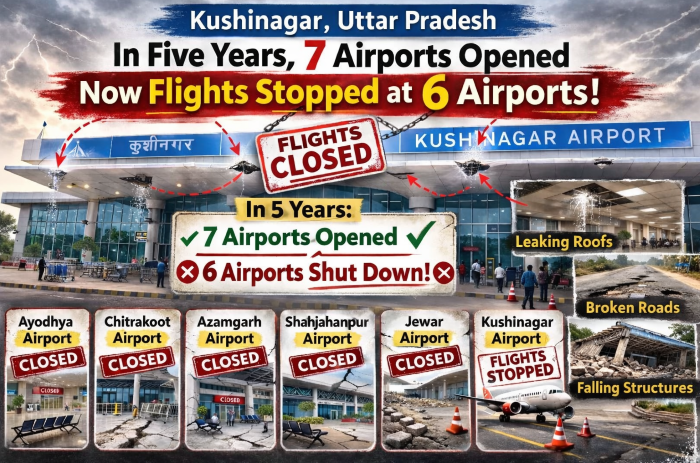
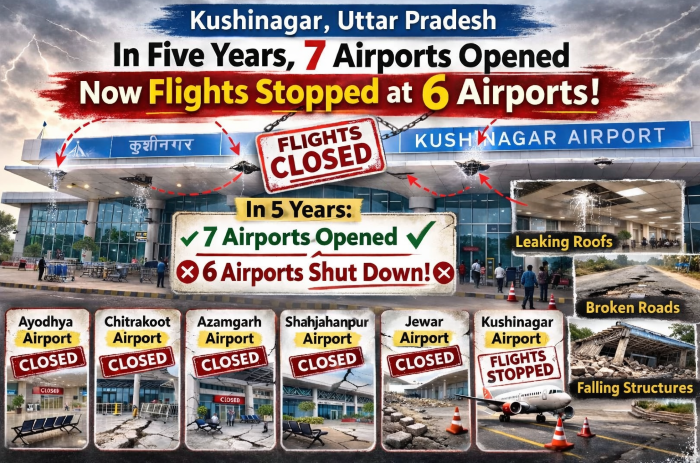
The phrase “airports have gone up in the air” may sound dramatic, but it captures a growing frustration among many citizens who feel that development today is often louder in publicity than in performance. Across political debates, infrastructure has become both a symbol of progress and a point of sharp criticism. In recent years, highways, expressways, railway stations, airports, water tanks, and grand public buildings have been showcased as proof of rapid transformation.
Government advertisements highlight speed, scale, and ambition. Supporters say the country is witnessing infrastructure growth like never before. But critics ask a simple question: if everything is being built so fast and at such high cost, why are reports of leaks, cracks, collapses, and closures surfacing so frequently?
Images of water tanks giving way, newly built roofs leaking during rains, damaged stretches of road soon after inauguration, or airport sheds facing structural issues create doubt in the public mind. For ordinary citizens, these are not just political talking points, they are everyday realities. A broken road means longer travel time. A leaking roof in a public building signals negligence. A closed airport terminal disrupts travel plans and business.
Opposition leaders argue that the problem lies in a development model driven by headlines. They allege that projects are rushed to meet deadlines and maximize visibility. According to them, expressways and large infrastructure projects are not only becoming symbols of connectivity but also of ballooning budgets and alleged commission practices. The charge is that public money is being spent in record amounts, yet transparency and accountability are not keeping pace.
The term “double engine government,” once promoted as a guarantee of coordination between state and central leadership, has now entered the political crossfire. Critics sarcastically call it a “double engine of corruption,” claiming that when power is concentrated, independent scrutiny weakens. Supporters, however, reject these allegations and insist that transformative change naturally faces resistance. At its core, this debate is not just about one party or one government.
It is about trust. Development is not measured only by the number of projects inaugurated but by how long they last and how safely they serve the public. Citizens want infrastructure that survives heavy rains, intense heat, and the test of time. In the end, beyond slogans and counter-slogans, people seek something simple: honest governance, durable construction, and responsible use of public funds. True progress is not about speed alone, it is about strength, transparency, and accountability.