




BY MOHAMMAD TARIQUE SALEEM
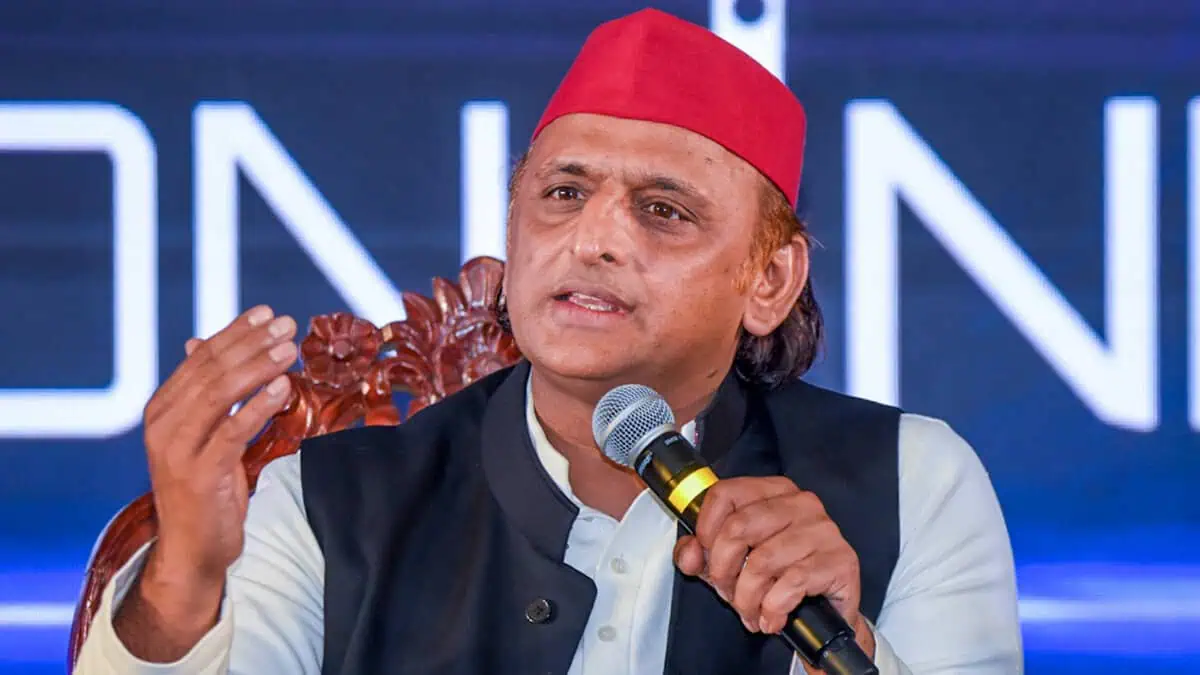
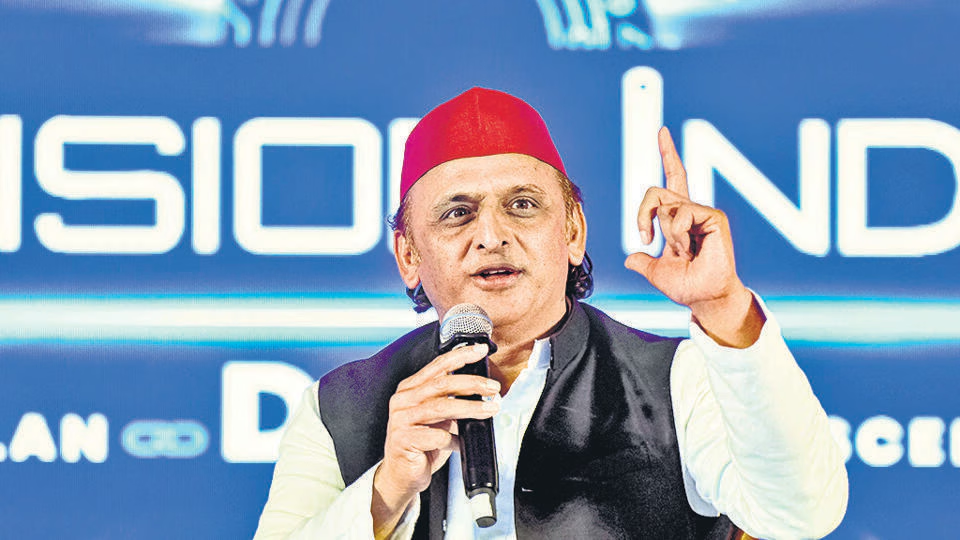
Recent remarks by Akhilesh Yadav have once again brought attention to the growing political rivalry between opposition parties and the ruling Bharatiya Janata Party (BJP). Speaking in Mumbai after attending the Vision India programme, the Samajwadi Party chief delivered a sharp critique of the BJP, accusing the ruling party of drifting away from democratic values. His comment that the BJP is behaving “not like a political party but like a gang” quickly drew attention, reflecting the increasingly intense tone of political debate in India as the country moves closer to future elections.
During his address, Yadav raised several issues that he believes highlight a disconnect between the government’s claims and its actions. One of the examples he mentioned was an incident in Prayagraj during the Magh Mela. According to Yadav, a Shankaracharya was allegedly prevented from taking a holy dip and later faced disrespect. For Yadav, this episode symbolized what he described as a broader disregard for religious leaders and traditional institutions. By bringing up such incidents, he attempted to question the BJP’s narrative of being the protector of cultural and religious values.
Another point of criticism centered on the cancellation of a proposed museum project in Agra dedicated to Chhatrapati Shivaji. The project, which was reportedly planned with a budget of around ₹300 crore, was intended to honor the legacy of the Maratha ruler. Yadav argued that abandoning such initiatives undermines efforts to preserve historical memory. He also used the opportunity to promise that if his party returns to power, it would develop a much larger 1,000-acre Shivaji park as a tribute to the iconic leader. The statement reflects how history and symbolism continue to play a major role in contemporary Indian politics.
Yadav also spoke about the importance of safeguarding democratic institutions. He called on the Election Commission of India to ensure transparency and fairness in upcoming elections. According to him, people’s trust in the democratic process depends on institutions functioning independently and without political pressure. At the same time, the Samajwadi Party leader used the occasion to revisit the ideological foundations of his politics. On the birth anniversary of Kanshi Ram, Yadav paid tribute to the leader who founded the Bahujan Samaj Party and played a transformative role in empowering marginalized communities.
Kanshi Ram’s political vision helped bring Dalits, backward classes, and minorities into the mainstream of Indian politics, giving them a stronger voice and representation. Yadav also recalled the historic alliance between Kanshi Ram and Mulayam Singh Yadav in the early 1990s. That partnership helped bridge the political divide between Dalits and Other Backward Classes and led to the formation of a government in Uttar Pradesh. By referencing this history, Yadav signaled his intention to revive a similar social coalition through the Samajwadi Party’s current political strategy, known as the PDA alliance, Pichhda (backward classes), Dalit, and Alpsankhyak (minorities).
Yadav remarks also included support for Mamata Banerjee, hinting at a wider effort among opposition leaders to strengthen cooperation against the BJP. With leaders like Abu Asim Azmi present at the event, the message was clear: opposition parties are trying to build both ideological and political unity. Overall, Yadav’s statements reveal a strategy that combines criticism of the ruling party with a renewed emphasis on social justice politics. Whether this approach will translate into a stronger opposition front remains to be seen, but it clearly signals that the political contest in India is becoming more intense as future elections approach.