





BY MOHAMMAD TARIQUE SALEEM
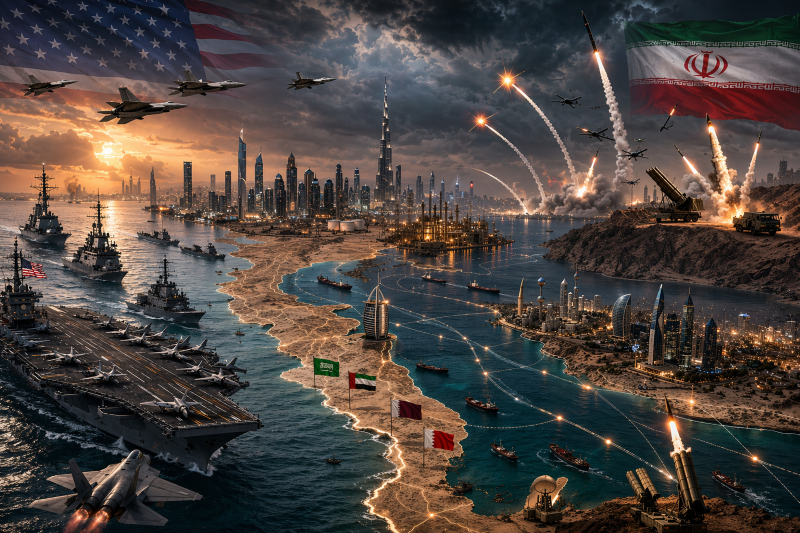
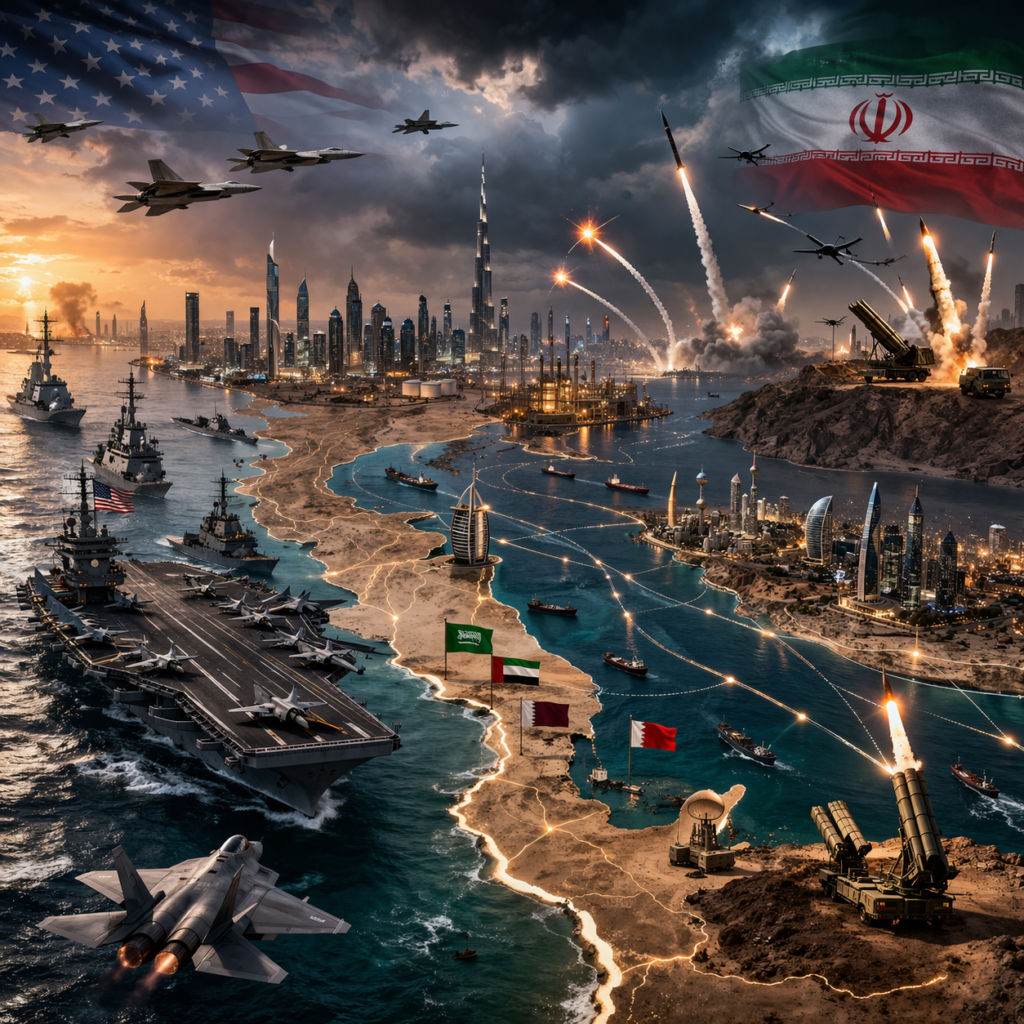
The evolving tensions between Iran and the member states of the Gulf Cooperation Council (GCC), namely Kuwait, Saudi Arabia, Bahrain, and Qatar-represent one of the most complex and fragile geopolitical dynamics in the modern Middle East. While the assertion that Iran is “continuously attacking” GCC nations may be debated in terms of direct military engagement, there is little doubt that the region is witnessing an intensification of proxy conflicts, political maneuvering, and strategic rivalry. This situation indeed casts a “dark cloud” over the Gulf region, raising concerns about stability, sovereignty, and long-term security.
At the heart of this tension lies a broader ideological and geopolitical competition. Iran positions itself as a regional power with influence extending through various allied groups and political networks across the Middle East. On the other hand, GCC countries, particularly Saudi Arabia and Bahrain, perceive Iran’s actions as interference in their internal affairs. This rivalry often manifests through proxy conflicts, cyber operations, and political pressure rather than conventional warfare.
The role of the United States is central to this discussion. For decades, the U.S. has acted as a security guarantor for many GCC states, maintaining military bases, conducting joint exercises, and providing advanced defense systems. This strategic partnership has allowed smaller Gulf nations, such as Bahrain and Qatar, to rely on American support as a deterrent against external threats, particularly from Iran. The concern raised about a potential American “surrender” reflects a broader anxiety about U.S. disengagement from the region.
In recent years, there has been growing debate within the United States about reducing its military footprint in the Middle East, shifting focus toward Asia and domestic priorities. If such a withdrawal were to occur without a strong regional security framework in place, GCC countries could find themselves more vulnerable to Iranian influence. However, the idea that the U.S. would completely abandon the GCC is unlikely in the near term. The Gulf region remains strategically vital due to its vast energy resources, shipping routes like the Strait of Hormuz, and significant American investments.
The U.S. has deep economic, military, and political ties with countries like Saudi Arabia and Kuwait. A sudden disengagement would not only destabilize the region but also harm American interests. That said, a partial recalibration of U.S. policy could still have significant consequences. If Washington reduces its active involvement, GCC nations may need to rethink their security strategies. This could include strengthening intra-GCC cooperation, investing in indigenous defense capabilities, and diversifying alliances with other global powers such as China, Russia, or European nations.
The scenario of a direct “war” between the United States and Iran is highly complex and fraught with risks. If such a conflict were to occur and the United States were to emerge victorious, it might temporarily reduce Iran’s capacity to project power in the region. This could be seen as beneficial for GCC countries in terms of short-term security. However, even in this scenario, the aftermath could be unpredictable. Regime instability in Iran or prolonged conflict could lead to regional chaos, economic disruption, and humanitarian crises.
Conversely, if the United States were perceived to “lose” or fail to achieve its objectives, the consequences for GCC countries could be severe. Iran’s regional standing would likely be strengthened, emboldening it to expand its influence further. This could intensify political pressure on GCC governments, increase support for aligned groups within these countries, and potentially destabilize their internal political landscapes. However, framing the situation purely in terms of “winning” or “losing” oversimplifies a deeply nuanced reality. Modern conflicts are rarely resolved in clear-cut terms. Instead, they often result in prolonged stalemates, shifting alliances, and ongoing instability. For GCC countries, the real challenge lies not in choosing sides but in building resilience against multiple forms of pressure, military, economic, and political.
One critical area where GCC countries must focus is regional unity. The Gulf Cooperation Council itself has experienced internal divisions in the past, such as the diplomatic rift involving Qatar. Although reconciliation efforts have been made, sustained unity is essential for presenting a collective front against external challenges. A fragmented GCC is far more vulnerable to external influence than a cohesive one. Additionally, GCC countries must invest in diplomatic engagement alongside military preparedness.
While deterrence is important, dialogue with Iran could help reduce tensions and establish mechanisms for conflict prevention. Confidence-building measures, regional forums, and backchannel negotiations could play a role in stabilizing relations. Economic diversification is another key factor. Many GCC economies are heavily dependent on oil revenues, making them susceptible to external shocks. By investing in technology, infrastructure, and alternative industries, these countries can strengthen their economic resilience and reduce vulnerability to geopolitical disruptions.
It is also important to consider the internal dimension of security. Allegations of foreign interference often exploit existing social, political, or economic grievances within countries. By addressing domestic issues, such as governance, inclusivity, and economic inequality, GCC governments can reduce the potential for external actors to gain influence. In conclusion, the tensions between Iran and GCC countries represent a significant challenge, but they are not insurmountable. The role of the United States remains crucial, yet GCC nations cannot rely solely on external powers for their security.
Whether or not the U.S. maintains its current level of engagement, the Gulf states must adopt a proactive and multifaceted approach to safeguarding their interests. This includes strengthening regional cooperation, enhancing defense capabilities, pursuing diplomatic solutions, and building robust internal systems. The situation indeed demands seriousness and strategic foresight. Rather than viewing it through the binary lens of victory or defeat, GCC countries must prepare for a complex and evolving geopolitical landscape, one where resilience, adaptability, and unity will be the key determinants of long-term stability.