




BY MOHAMMAD TARIQUE SALEEM
The United States-Israeli war on Iran erupted on February 28, 2026, with coordinated airstrikes that achieved a stunning early success: the targeted assassination of Supreme Leader Ayatollah Ali Khamenei and several top officials. This decapitation blow plunged Tehran into chaos, forcing an interim leadership council to seize control amid a profound power vacuum. In swift retaliation, Iran launched widespread missile and drone barrages, not only at Israel but also at Gulf Cooperation Council states including Saudi Arabia, the UAE, Qatar, Bahrain, Kuwait, and Oman, despite their non-involvement in the initial attacks. Strikes hit US military bases, airports, ports, and commercial zones, causing casualties, infrastructure damage, and widespread disruption. As the conflict enters its second week, ongoing US-Israeli operations continue degrading Iran’s capabilities, while Iranian proxies escalate regionally. The war has already upended Middle East dynamics, threatening Gulf security assumptions, economic stability via Strait of Hormuz risks, and long-term alliances in a potential turning point for the region.
The United States-Israeli war on Iran, which erupted on February 28, 2026, has already reshaped the geopolitical landscape of the Middle East. The joint campaign, launched with coordinated airstrikes, achieved early and dramatic successes, including the targeted killing of Supreme Leader Ayatollah Ali Khamenei and numerous high-ranking officials in the opening days. This decapitation strike left Iran reeling, with an interim leadership council scrambling to assert control amid a power vacuum.
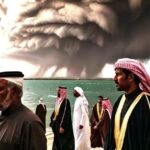
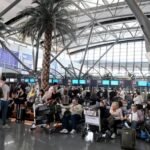
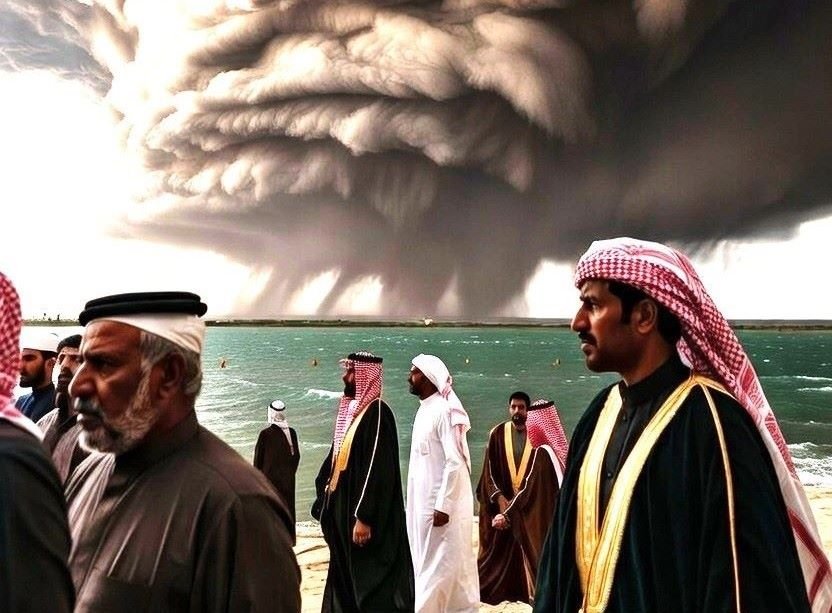
Tehran responded swiftly and broadly, launching missile and drone barrages not only at Israel but also at several Gulf states, Saudi Arabia, Qatar, the United Arab Emirates, Bahrain, Kuwait, and Oman, despite none of these nations directly participating in attacks on Iranian soil. Various sites across these states were hit, including US military bases, airports, ports, and even some commercial areas. The strikes inflicted casualties, disrupted air travel, damaged infrastructure, and heightened fears of wider escalation. Iranian proxies, including Hezbollah in Lebanon and militias in Iraq, have also intensified operations, further broadening the conflict.
As the war enters its second week, with ongoing US-Israeli air campaigns degrading Iran’s missile capabilities and naval assets, the fighting shows no immediate signs of abating. If the conflict drags on, it could become a real turning point for the Gulf, one that reshapes how states think about security, alliances, and even their long-term economic futures. For years, Gulf stability has leaned on a familiar set of assumptions: The United States remained the dominant security guarantor; rivalry with Iran was managed, contained, and kept below the threshold of full confrontation; and the Gulf Cooperation Council (GCC), despite its disagreements, provided enough coordination to prevent regional politics from unravelling entirely.
A sustained conflict involving the US, Israel, and Iran would strain all of that at once. It would push Gulf capitals to revisit not only their defence planning but also the deeper logic of their regional strategy. In recent years, Gulf diplomacy had already been shifting—carefully, quietly, and with a strong preference for hedging rather than choosing sides. The Saudi-Iran thaw brokered by China in 2023, the UAE’s pragmatic channels with Tehran, and Oman’s steady mediation role all pointed to the same idea: Stability requires dialogue, even when mistrust runs deep. Qatar has also kept doors open, betting on diplomacy and de-escalation as a way to reduce risk.
But a prolonged war makes that balancing act much harder to sustain. Pressure from Washington to show clearer alignment has intensified, with US officials urging Gulf partners to provide more overt support, such as basing rights or intelligence sharing. Domestic opinion in these countries now demands firmer answers about where national interests truly stand, especially after Iranian missiles struck civilian-adjacent targets. Regional polarisation has intensified, forcing states into uncomfortable positions. In this environment, strategic ambiguity stops looking like smart flexibility and starts looking like vulnerability, as external powers and domestic voices push for clearer sides.
The economic shockwaves could be just as significant. Any extended conflict tied to Iran immediately puts maritime chokepoints back at the centre of global attention, especially the Strait of Hormuz, one of the most sensitive arteries in the world economy. Iran has partially closed or threatened the strait, leading to even limited disruptions that have triggered sharp energy price increases, higher insurance and shipping costs, and renewed investor anxiety. Oil prices have soared in the initial days, providing short-term revenue boosts for Gulf exporters, but sustained volatility carries a different cost.
It could scare away long-term capital, complicate megaproject financing, and raise borrowing costs at exactly the moment many Gulf states are trying to accelerate diversification away from hydrocarbons. There is also a longer-term strategic risk. Major consumers, especially in Asia, may decide that repeated instability is reason enough to speed up diversification away from Gulf energy resources. Over time, that would quietly reduce the region’s leverage, even if it remains a major energy supplier.
Inside the GCC, the war could either push states closer together or expose the cracks. The bloc has always moved between unity and rivalry, and a crisis doesn’t automatically produce cohesion. Different members have different threat perceptions and comfort levels with risk. Oman and Qatar have typically valued mediation and communication channels with Tehran, even as they condemn the attacks on their territory. Saudi Arabia and the UAE have leaned more heavily towards deterrence, quietly supporting US-Israeli objectives while publicly calling for restraint to avoid further escalation. Kuwait tends to balance carefully and avoid hard positioning.
If the conflict escalates unpredictably, perhaps with more Iranian proxy actions or accidental strikes, these differences could resurface and strain coordination. Yet the opposite outcome is also possible. Shared threats from Iranian retaliation have already prompted emergency GCC meetings, discussions on joint missile defence enhancements, and improved intelligence sharing. The crisis could drive deeper cooperation on maritime security and air defence integration. Which direction the GCC takes will depend less on outside pressure and more on whether member states see this as a moment to compete for individual advantage or a moment to close ranks against a common peril.
Zooming out, a prolonged war would also accelerate larger geopolitical realignments. China and Russia would not remain passive. Beijing, deeply invested in Gulf energy flows and regional connectivity via the Belt and Road Initiative, may expand its diplomatic footprint and present itself as a stabilising intermediary, perhaps mediating ceasefires or offering economic incentives. Moscow could exploit the turmoil to increase arms sales and leverage regional divisions, positioning itself as an alternative to US dominance.
Meanwhile, if US military engagement deepens but Washington’s political bandwidth narrows due to domestic debates over the war’s costs, Gulf states may find themselves in a complicated position, more dependent on American security support in the short term, yet more cautious about relying on a single patron long-term. That dynamic could produce a new pattern: conditional alignment, where Gulf capitals cooperate militarily with the US but widen their economic and diplomatic options to avoid overdependence.
The deepest change, though, may not be military or economic. It may be cultural, in strategic terms. The Gulf states have spent decades prioritising stability, modernisation, and careful geopolitical manoeuvring to attract investment and build diversified economies. A sustained regional war could disrupt that model profoundly. It could force painful trade-offs between immediate security imperatives and long-term development ambitions, between diplomatic flexibility and alliance discipline, between the desire to avoid escalation and the harsh reality of living next door to it.
The Gulf now stands at a crossroads. It could become the front line of a prolonged, great power-inflected confrontation, with recurring cycles of strikes and retaliation. Or it could leverage the diplomatic capital it has built, through years of quiet hedging and dialogue, to push for de-escalation, perhaps by facilitating back-channel talks or supporting UN-led efforts, while simultaneously strengthening defensive resilience through GCC-wide initiatives. Either way, the outcome won’t just shape Gulf security thinking. It could influence the entire region’s political architecture for years, possibly decades, to come, determining whether the Middle East moves toward fragile coexistence or deeper, more entrenched division.



