





BY MOHAMMAD TARIQUE SALEEM
The war between America (along with Israel) and Iran has turned the Gulf region upside down. Missiles and drones from Iran are hitting not just U.S. military bases, but also airports, hotels, oil fields, and other important places in all six Gulf countries, Saudi Arabia, UAE, Kuwait, Bahrain, Qatar, and Oman. Even Jordan and Iraq have felt the impact. Ships can’t move safely through the Strait of Hormuz anymore, a narrow sea passage that carries a huge part of the world’s oil and gas.
This has stopped or slowed down exports, pushed oil prices way up, and created big problems for everyone. These countries had big dreams and plans for their future. They wanted to move away from depending only on oil, build modern cities, create new jobs in tech, tourism, finance, and more, and make life better for their people. But now, this war has put a heavy dark cloud over all those plans. Let’s look at each one simply:
- Saudi Arabia’s Vision 2030 (started in 2016) : The plan was to build new mega-cities like NEOM, grow tourism, entertainment, and tech, and reduce oil money reliance. Iranian attacks hit oil fields (like Shaybah and Ras Tanura), refineries, and even near the U.S. embassy in Riyadh. Oil exports are stuck or down because of the Hormuz problem. Investors are scared, tourists aren’t coming, and big projects might get delayed or stopped.
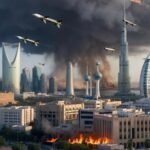
- UAE’s We the UAE 2031 (launched 2022): UAE wanted to be a top place for business, AI, green energy, and safe living. Dubai and Abu Dhabi are famous for luxury and safety. But Iran fired hundreds (even over 1,700 in some reports) of missiles and drones here, hitting airports, hotels (like near Burj al-Arab), and other spots. Some people died, buildings got damaged, and the image of being super-safe is hurt badly. Who wants to visit or invest when the sky has drones and explosions?
- Kuwait’s New Kuwait Vision 2035: They aimed to become a big financial and trade center with more private businesses instead of just oil. Attacks hit border areas and killed some security people. Shipping problems add extra pressure on their economy.
- Bahrain’s Economic Vision 2030: The goal was a stronger, more competitive economy and better living for everyone. Hosting the U.S. Navy base made it a target, refineries caught fire, hotels and towers damaged, people killed or hurt.
- Qatar’s National Vision 2030 (from 2008): Qatar wanted a smart, knowledge-based economy with great education and high living standards. Their huge gas export facility stopped operations because of the attacks and Hormuz closure. Al Udeid (big U.S. base) was hit hard.
- Oman’s Vision 2040: A long plan for a balanced, sustainable future. Even though Oman tries to stay neutral and help talk peace, ports like Duqm got attacked by drones.
- Iraq’s Vision 2030 and 2050: Focused on rebuilding after wars, diversifying the economy, and finding stability. Extra attacks make everything harder.
- Jordan’s Economic Modernisation Vision (to 2033): Aimed at faster growth, better jobs, health, education, and higher living standards. But attacks reached here too, putting those goals at risk.
The Strait of Hormuz is the biggest headache right now. Normally, tankers carry oil and gas through it every day. Iran threatened to close it and attacked some ships, now almost no traffic moves. Hundreds of ships are stuck waiting. This hurts everyone’s plans because these countries need to sell oil/gas to pay for new schools, hospitals, jobs, and big projects. Global oil prices jumped, insurance for ships became crazy expensive, and flights got canceled or grounded at many airports.
Air defenses in the Gulf shot down most incoming missiles and drones, so damage isn’t total destruction everywhere. But even small hits create fear, close businesses, scare away tourists and investors, and cost billions to fix. These countries spent years building a picture of peace, safety, and progress to attract the world. Now, with explosions, deaths (even if not huge numbers yet), and economic chaos, that picture is cracked.
People are angry at Iran for hitting them, but also frustrated because they got pulled into a fight they didn’t start. If the war drags on, rebuilding trust and money will take years. The bright futures these visions promised, modern jobs, happy lives, global respect, now look far away under this dark cloud of war. The only way out is for everyone to talk, stop the attacks, and bring back calm so these dreams can shine again.