






COMPILED BY MOHAMMAD TARIQUE SALEEM
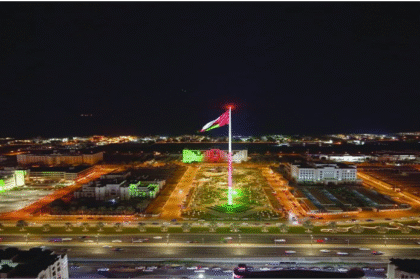
Nestled between rugged mountains and the azure Arabian Sea, Muscat awakens to a new dawn. Ancient forts whisper tales of frankincense caravans, while the majestic Sultan Qaboos Grand Mosque gleams under the sun, a timeless symbol of Omani grace and harmony. Yet, in this serene landscape, a bold vision stirs. With the launch of the Oman Global Financial Centre, the Sultanate steps confidently into the future, inviting the world’s capital to flow through its veins. Here, tradition meets ambition: political stability anchors innovation, and investor-friendly horizons promise prosperity for generations. Oman is no longer just a hidden gem, it’s emerging as the Gulf’s next financial heartbeat.
Imagine a quiet corner of the Gulf suddenly stepping into the spotlight, ready to rival the glittering financial giants like Dubai and Abu Dhabi. That’s exactly what’s happening in Oman right now. Just days ago, on January 6, 2026, the Sultanate’s Council of Ministers gave the green light to the Oman Global Financial Centre (OGFC), a bold new venture that’s got everyone talking about Muscat’s ambitions to become a serious player in international finance.
For years, Oman has been the understated neighbor in the GCC, relying heavily on oil while watching others build towering skylines of wealth. But with oil prices unpredictable and the world shifting toward sustainable economies, Oman is charting its own path under Oman Vision 2040. This isn’t just about diversifying away from hydrocarbons; it’s about creating a vibrant, future-proof economy that brings real opportunities to its people.

At its core, the OGFC is designed to be an investor’s dream, a fully autonomous zone with its own legislative, administrative, and regulatory framework. Think of it as a sandbox where global banks, insurance firms, asset managers, and fintech innovators can operate freely, blending conventional and Islamic finance under one roof. There are promises of incentives: easier company setup, tax perks, streamlined partnerships, and smooth capital movement. It’s built on lessons from successful models like Dubai’s DIFC or Abu Dhabi’s ADGM, but tailored to Oman’s strengths-rock-solid political stability, a strategic location bridging Asia, Africa, and Europe, and a reputation for trustworthiness.
His Excellency Sultan bin Salim Al Habsi, the Minister of Finance who’s spearheading this, puts it simply: the centre will be an “enabling platform” to supercharge innovation and attract long-term capital. In his words, it’s about leveraging Oman’s advantages to become a gateway for global markets. And experts agree. Dr. Khalid bin Saeed Al Amri from the Omani Economic Association calls it a game-changer, one that could draw big international players to set up shop, deepen local capital markets, and spark homegrown fintech breakthroughs.
What excites me most is the human side of this story. This isn’t just dry policy, it’s about jobs and futures. The OGFC is expected to create thousands of high-skilled positions for Omanis in areas like financial analysis, international law, and cutting-edge tech. Knowledge transfer from global giants will upskill the workforce, empowering a new generation to thrive in a post-oil era. For young Omanis, this could mean exciting careers right at home, rather than looking abroad.
From an investor’s perspective, the appeal is clear. In a region full of competition, Oman is offering something refreshing: regulatory clarity, independent courts for quick dispute resolution, and a balanced approach that protects national interests without scaring off capital. Economists point out that reducing bureaucracy and uncertainty flips the script on “risk aversion”, suddenly, Oman looks like a safe, predictable bet for big money.
Picture Muscat’s stunning coastline, with its mix of ancient forts and modern architecture, now buzzing with even more energy. The city’s skyline, already dotted with sleek buildings, could soon host regional headquarters for global financial powerhouses. Of course, challenges lie ahead – building infrastructure, attracting the first wave of tenants, and proving it can compete. But Oman’s track record of steady, thoughtful progress gives reason for optimism. With strong financial stability and growing global partnerships, the Sultanate is timing this perfectly amid a world hungry for diversified investment destinations.
In the end, the Oman Global Financial Centre feels like more than a policy win; it’s a statement of confidence. Oman isn’t trying to copy its neighbors, it’s carving out its own niche as a stable, innovative hub where East meets West. For global investors eyeing the next big opportunity, and for Omanis dreaming of a prosperous future, this could be the start of something truly transformative. Muscat is opening its doors wide, and the world should take notice.