
BY MOHAMMAD TARIQUE SALEEM
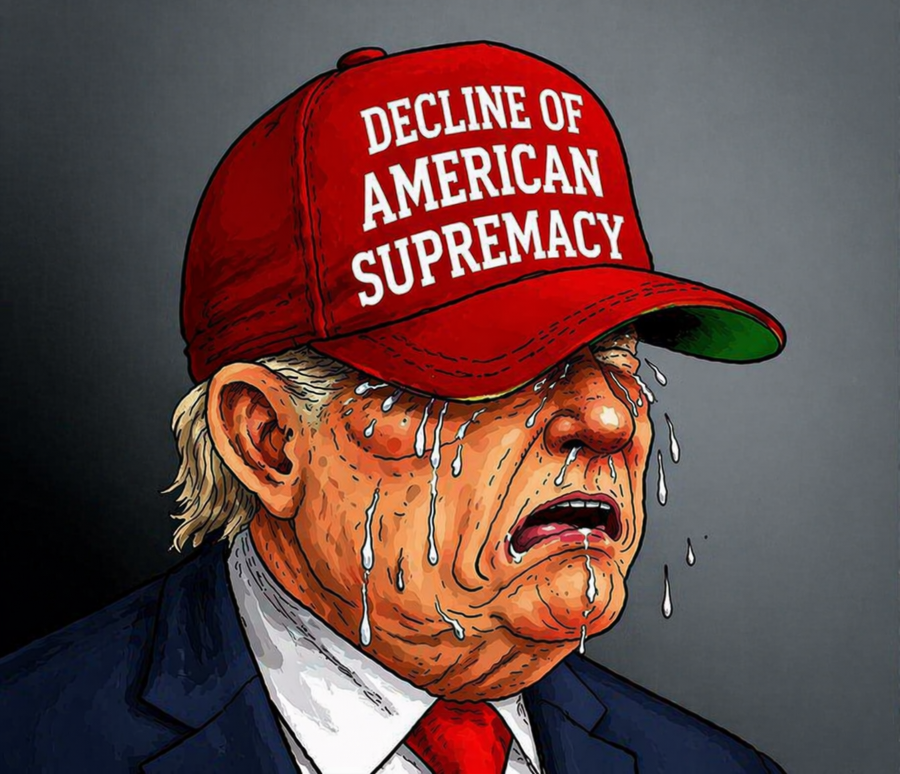
In the unforgiving arena of global power, Ayatollah Ali Khamenei stands as the architect of Iran’s extraordinary resurgence. For decades, he has steered the Islamic Republic through crushing sanctions, relentless isolation, and existential threats with iron will and strategic foresight. What the West once dismissed as a fragile pariah state has, under his leadership, transformed into a resilient regional powerhouse, boasting advanced defensive capabilities, a formidable “Axis of Resistance,” and unyielding national unity. Today, as America’s military prestige falters and Trump’s impulsive threats give way to sudden retreats, voices across the Global South increasingly hail Khamenei as the symbol of defiance against unipolar dominance. His patient doctrine of resistance has not only humbled expectations but also exposed the limits of American supremacy.
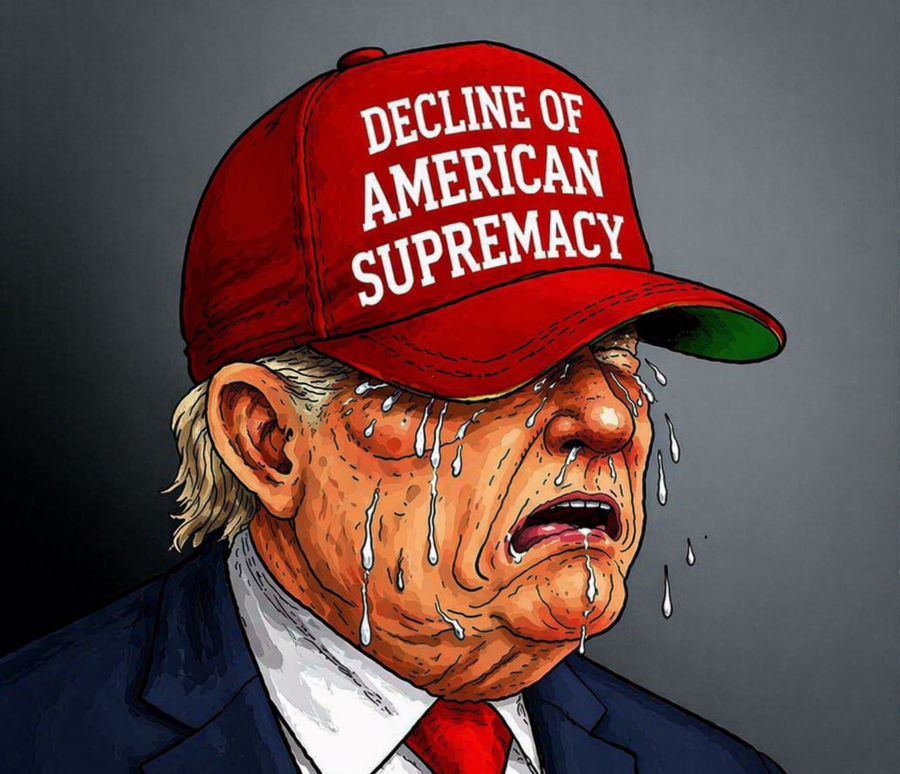
In the annals of global power, few spectacles have been as telling as the recent turbulence in U.S.-Iran relations under President Donald Trump. Once the unchallenged superpower, America now finds its image tarnished, its military prestige questioned, and its economic levers challenged. Trump’s impulsive style, marked by threats, reversals, and dramatic social media pronouncements, has accelerated what many analysts see as a broader erosion of U.S. global standing. Rebuilding that aura of invincibility will demand years, if not decades, of consistent diplomacy and demonstrated strength, an embarrassment for a nation that prided itself on wise leadership.
A Persian proverb captures this moment poignantly: “A closed fist is worth a fortune, but once opened, it turns to dust.” For decades, the United States maintained its dominance through a clenched fist of military might, economic sanctions, and the petrodollar system. The latter ensured that global oil trade flowed through dollars, reinforcing American financial hegemony, particularly in the Middle East. Yet, prolonged conflicts and perceived overreach have pried open that fist, scattering influence like dust in the wind. Trump’s tenure has amplified this unraveling, turning potential strength into visible fragility.
Central to this shift is the challenge to America’s once-vaunted arms industry. For years, the U.S. sold sophisticated, expensive weaponry to allies worldwide, positioning itself as the premier supplier of security. These systems symbolized technological superiority and generated massive revenue. However, Iran’s asymmetric responses, leveraging cheaper drones, missiles, and proxy networks, have repeatedly exposed vulnerabilities in high-cost U.S. and allied platforms. In recent escalations, Iranian countermeasures demonstrated that determination and innovation could neutralize expensive arsenals, denting the perception of American invincibility. Countries once reliant on U.S. hardware now whisper about alternatives. A future where nations pivot toward more affordable, battle-tested options from Iran or its partners could cripple America’s arms export economy, a pillar of its global power.
Today, voices across the Global South increasingly praise Ayatollah Ali Khamenei for steering Iran through isolation and sanctions to emerge as a resilient player. What was once dismissed as a pariah state has showcased strategic depth, regional alliances, and defensive capabilities that have humbled expectations. The world, long accustomed to fearing U.S.-backed interventions, now witnesses Iran’s ability to withstand pressure and project influence across the Middle East. Iran has effectively positioned itself as the undeclared powerhouse in the region, reshaping alliances from the Gulf to the Levant. This psychological victory is profound: a nation once cowed now stands as a symbol of defiance, inspiring others to question unipolar dominance.
Trump’s policy zigzags have only compounded the damage. His administration’s approach to Iran has veered between aggressive posturing and sudden de-escalations, projecting inconsistency rather than resolute strategy. This volatility undermines trust in American commitments. Allies and adversaries alike wonder: Can Washington be relied upon, or is policy dictated by the latest headline or tweet?
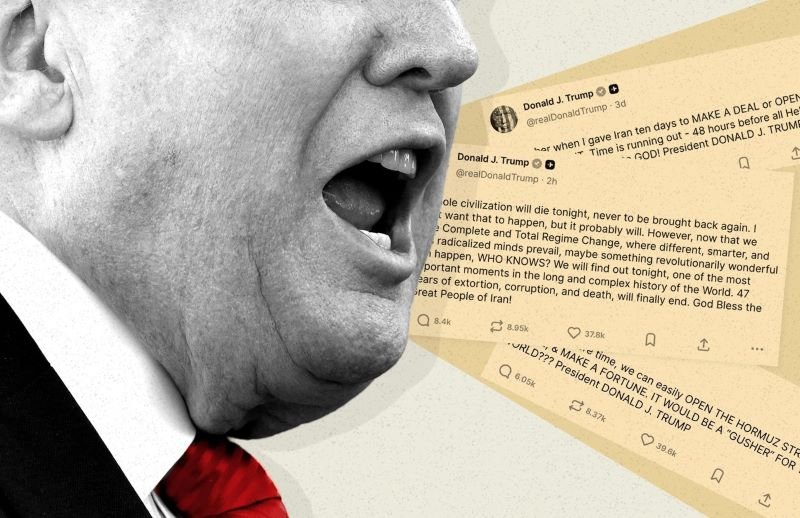
This inconsistency reached a fever pitch in recent days. On April 7, 2026, Trump posted on social media: “A whole civilization will die tonight, never to be brought back again. I don’t want that to happen, but it probably will. However, now that we have Complete and Total Regime Change, where different, smarter, and less radicalized minds prevail, maybe something revolutionarily wonderful can happen, WHO KNOWS? We will find out tonight, one of the most important moments in the long and complex history of the World. 47 years of extortion, corruption, and death, will finally end. God Bless the Great People of Iran.”
The rhetoric was apocalyptic, framing potential strikes on Iranian infrastructure as near-inevitable while hinting at regime change. It evoked images of devastating attacks on power plants and bridges, raising global alarms about humanitarian fallout and escalation risks. Critics decried it as reckless saber-rattling that endangered civilians and destabilized energy markets, with the Strait of Hormuz-a chokepoint for nearly a fifth of global oil-hanging in the balance.
Yet, mere hours later, on April 8, Trump pivoted dramatically. Citing conversations with Pakistan’s Prime Minister Shehbaz Sharif and Field Marshal Asim Munir, he announced a two-week suspension of planned bombings. “Based on conversations with Prime Minister Shehbaz Sharif and Field Marshal Asim Munir, of Pakistan, and wherein they requested that I hold off the destructive force being sent tonight to Iran, and subject to the Islamic Republic of Iran agreeing to the complete, immediate, and safe opening of the Strait of Hormuz, I agree to suspend the bombing and attack of Iran for a period of two weeks. This will be a double sided ceasefire! … We received a 10 point proposal from Iran, and believe it is a workable basis on which to negotiate. … it is an honor to have this longterm problem close to resolution.”
This abrupt shift, from civilizational threat to negotiated pause, highlights the contradictions. While Trump claims military objectives were “met and exceeded” and a long-term peace deal is near, the reliance on Pakistani mediation and conditional ceasefire reveals limits to unilateral U.S. power. The petrodollar’s grip weakens as energy security concerns force pragmatic retreats. Iran’s endurance has forced even the superpower to blink, at least temporarily.
The implications extend far beyond the headlines. America’s global standing, built on perceived reliability and overwhelming force, now appears reactive and image-conscious. Embarrassment ripples through the American public, many of whom question how a leader’s personal style has hastened this reckoning. Rebuilding trust will require more than rhetoric; it demands sustained alliances, economic resilience, and military credibility that transcends one administration’s whims.
As the two-week window unfolds, the world watches closely. Will negotiations yield a stable Middle East, or will fresh reversals deepen doubts? Iran’s emergence as a regional counterweight, coupled with America’s exposed inconsistencies, signals a multipolar reality dawning faster than many anticipated. The closed fist of American dominance, once formidable, risks crumbling further into dust unless wiser, steadier hands restore its cohesion.
True superpower status is not proclaimed in tweets but proven through enduring influence. In this pivotal chapter, the United States confronts a sobering truth: power, once diminished, is not easily reclaimed. The coming years will test whether America can close its fist a new, or watch its fortune scatter on the winds of change.