






COMPILED BY : SHAZIA SALEEM
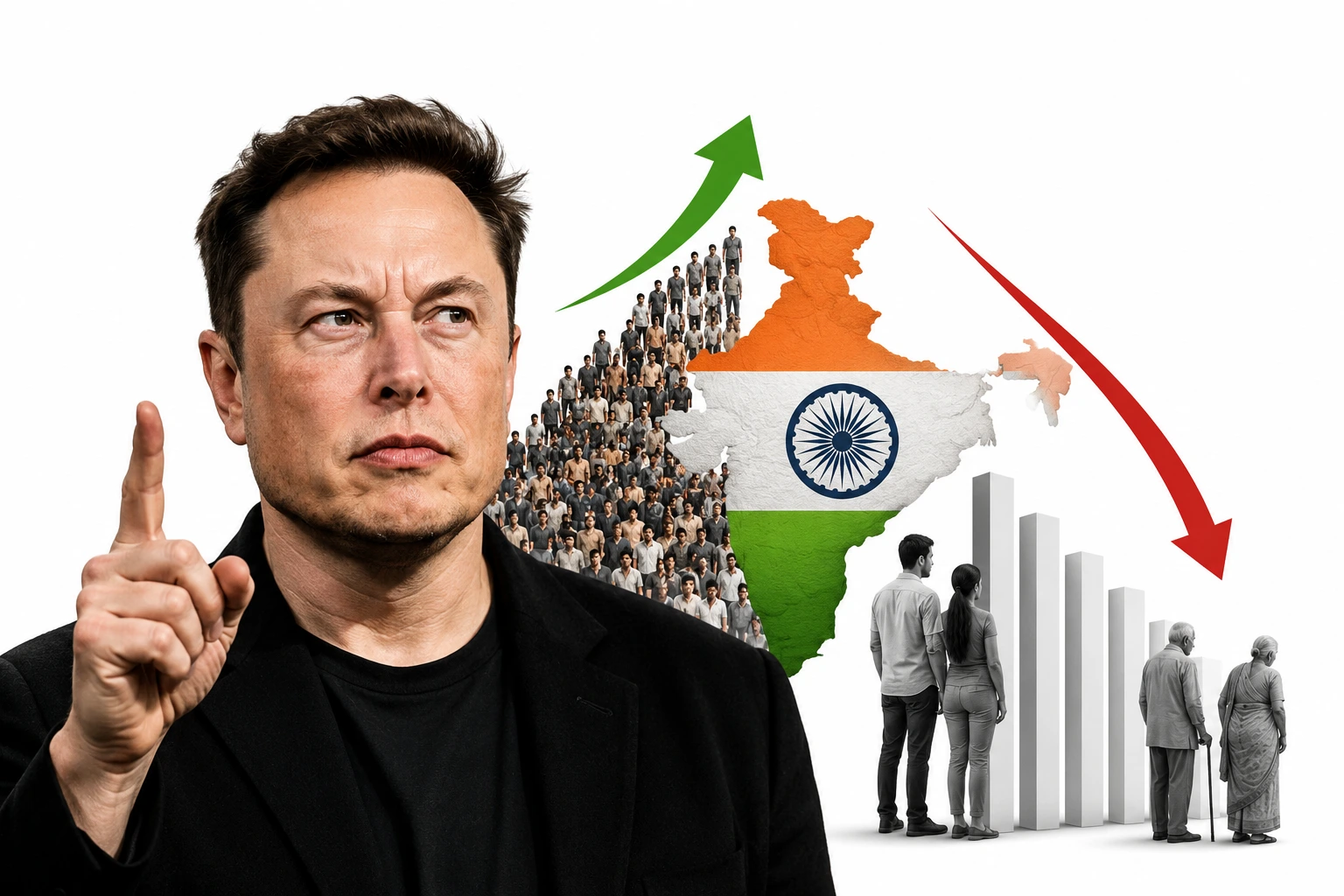
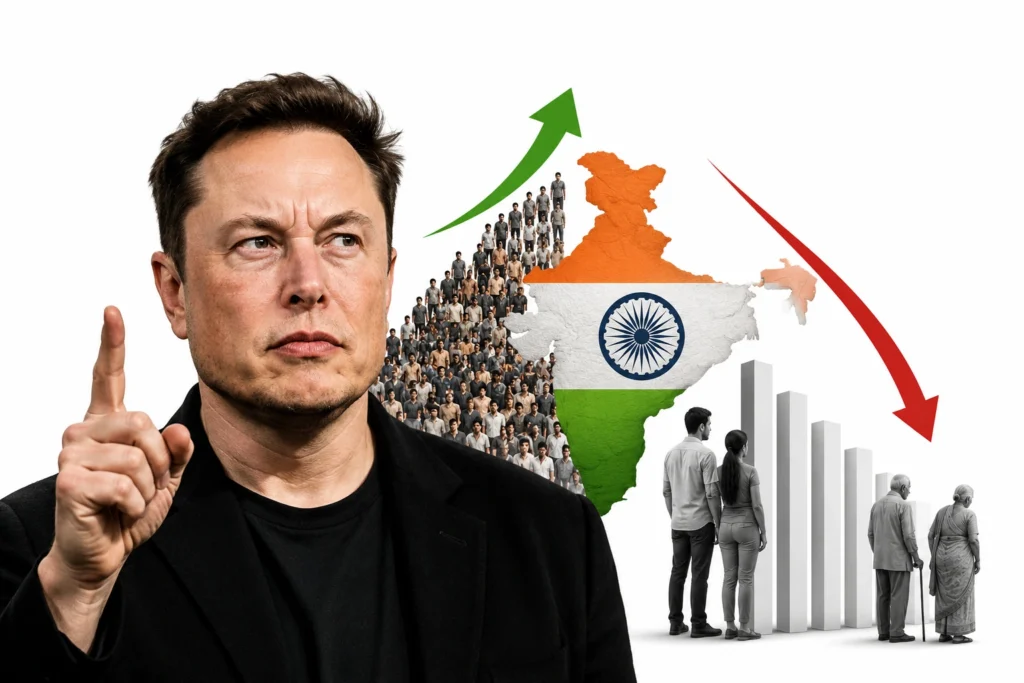
Elon Musk recently drew global attention to a significant demographic shift in India according to a recent social media post, tech billionaire (https://www.youtube.com/live/b5rT2qhXKjY). Responding to data showing the country’s Total Fertility Rate (TFR) dropping to 1.9 children per woman, Musk stated, “India’s birth rate has fallen below replacement. Among those most educated, India’s birth rate fell below replacement many years ago.” This observation, shared amid broader concerns about global population trends, has sparked intense debate about India’s future as one of the world’s most populous nations.
The replacement fertility level is generally considered to be 2.1 children per woman, the rate at which a population can sustain itself over generations without relying on immigration. According to the 2024 Sample Registration System (SRS) report, India’s TFR has declined from around 2.3 a decade ago to 1.9, with most states now below this threshold. Delhi recorded the lowest at 1.2, even lower than some developed European countries like Finland. Only a handful of states, Bihar, Uttar Pradesh, Madhya Pradesh, Rajasthan, Chhattisgarh, and Jharkhand, remain above replacement level.
This decline marks a historic turning point. For decades, India grappled with rapid population growth, implementing policies like family planning drives to curb explosive increases. Now, the narrative is flipping. Urbanization, rising education levels (especially among women), higher costs of living, delayed marriages, and career priorities are driving smaller family sizes. In metropolitan areas, dual-income households face sky-high housing, education, and healthcare expenses, making additional children a heavy financial burden. Cultural shifts toward nuclear families and greater female workforce participation further contribute to this trend.
Musk’s comments align with his long-standing warnings about collapsing birth rates worldwide. He has repeatedly described population collapse as a greater existential risk than many environmental concerns, arguing that a shrinking, aging population undermines innovation, economic vitality, and societal stability. In India’s context, this raises critical questions about the sustainability of its much-vaunted “demographic dividend”, the economic advantage derived from a large working-age population relative to dependents. India’s young population has been a key driver of growth, supplying a vast labor force for industries, IT services, and manufacturing.
A youthful demographic has fueled consumption, entrepreneurship, and GDP expansion. However, if fertility rates continue to fall, the country could face an aging population sooner than anticipated. Projections suggest that by the 2040s or 2050s, the proportion of elderly citizens could rise sharply, straining pension systems, healthcare infrastructure, and social security nets that are already underdeveloped compared to countries like Japan or South Korea, which grappled with similar “silver tsunamis.” Labor shortages may emerge in key sectors, potentially slowing economic momentum.
A smaller workforce could lead to higher dependency ratios, where fewer workers support more retirees. This might pressure wages upward in the short term but challenge industries reliant on cheap labor. Moreover, reduced domestic consumption from a contracting population could impact markets that businesses, including global players, have eyed eagerly. Experts debate the implications. On one hand, lower fertility offers opportunities: reduced pressure on resources like water, arable land, and energy; better per capita infrastructure investment; and potential for higher quality of life with improved education and health outcomes. Environmentalists highlight benefits amid climate challenges, as a stabilized or slightly declining population eases strain on ecosystems.
Many Indians in comments and discussions echo this, noting that with widespread unemployment, pollution, and resource scarcity, fewer people could mean a more sustainable and livable future. On the other hand, policymakers worry about losing the demographic edge before India fully capitalizes on it. The government has shifted focus in some high-fertility states through programs like family planning and women’s empowerment, but a uniform national strategy is complex given regional disparities. Encouraging balanced growth—through better childcare support, affordable housing, parental leave policies, and incentives for young families, could help stabilize rates without coercive measures.
Musk’s intervention underscores a global phenomenon. From East Asia to Europe, nations face sub-replacement fertility. Solutions vary: some countries offer financial incentives (e.g., child allowances in Scandinavia or Hungary), immigration policies, or technological adaptations like automation to offset labor gaps. For India, leveraging technology, skilling the workforce, and boosting productivity will be crucial. The video from Sanskriti IAS delves into these nuances, analyzing Musk’s statement alongside data on causes and consequences.
It questions whether India’s young population advantage will disappear and what proactive steps—policy, societal, and economic, are needed to navigate this transition. Ultimately, India’s demographic future is not predetermined. While declining fertility signals progress in human development, it demands foresight. Investing in education, healthcare, and inclusive growth can turn potential challenges into strengths. As Musk highlights, the world is watching. For India, balancing population dynamics with sustainable development will define its trajectory in the 21st century.