




ARABIAN TIMES NEWS NETWORK
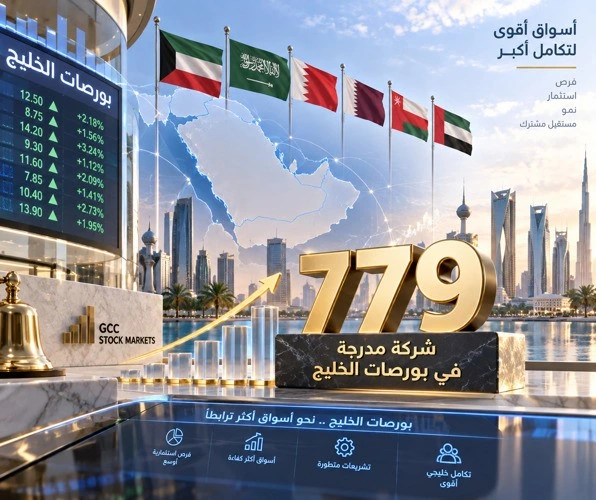
Kuwait ranks among just four Gulf markets where every listed company is fully available for trading by nationals from other Gulf Cooperation Council (GCC) states. This complete accessibility underscores the country’s relatively open equity market and its contribution to deeper regional investment integration. According to a report by the Statistical Center of the Gulf Cooperation Council, the wider Gulf capital-market landscape comprised 779 listed companies at the end of 2025.
Of these, 756 companies, about 97 percent of the total, had shares open to trading by GCC nationals. Kuwait, Bahrain, Muscat and Qatar were the four markets that achieved 100 percent availability, setting them apart as the most accessible equity venues for cross-border Gulf investors. Gulf stock markets recorded robust trading activity throughout 2025. Approximately 401.7 billion shares changed hands, generating a combined value of about $618 billion.
This marked a 19.5 percent increase from the previous year and reflected sustained investor interest across the region. Despite the rise in trading value, overall GCC stock-market capitalisation stood at roughly $3.9 trillion, a decline of 6.2 percent from 2024. The composite Gulf market index also slipped 3.8 percent, closing the year at around 165.2 points. For Kuwait, the full accessibility of its listed companies to GCC investors strengthens the market’s regional standing and encourages greater cross-border participation.
It complements broader efforts to deepen Gulf capital-market integration and improve investment flows among member states. By removing barriers for regional nationals, Kuwait positions itself as a more attractive destination for Gulf capital seeking diversified exposure within a familiar regulatory and economic environment. Throughout 2025, GCC markets continued to advance regulatory and structural reforms. These included updates to capital-market and investment-fund regulations, listing and offering rules, corporate governance standards and trading practices.
Market-making mechanisms were expanded, digital financial services were enhanced, and regulators intensified risk-based supervision while modernising financial-market infrastructure and capital-adequacy frameworks. Sustainability reporting gained greater prominence, and authorities worked to enable electronic securities issuance and raise the overall efficiency of market operations. A notable regional milestone was the entry into force of the Inter-GCC Registration Regulation for Investment Funds.
This created the first unified regulatory framework for a financial product across GCC markets, simplifying cross-border fund distribution and compliance. Gulf authorities are also advancing initiatives to facilitate the listing and trading of bonds and sukuk, encourage dual listings, strengthen electronic links between stock exchanges, and introduce unified investor identification numbers for GCC citizens. These steps, reported by Al-Anba, aim to make Gulf capital markets more interconnected and easier to access.
Taken together, the developments of 2025 point to a gradual but deliberate move toward greater cohesion in the region’s financial markets. Kuwait’s achievement of 100 percent trading access for GCC nationals places it firmly among the more integrated equity markets in the Gulf. As reforms continue and infrastructure improves, the combination of openness, liquidity and regulatory progress is expected to support stronger regional capital flows and a more resilient Gulf investment landscape.