
BY MOHAMMAD TARIQUE SALEEM
Lucknow, 26 September 2026 – Leading specialists in craniofacial and plastic surgery gathered at Hotel Clarks Awadh for the 5th Indo-Gulf Craniofacial Society Meeting and Hands-on Workshop on Craniofacial Remodeling and Fixation. The one-day programme brought together leading experts in craniofacial and plastic surgery, focusing on strengthening practical skills in cranial vault surgery through a powerful blend of scientific discourse and intensive hands-on training. Craniofacial surgery deals with complex three-dimensional anatomical structures and highly technical procedures that demand precision, spatial awareness, and refined technical expertise.
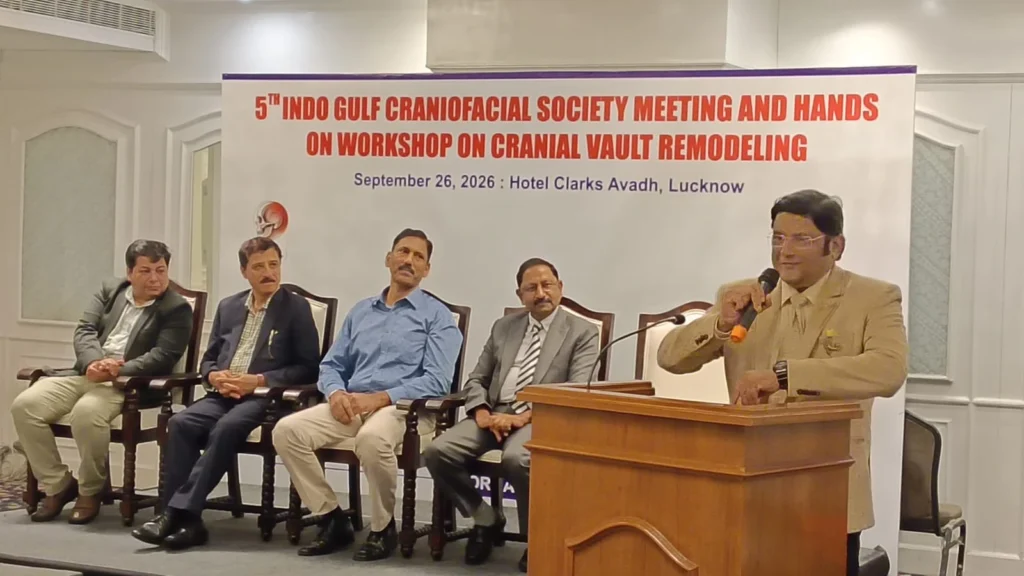
Traditional methods of learning, primarily observation in the operating theatre, often fall short in preparing young surgeons for the challenges of real-world cases. Recognising this gap, the workshop’s primary objective was to bridge the divide between theoretical knowledge and practical proficiency through structured, simulation-based training. The scientific session commenced with a warm welcome address by Dr. Rajeev Agrawal, Professor and Head of the Department of Plastic Surgery at SGPGIMS, Lucknow. Setting the tone for the day, Dr. Agrawal delivered an insightful lecture on the “Concept of Hands-on Training in Craniofacial Surgery.” He emphasised that complex procedures such as osteotomy planning, bone cutting, shaping, and reconstruction cannot be mastered by observation alone.
Simulation training on dry skulls, synthetic models, and animal skulls, he noted, allows surgeons to practise in a controlled, risk-free environment, systematically closing the gap between classroom learning and the high-stakes operating theatre. Building on this foundation, Dr. Anil Murarka presented a detailed lecture on the “Surgical Anatomy of the Cranium.” He underscored the critical importance of precise knowledge of cranial bones, sutures, blood vessels, and their relationship with the dura and brain. Accurate anatomical understanding, he stressed, is indispensable for planning safe cranial osteotomies and protecting vital neurovascular structures from injury.
Dr. Atul Parashar followed with a comprehensive talk on the “Basic Principles of Craniofacial Surgery.” He discussed the core principles governing the assessment and correction of craniofacial deformities, including abnormal skull growth patterns and three-dimensional bony architecture. Systematic surgical planning, optimal timing of intervention, and a multidisciplinary approach, he asserted, form the bedrock of successful complex craniofacial procedures.
Precise planning of osteotomy locations and extents is essential to achieve the desired skull shape while prioritising safety. Thoughtful repositioning of bone segments, he explained, not only restores function but also enhances aesthetic contour. Dr. Rajeev Agrawal returned to the podium to elaborate on the “Surgical Technique of Cranial Vault Osteotomy.” He meticulously outlined the key operative principles and step-by-step technique, stressing careful surgical exposure, controlled bone cutting, protection of the dura, and systematic mobilisation of cranial bones. Precise reshaping and accurate repositioning of bone segments, he reiterated, are fundamental to achieving stable and aesthetically satisfactory reconstruction.
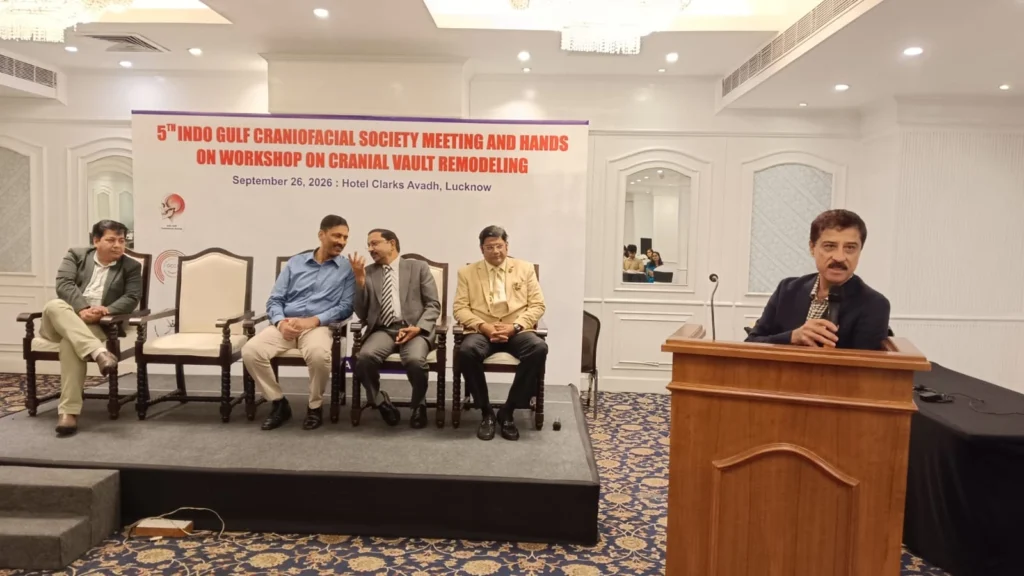
Dr. Anil Murarka concluded the lecture series with a focused discussion on “Fixation Techniques in Craniofacial Surgery.” He explained the principles of stabilising remodelled cranial bones and the need to select fixation methods according to specific clinical scenarios. Proper fixation, he noted, maintains the desired skull shape during the critical bone-healing phase. Special attention was given to paediatric cases, where surgeons must carefully balance adequate stability with the ongoing growth requirements of a developing skull. The scientific session culminated in a lively panel discussion on challenging craniofacial cases, with active participation from all faculty members, offering participants valuable insights into real-world decision-making.
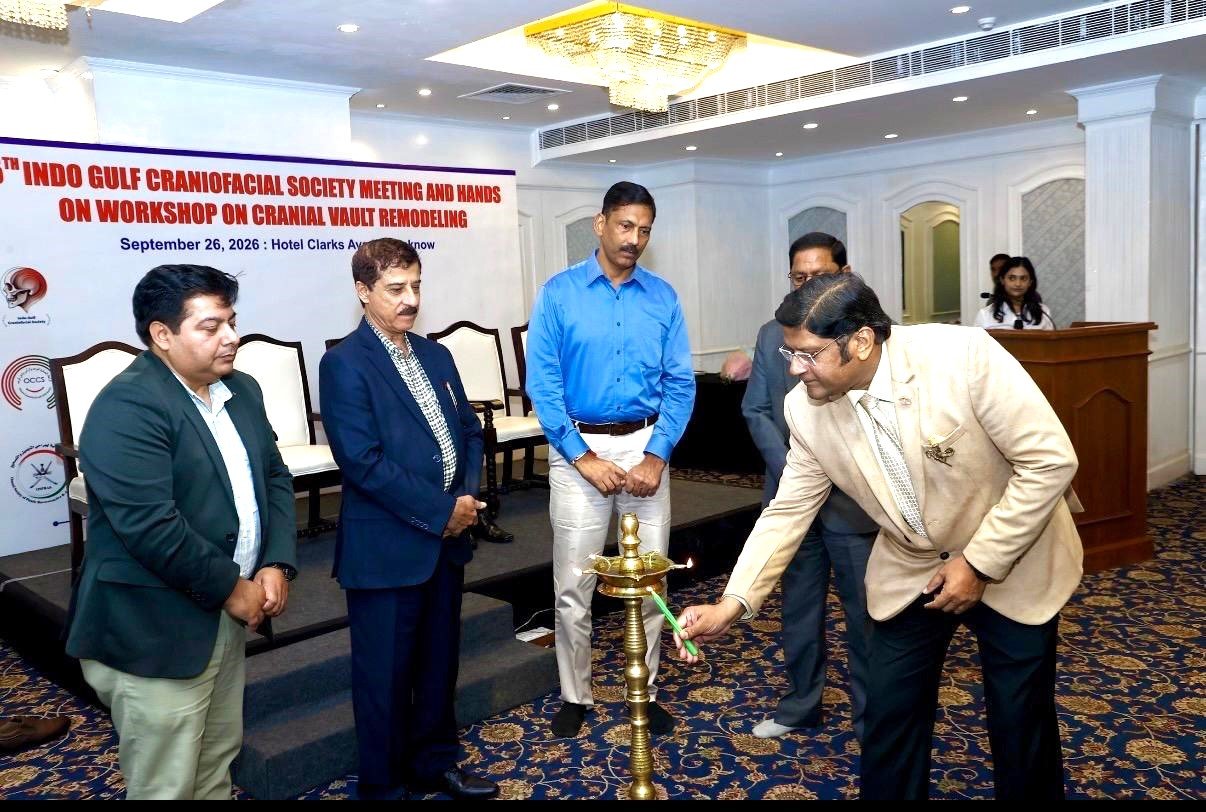
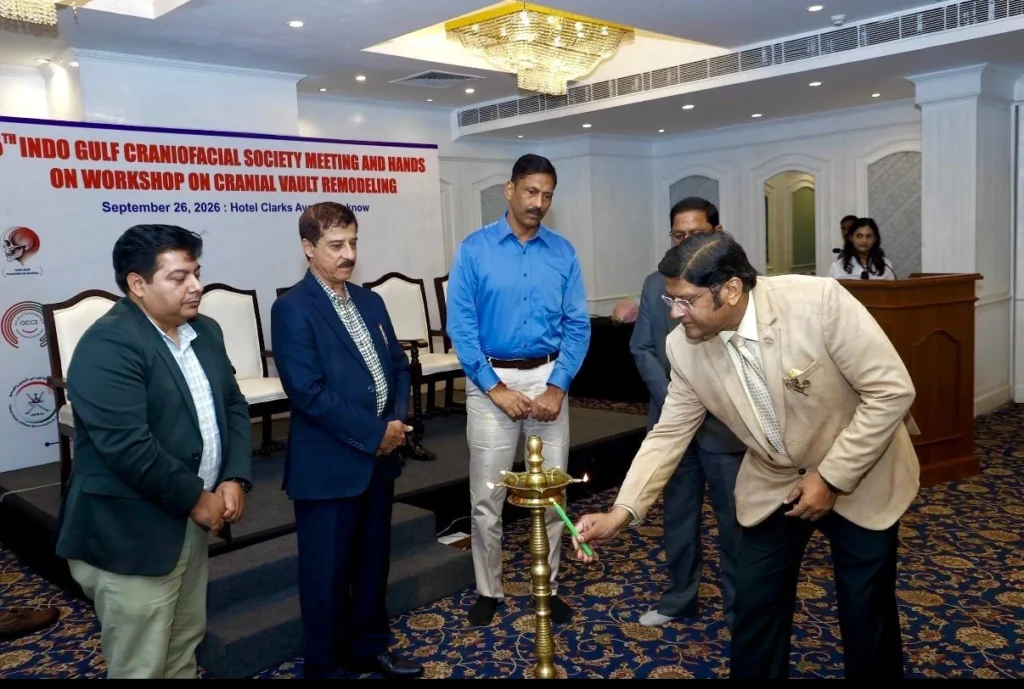
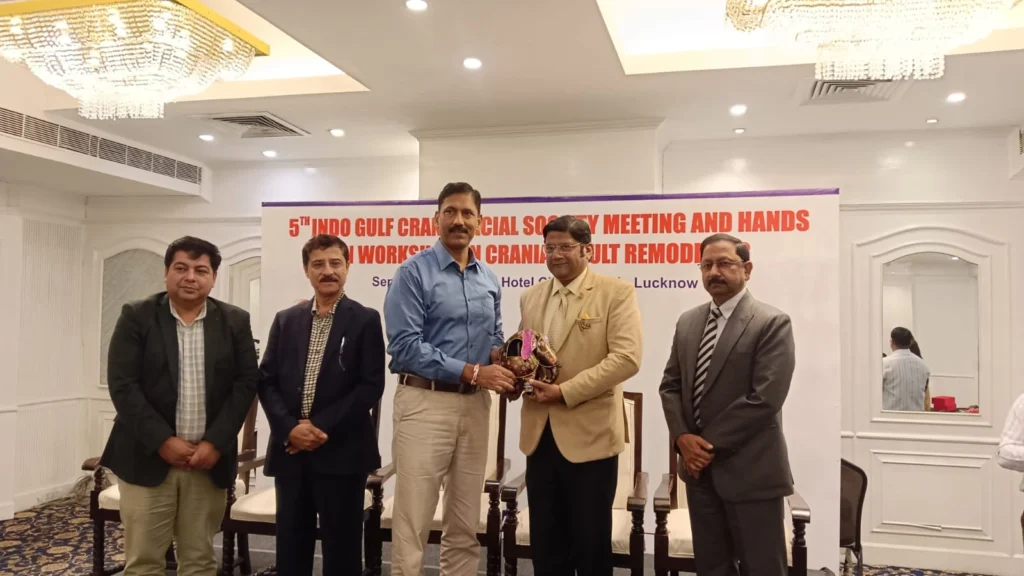
Chief Guest Ashutosh Pandey, a senior Uttar Pradesh police officer, drew parallels between evidence-based medicine, surgical training and evidence-based policing. He spoke about India’s historical contributions to surgical knowledge, referring to Sushruta and traditional techniques, while emphasising the importance of combining knowledge, material and modern technology. He stressed that successful craniofacial care extends beyond surgery to healing, rehabilitation and restoring patients’ quality of life. The formal inauguration of the workshop was performed by Shri Ashutosh Pandey, IPS, Director General of Telecom. His presence lent significant prestige to the event and marked the transition from theoretical learning to practical application.
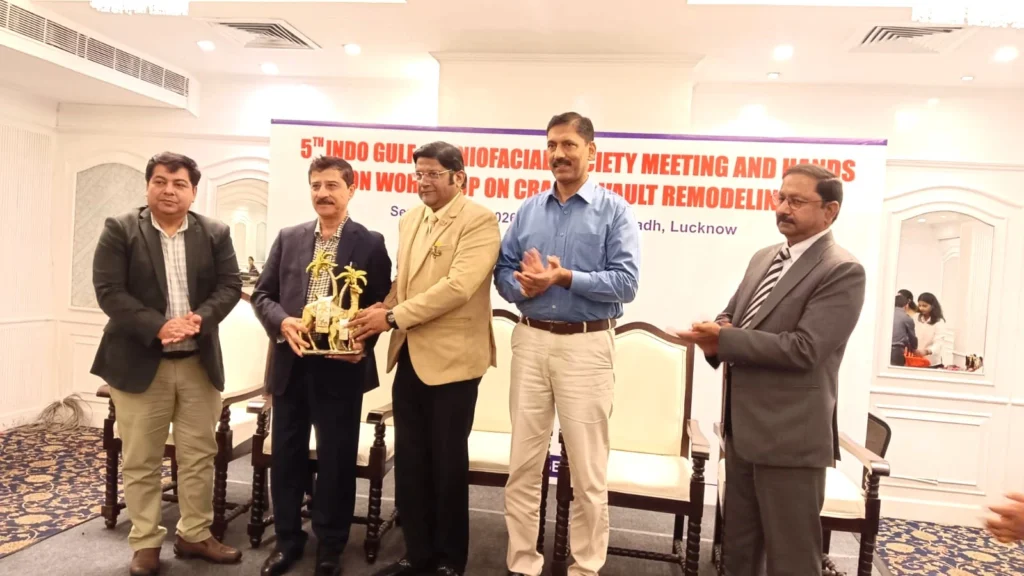
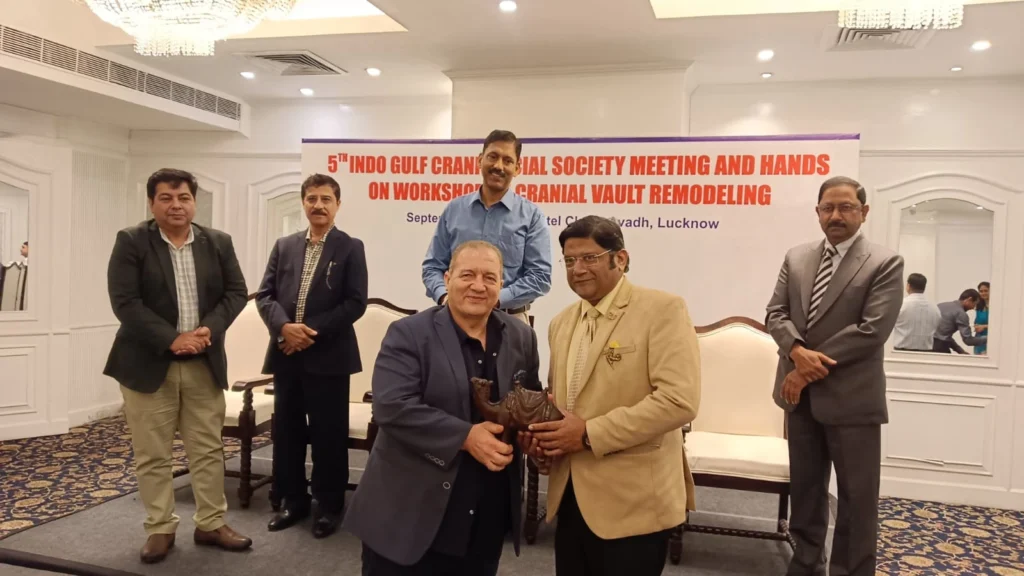
Dr. Taimur Al Bulushi of Oman shared his journey in establishing craniofacial surgery services in the Sultanate. He recalled attending an early workshop organised by Dr. Agrawal and said the collaboration helped shape his professional development. He explained that Oman had invested in developing local expertise to reduce the need for patients to travel abroad for complex treatment. Dr. Al Bulushi said the Indo-Gulf Craniofacial Society, established with Indian and Middle Eastern participation, aims to promote education, collaboration and training across the region. He described India as having significant potential to emerge as an international training centre because of its large patient population and clinical experience.
The afternoon session was entirely devoted to intensive hands-on training. Participants were divided into four groups and rotated through dedicated training stations, each supervised by expert faculty. Under close guidance, surgeons practised planning cranial bone cuts, performing osteotomies, mobilising and remodeling bone segments, and applying various fixation techniques. This model-based training provided invaluable experience in instrument handling, bone manipulation, and three-dimensional reconstruction, skills that are difficult to acquire solely in the operating room.
The programme concluded with a closing address and valedictory ceremony. Reflecting on the day’s achievements, organisers noted that the workshop had successfully created a vital platform for advancing structured training and practical surgical excellence in craniofacial surgery. By combining expert lectures with immersive hands-on practice, the 5th Indo-Gulf Craniofacial Society Meeting has set a new benchmark for surgical education in the region. Such initiatives not only sharpen the skills of the next generation of craniofacial surgeons but ultimately translate into safer procedures and better outcomes for patients living with complex craniofacial conditions.