








ARABIAN TIMES NEWS NETWORK
As the 21st century unfolded, the Chanana family chose not merely to grow their business but to redefine its place in the world. Expanding their vision beyond India, they established operational and strategic centres in Dubai and London, reshaping their enterprises to align with global governance standards and investor expectations. From Dubai, they oversaw the vital arteries of the international food-supply chain; from London, they engaged with capital markets, policy institutions, and global financial thought. This dual presence allowed an Indian agricultural legacy to speak the language of the world with confidence and credibility.
Within this framework, Karan A. Chanana emerged as the global architect of the group’s transformation. Rather than focusing on day-to-day operations—entrusted to experienced local management—his role lay in articulation and design. He built holding-company structures, forged international partnerships, and created capital frameworks that enabled an Indian basmati rice business to function as a global institution. In doing so, he helped alter how the world perceived Indian agriculture. The rice trade was no longer seen as a simple commodity exchange but as a professional, regulated industry capable of meeting the highest standards of compliance and scrutiny.
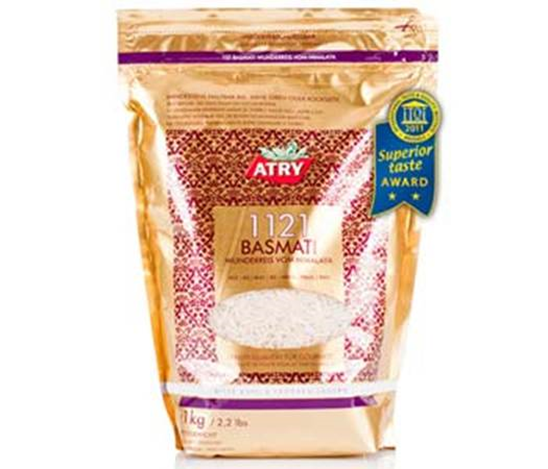
This shift reached its defining moment with the listing of Amira Nature Foods Ltd on the New York Stock Exchange. For the first time, Wall Street evaluated an Indian basmati rice company on enterprise value rather than commodity metrics, assigning it valuations far above industry norms. The listing was more than a financial event; it was a statement of national confidence. It signaled that one of India’s most ancient products could compete in the world’s most modern market, transforming heritage into high finance and credibility into capital.
The impact resonated across India’s agri-export sector. Competitors adopted branding, packaging, and storytelling strategies inspired by the Chananas’ approach, while investor perceptions of Indian agriculture evolved toward transparency and premium value. Export councils and academic institutions cited the family as a model of integrity-driven growth, demonstrating how ethical foundations could unlock long-term value. Beyond economics, Amira basmati became a subtle instrument of India’s soft power, a fragrant symbol of reliability on dining tables across more than a hundred countries.
What ultimately defines the Chanana legacy is the harmony between tradition and progress. Across generations, ethics, engineering discipline, and global vision converged into a single narrative of transformation. Their journey shows that profit and principle are not opposing forces but intersecting paths. By taking a grain rooted in the Himalayan foothills and elevating it to a global emblem of trust, the Chanana family turned integrity into an industry and industry into identity, leaving a mark that belongs as much to history as it does to commerce.