



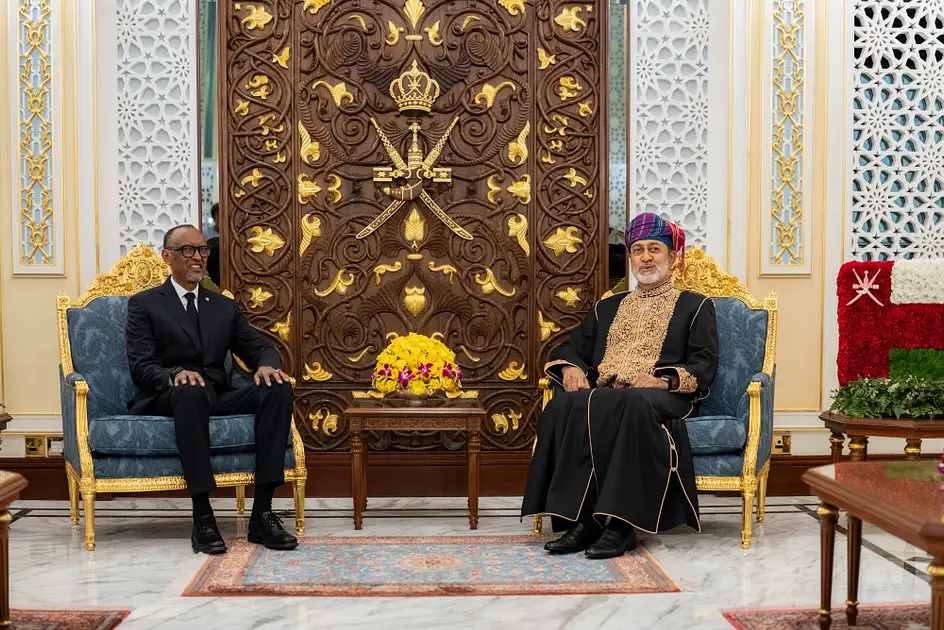
COMPILED BY SHAZIA SALEEM
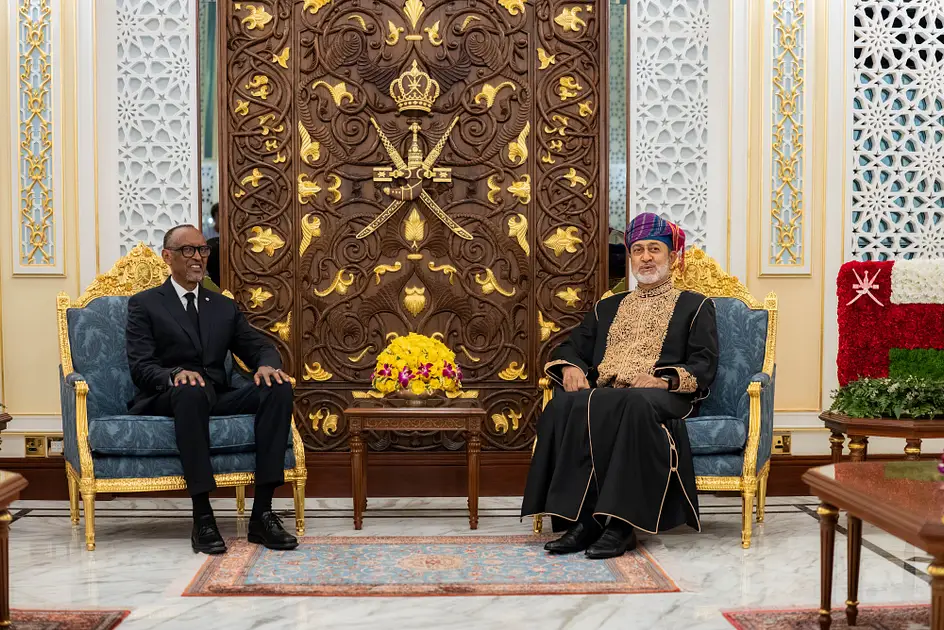
Muscat – In a gesture underscoring the warmth of ties between the Sultanate of Oman and the Republic of Rwanda, His Majesty Sultan Haitham bin Tarik hosted an official dinner banquet at Al Hosn Palace on September 7th evening in honour of President Paul Kagame and the delegation accompanying him on his official visit to Oman. The state dinner, held within the historic walls of Al Hosn Palace overlooking Muscat’s old harbour, formed a central part of the ceremonial programme arranged for the Rwandan head of state during his visit, one that reflects the growing diplomatic engagement between the two nations in recent years.
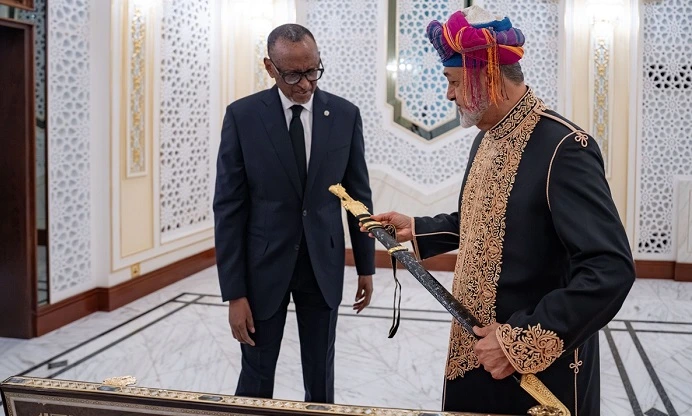
Ahead of the banquet, His Majesty Sultan Haitham bin Tarik and President Kagame took part in an exchange of commemorative gifts, a customary and symbolically rich gesture in state visits that speaks to mutual respect and the strengthening of bilateral relations. Such exchanges, though brief, often carry considerable diplomatic weight, serving as tangible expressions of goodwill between nations and their leaders. Officials from both sides noted that the gesture captured the spirit of the visit: an affirmation of friendship and a shared commitment to deepening cooperation between Oman and Rwanda across multiple fronts.
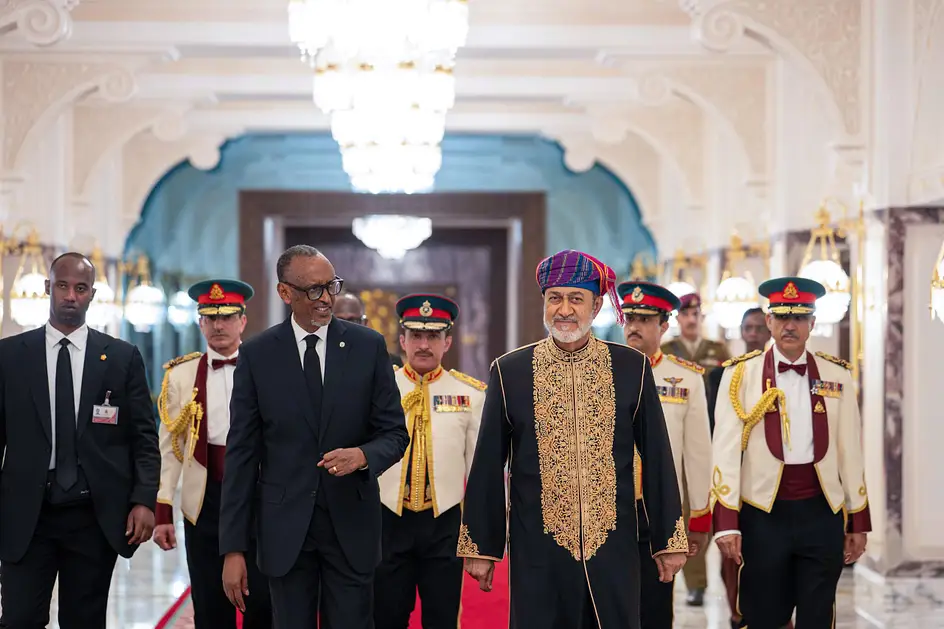
The dinner itself was attended by a distinguished gathering that reflected the significance Oman placed on the occasion. Among those present were a number of Their Highnesses and members of the Omani Royal Family, underscoring the visit’s importance at the highest levels of the state. Their Excellencies the Ministers and Advisors of the Sultanate also attended, alongside senior military leaders, reflecting the breadth of government representation at the event. A number of Their Excellencies the Undersecretaries were also present, rounding out an audience that spanned the political, military, and administrative leadership of the country.
The visit by President Kagame comes at a time when Gulf states, including Oman, have been steadily expanding their diplomatic and economic engagement with African nations. For Rwanda, under President Kagame’s leadership, the visit offers an opportunity to explore avenues of cooperation with Oman in areas that could include trade, investment, and broader economic partnership, building on the diplomatic foundation being reinforced through this visit. Al Hosn Palace, one of the oldest structures in Muscat and a site steeped in the history of Omani governance, has long served as a venue for hosting visiting dignitaries and marking significant moments in the Sultanate’s foreign relations.
Its selection as the setting for Monday’s dinner lent the occasion an added layer of historical and ceremonial significance, situating the visit within Oman’s long tradition of statecraft and hospitality. While the specifics of bilateral discussions between the two leaders were not detailed in connection with the dinner itself, the tone of the evening, marked by the exchange of gifts and the wide-ranging attendance of Omani officials, pointed to a visit oriented toward reinforcing existing ties and laying groundwork for expanded cooperation in the years ahead. As the official visit continues, further engagements between the two delegations are expected to address the practical dimensions of the Oman-Rwanda relationship, building on the goodwill established during Monday’s state dinner at Al Hosn Palace.