




BY MOHAMMAD TARIQUE SALEEM
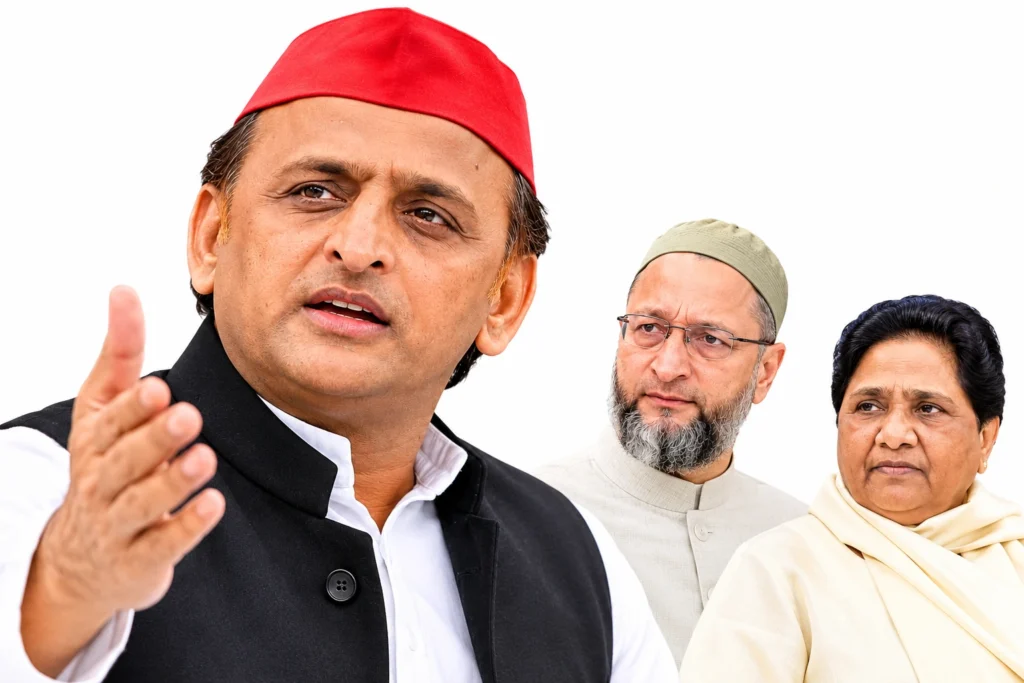
As Uttar Pradesh moves towards the crucial 2027 Assembly elections, the political battle is gradually taking shape around the Samajwadi Party’s PDA (Pichhda, Dalit, Alpsankhyak) mission, which has emerged as the central political strategy of party president Akhilesh Yadav. The BJP, it is widely argued within opposition circles, is keen to ensure that Akhilesh Yadav does not return to power in 2027. Against this backdrop, the political activities of AIMIM and BSP have raised questions about whether efforts are being made to weaken the PDA coalition by creating divisions among its potential supporters.
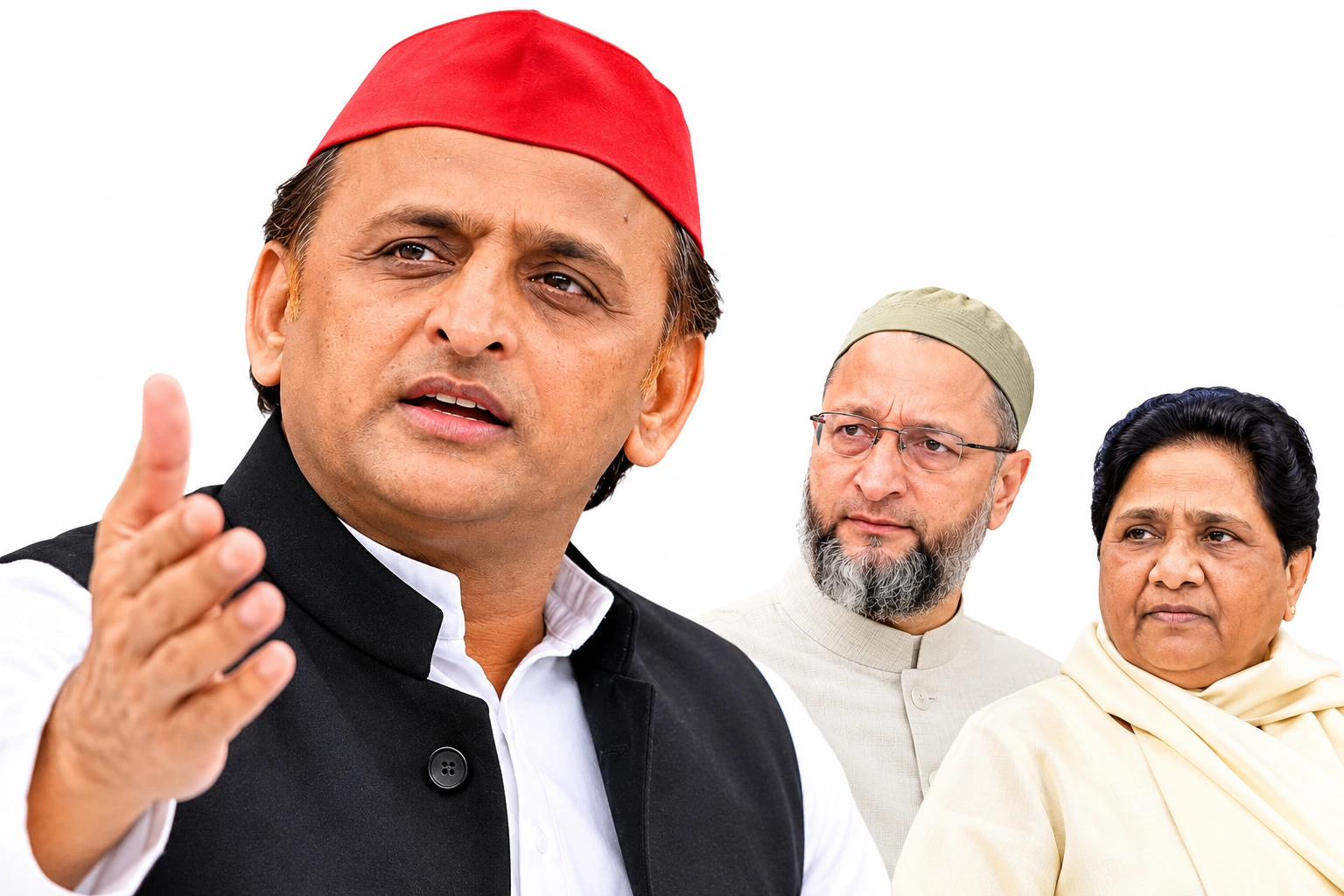
Under Akhilesh Yadav’s leadership, PDA has developed into a broader political vision based on social justice, political representation and the participation of historically marginalised communities. It seeks to unite backward classes, Dalits and minorities under a common political platform. However, the emergence of competing political forces, particularly Asaduddin Owaisi’s All India Majlis-e-Ittehadul Muslimeen (AIMIM) and Mayawati’s Bahujan Samaj Party (BSP), has introduced new challenges into Uttar Pradesh’s changing political landscape.
Both parties are seeking to expand their political influence and strengthen their independent electoral constituencies. While AIMIM is attempting to strengthen its presence among Muslim voters, BSP continues to seek consolidation of its traditional Dalit support base while reaching out to other marginalised sections. Their political ambitions could potentially weaken the broader social coalition that Akhilesh Yadav is attempting to build through the PDA framework.
A growing political perception among sections of the opposition is that Asaduddin Owaisi and Mayawati could emerge as alternative political forces, making inroads into the Muslim and Dalit vote banks respectively. There are questions about whether their political activities could ultimately benefit the BJP by dividing votes that might otherwise consolidate behind the Samajwadi Party. The allegation that these developments could serve a larger political strategy to prevent Akhilesh Yadav from returning to power in 2027 deserves serious political scrutiny.
Whether this is part of a deliberate political design or simply the result of independent electoral ambitions remains a matter of political debate. Nevertheless, the increasing political activities of AIMIM and BSP raise an important question: Are these competing political forces likely to undermine the unity that Akhilesh Yadav is seeking to establish through PDA?
The PDA concept is significant because it attempts to bring together different sections of society under a common political and social framework. Its strength lies in the recognition that backward communities, Dalits and minorities share several concerns relating to political representation, economic opportunities, education, employment and social justice. By bringing these communities together, Akhilesh Yadav is attempting to create a broader political alternative in Uttar Pradesh.
However, the challenge is not simply to bring different communities together but also to maintain their political confidence. The Samajwadi Party must ensure that Muslims, Dalits and backward communities receive meaningful representation within the organisation and that their concerns are reflected in its political priorities. A coalition cannot survive on slogans alone; it requires trust, participation and credible leadership.
The increasing political activities of AIMIM and BSP could make this task more difficult. While every political party has the democratic right to contest elections and expand its influence, voters must also consider the wider political consequences of electoral fragmentation. If opposition votes are divided among multiple parties, the BJP could gain an electoral advantage even without securing additional support.
This is particularly important in constituencies where the electoral outcome may depend on relatively narrow vote margins. The division of Muslim, Dalit and backward-class votes could directly affect the prospects of opposition candidates. Therefore, the 2027 election will not only test the popularity of individual parties but also the ability of opposition forces to understand the larger political implications of their electoral strategies.
For Akhilesh Yadav, the responsibility is considerable. He must strengthen the PDA mission through effective organisation, credible candidates, wider grassroots participation and clear commitments on education, employment, economic development and constitutional rights. The Samajwadi Party must also demonstrate that PDA is not merely an election-time slogan but a sustainable political movement representing the aspirations of diverse sections of society.
At the same time, AIMIM and BSP must explain how their respective political strategies will contribute to the larger struggle for social justice and democratic representation in Uttar Pradesh. Merely creating separate political identities is not enough; voters will ultimately judge parties by their policies, performance and ability to bring meaningful change.
The 2027 Assembly election will be a decisive test of Akhilesh Yadav’s political leadership and the strength of his PDA mission.
Although AIMIM and BSP may attempt to expand their influence among sections of the PDA support base, this alone does not mean that Akhilesh Yadav’s political project will fail. If the Samajwadi Party maintains public confidence, strengthens its organisational structure and ensures genuine representation for all sections, attempts to divide its potential support base may not succeed.
Ultimately, the strength of PDA will depend on the unity, political awareness and collective aspirations of backward classes, Dalits and minorities. The challenge before Akhilesh Yadav is to transform this social coalition into a strong and united political force capable of shaping the future of Uttar Pradesh.



