




BY MOHAMMAD TARIQUE SALEEM
LUCKNOW: Samajwadi Party national president and former Uttar Pradesh Chief Minister Akhilesh Yadav used the 137th birth anniversary of renowned socialist thinker and freedom fighter Acharya Narendra Dev to renew his ideological attack on the BJP, accusing it of promoting social divisions, weakening public institutions and failing to address the pressing concerns of ordinary people.
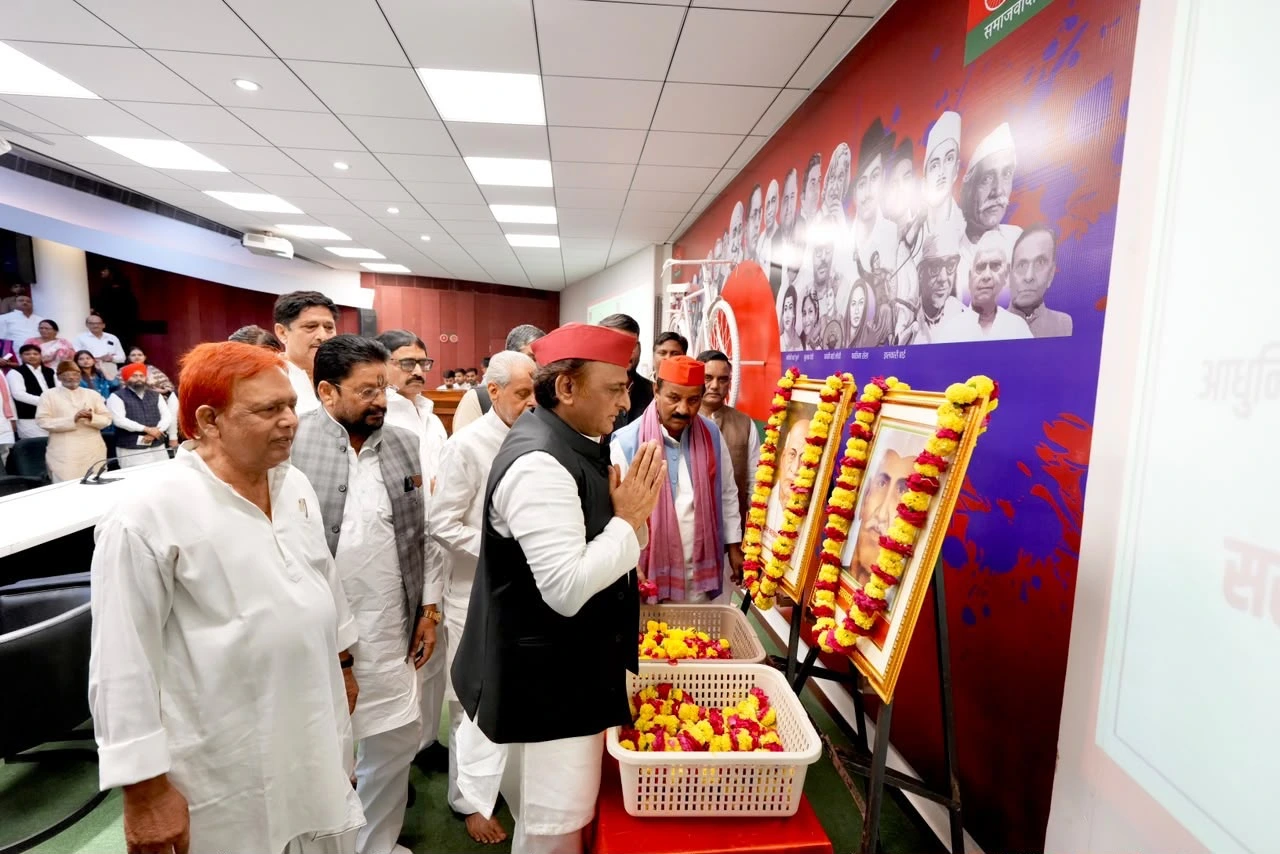
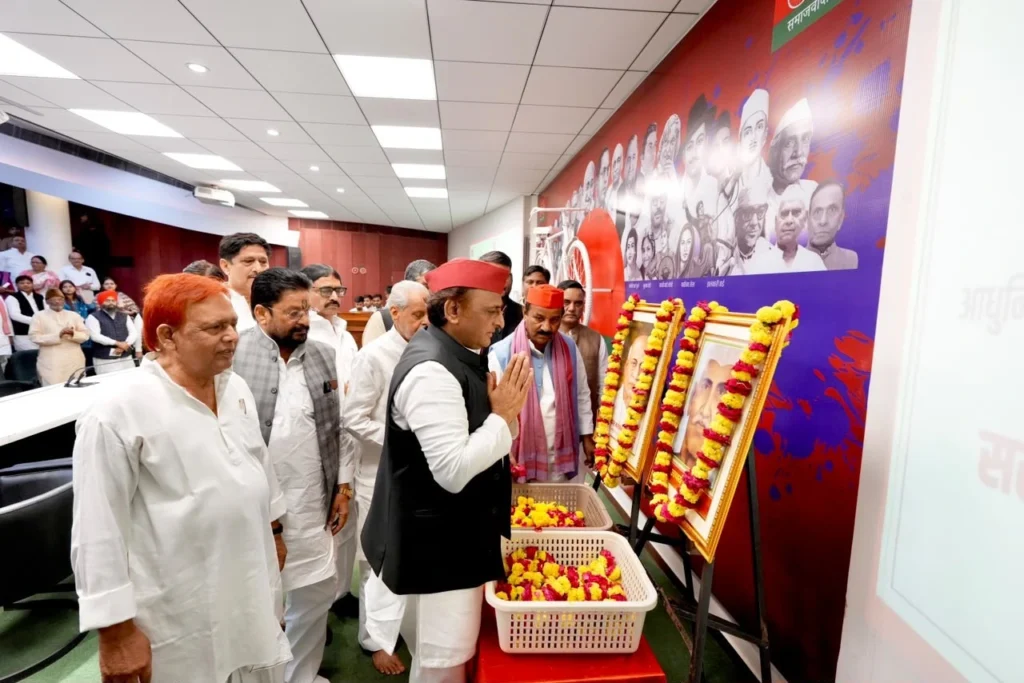
Paying floral tributes at Acharya Narendra Dev’s memorial on the banks of the Gomti in Lucknow, Akhilesh also remembered Bharat Ratna Sardar Vallabhbhai Patel, whose contribution to national integration, he said, remained an important lesson for contemporary politics. He subsequently paid homage to both leaders at the Samajwadi Party headquarters, where the occasion was observed with party leaders and workers.
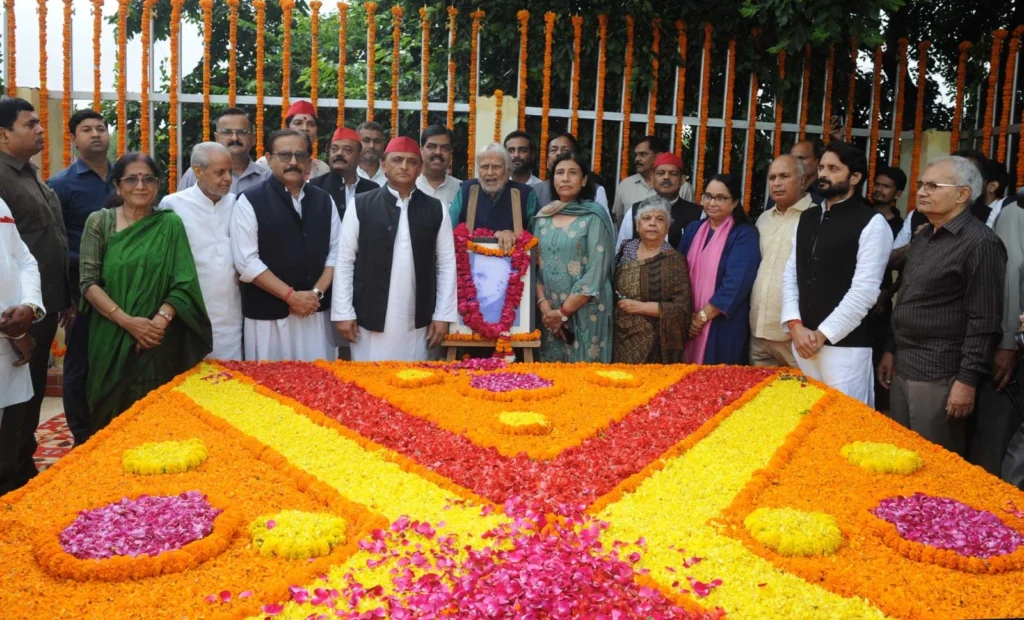
Describing Acharya Narendra Dev as an outstanding educationist, freedom fighter, scholar of Buddhist philosophy and pioneer of the socialist movement, Akhilesh said his commitment to peaceful social transformation continued to hold relevance. Acharya Narendra Dev believed that education and peaceful revolution were essential instruments for transforming society. Akhilesh said the Samajwadi Party was committed to carrying forward his ideals.
He also presented Sardar Patel as a leader whose political approach was rooted in public service, national unity and social welfare. Recalling Patel’s role in integrating princely states into independent India, Akhilesh described his approach as that of a ‘silent socialist’. He argued that both Acharya Narendra Dev and Sardar Patel represented values that should guide a democratic and inclusive society.
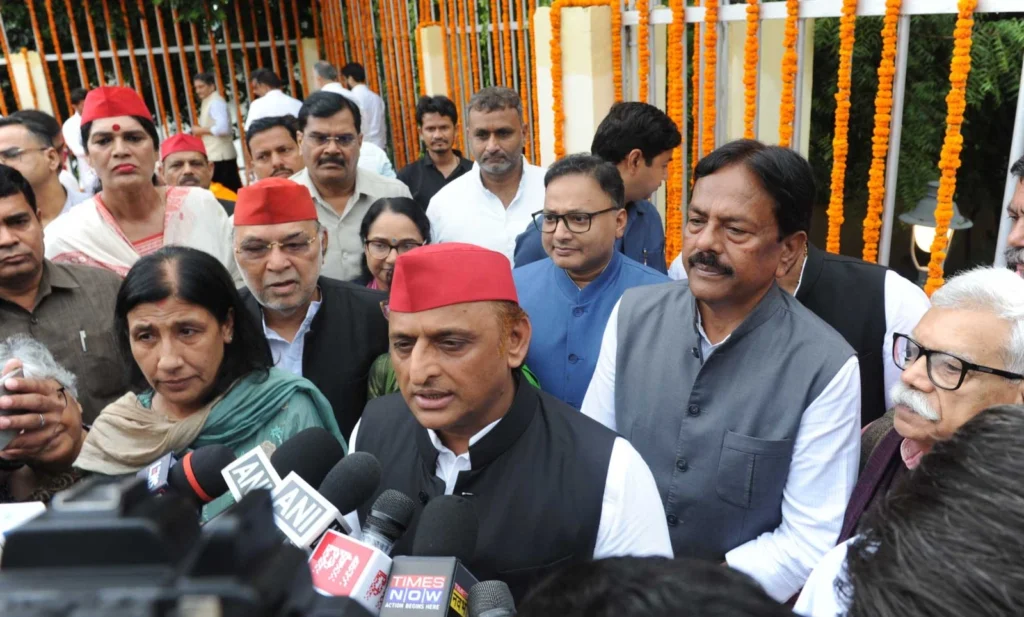
The SP chief, however, turned the occasion into a broader political indictment of the BJP, accusing it of exploiting social differences for electoral advantage. Calling the party a force of negative politics, he alleged that its approach was based on creating divisions rather than strengthening national unity.
In a pointed political remark, Akhilesh said, “Jo hota bhajpai, woh paida karta khai” (Those who belong to the BJP create divisions). He questioned the BJP’s claims of promoting unity while, according to him, its politics continued to encourage social and caste-based divisions. He maintained that national integration could not be achieved through rhetoric when social discrimination was allowed to flourish.
Economic distress and the government’s performance in Uttar Pradesh formed another major part of his criticism. Akhilesh alleged that inflation, unemployment and corruption had increased under the BJP government, while farmers continued to struggle for remunerative prices. He accused the government of making ambitious economic promises without delivering corresponding benefits to farmers, young people and ordinary households.
Education emerged as one of his strongest concerns. Alleging that approximately 26,000 government primary schools had been closed in Uttar Pradesh, he accused the BJP government of undermining public education. Referring to Acharya Narendra Dev’s lifelong association with education, he said closing schools represented a reversal of the principles that should guide a progressive society. He also expressed concern over reports of possible liquor outlets being opened in some closed school premises.
Akhilesh further alleged that government healthcare was being systematically weakened while private hospitals were expanding. Citing the growth of private hospitals in Gorakhpur and Agra, he questioned why public healthcare facilities were deteriorating and accused the government of failing to provide adequate medical services to ordinary citizens.
On law and order, he challenged Union Home Minister Amit Shah to examine the situation in Uttar Pradesh rather than limit political discussions to electoral issues. He raised concerns over custodial deaths, crimes against women, murders, cyber fraud, alleged discrimination against PDA communities and Dalits, and the treatment of Muslims. He also questioned the use of bulldozers against accused persons, alleged caste bias in the functioning of the Special Task Force and the weakening of the emergency police response system.
The Samajwadi Party leader asserted that the BJP’s governance had alienated several sections of society, including students, teachers, farmers, traders and unemployed youth. Referring to the party’s electoral prospects, he said people had made up their minds to remove the BJP from power in Uttar Pradesh and expressed confidence that the Samajwadi Party would defeat it through organised political mobilisation.
The anniversary observance also carried a clear message about the ideological direction of the Samajwadi Party. By invoking Acharya Narendra Dev’s socialist philosophy and Sardar Patel’s commitment to national integration, Akhilesh sought to position his party around education, equality, social harmony and public welfare.
The central political question emerging from his address was whether national unity could be sustained without social equality and whether development could be meaningful while public education, healthcare and employment remained under pressure. For Akhilesh, the answer lay in returning to the principles represented by these two historical figures.
The programme was attended by senior party leaders, including Rajendra Chaudhary, Shyam Lal Pal, Ram Achal Rajbhar, Ravidas Mehrotra and several other representatives and workers. Floral tributes were also offered at party offices across Uttar Pradesh, marking the birth anniversaries of Acharya Narendra Dev and Sardar Vallabhbhai Patel.



