



BY MOHAMMAD TARIQUE SALEEM
As Uttar Pradesh approaches the 2027 Assembly elections, parties of every shade are vigorously courting the state’s substantial Muslim electorate. Through carefully designed outreach programmes, symbolic gestures and calculated alliance strategies, the contest for this crucial support has intensified markedly. Yet both historical precedent and present realities indicate that these efforts are unlikely to alter the established pattern. The Muslim vote, which shifted decisively from the Congress after 1989, has remained firmly with the Samajwadi Party for more than three decades. That allegiance shows no sign of diminishing.
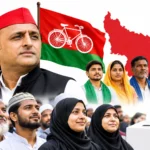
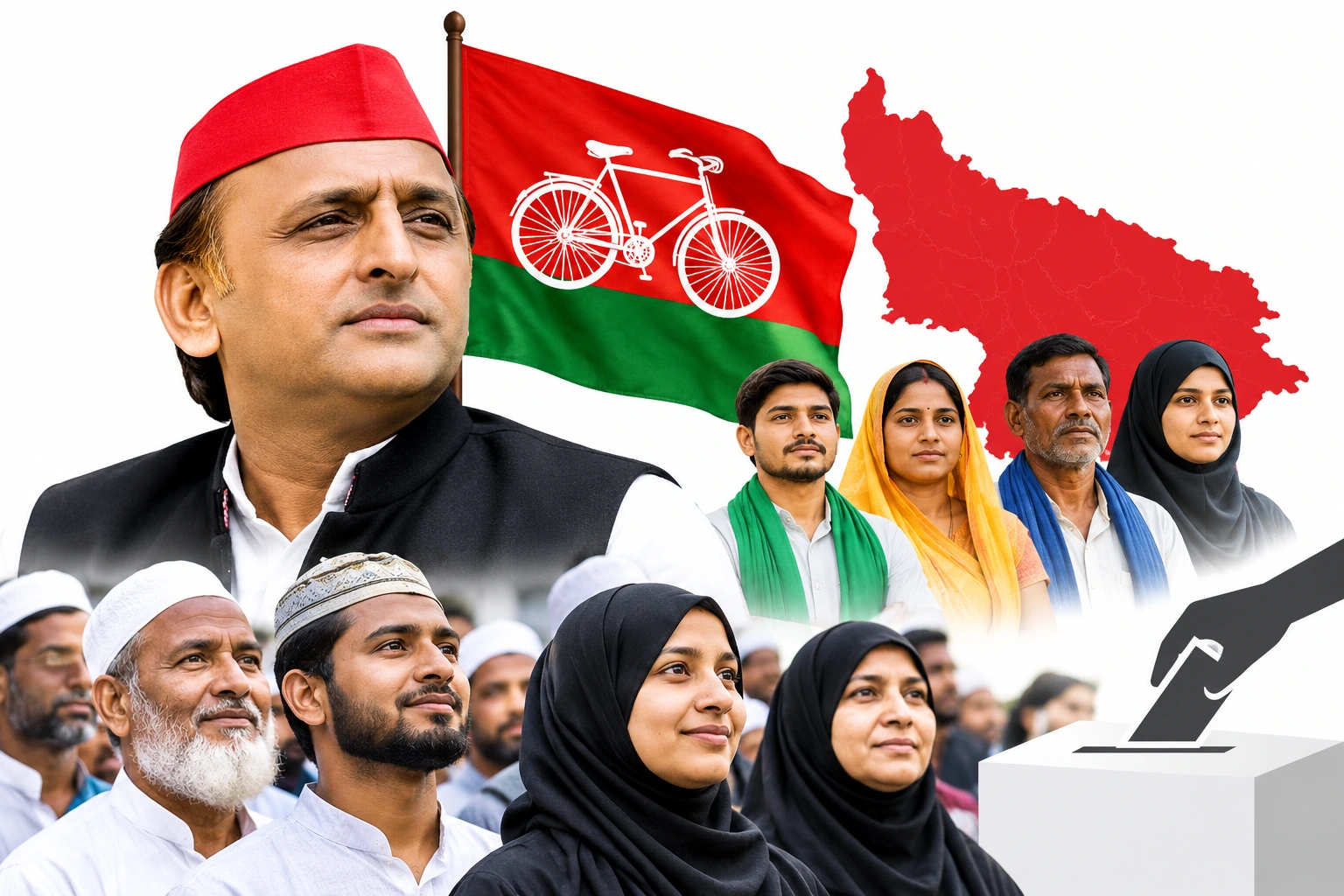
For generations of Muslim voters in Uttar Pradesh, the Samajwadi Party has become both the first and the last choice. The party’s consistent positioning as a secular alternative, its resistance to majoritarian politics, and its organisational presence in Muslim-dominated regions have created a bond that rivals find difficult to fracture. While other parties may temporarily attract attention through rhetoric or temporary alliances, the core Muslim electorate continues to view the Samajwadi Party as its most reliable political home.
Political analysts tracking the state’s electoral pulse are increasingly of the view that the Samajwadi Party’s return to power in 2027 with a thumping majority is no longer a distant possibility but a near certainty. The party’s ability to consolidate its traditional support base while expanding its social coalition has strengthened this assessment. At the heart of this resurgence lies Akhilesh Yadav’s carefully crafted PDA formula-Pichhda, Dalit and Alpsankhyak. This social engineering experiment is emerging as the trump card that could dramatically reshape the political landscape of Uttar Pradesh.
The PDA strategy goes beyond mere arithmetic. It seeks to unite Other Backward Classes, Dalits and minorities into a cohesive electoral force capable of challenging the dominant narrative of the past decade. By placing the concerns of these communities at the centre of its political messaging, the Samajwadi Party has managed to project itself as the natural vehicle for those who feel sidelined. For Muslim voters in particular, the inclusion of Alpsankhyak within this framework reinforces the party’s long-standing claim of being their primary political protector.
What makes the 2027 contest different is the growing confidence within the Samajwadi camp that the Muslim vote will not fragment significantly. Past experiments by other parties to dent this support have largely failed. The memory of the post-1989 realignment remains strong: once the Congress lost its hold over Muslim voters, the Samajwadi Party stepped into the vacuum and never really relinquished it. That historical continuity continues to shape voting behaviour even today.
As the election draws closer, the intensity of courtship will only increase. Parties will announce schemes, hold conventions and make tall promises. Yet the underlying political chemistry of Uttar Pradesh suggests that the Muslim vote bank will once again tilt decisively towards the Samajwadi Party. Combined with the broader appeal of the PDA coalition, this support is expected to provide Akhilesh Yadav the decisive edge needed to form the next government.
The elections in Uttar Pradesh are rarely decided by last-minute manoeuvres alone. They are shaped by long-term trust, organisational strength and social equations that have been carefully nurtured over years. On all these counts, the Samajwadi Party appears better placed than its rivals. If the current trends hold, 2027 may well mark the return of the party to power with a clear and emphatic mandate, powered in no small measure by the unwavering support of the Muslim electorate that has stood by it for more than three decades.



