

BY MOHAMMAD TARIQUE SALEEM
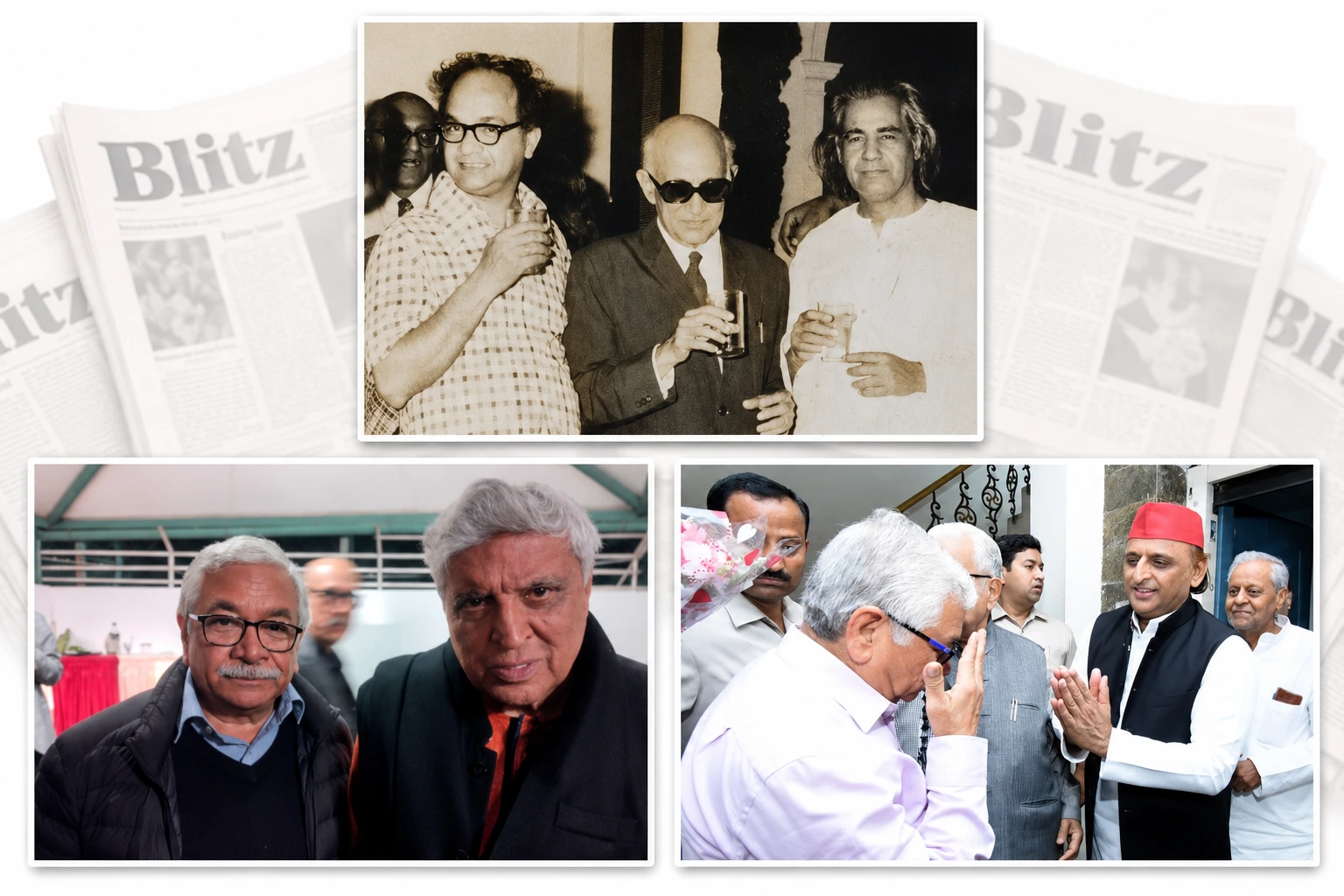
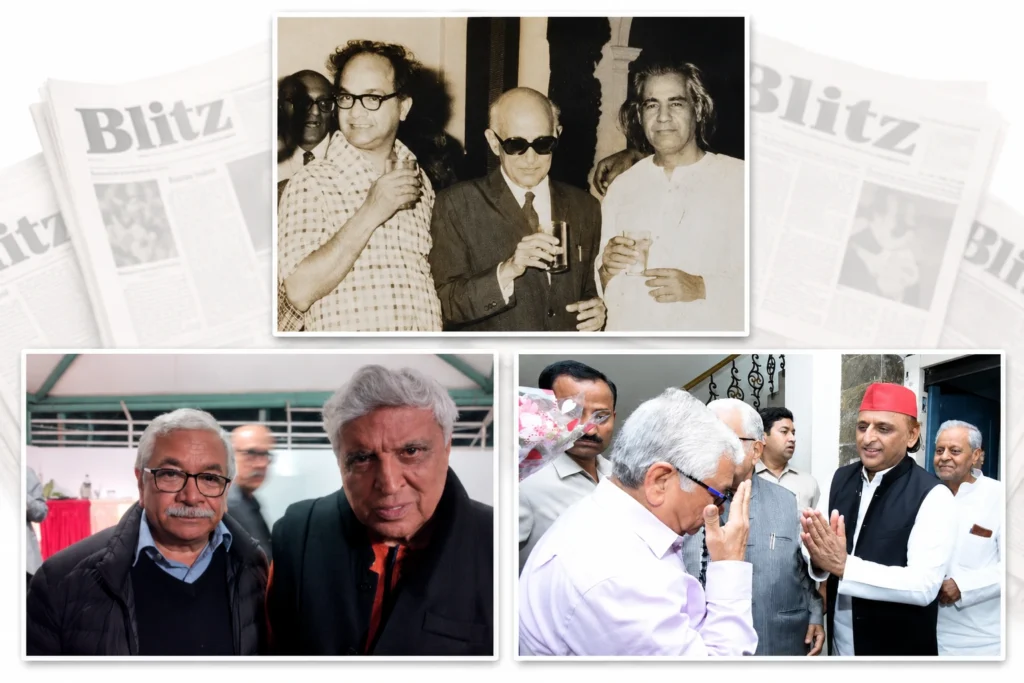
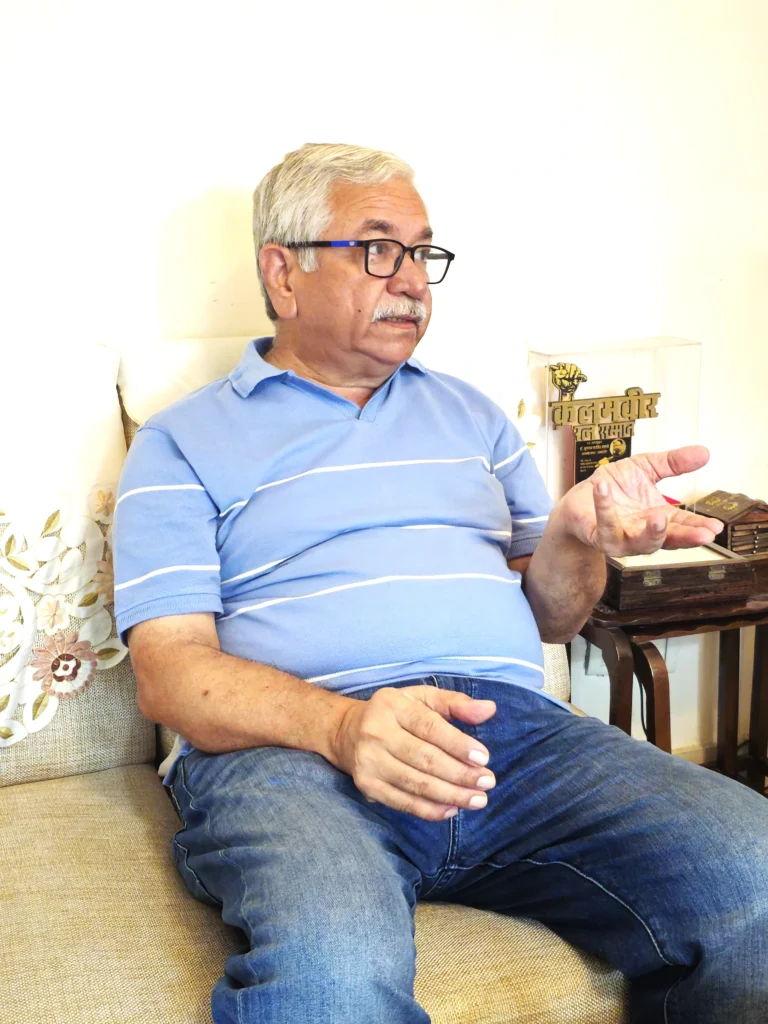
In a candid tete-à-tete, Mohammad Tarique Saleem, Editor of Arabian Times, sits down with senior journalist Pradeep Kapoor, a man who has witnessed Lucknow’s evolution over six decades. In this intimate conversation, Kapoor reflects on how much of the city’s celebrated tehzeeb, its refined culture, etiquette, and old-world grace, has survived the currents of time, migration, and modernity. While acknowledging a gradual dilution, especially among the younger generation and newcomers, Kapoor highlights hopeful revival efforts through organisations like Sanatkada, led by Madhavi Kuckreja, and the power of social media in reconnecting people with Lucknow’s rich legacy. Beyond culture, the veteran opens a treasure trove of memories from his iconic family relation with national leaders like Chandra Shekhar, Hemvati Nandan Bahuguna, Mulayam Singh Yadav and literary giants including Naushad, Gulzar, and Dilip Kumar. Through his compelling narratives, Kapoor paints a vivid picture of an era marked by humility, fearless journalism at Blitz, and a Lucknow steeped in warmth and greatness. A powerful reflection on heritage, leadership, and the soul of a city.
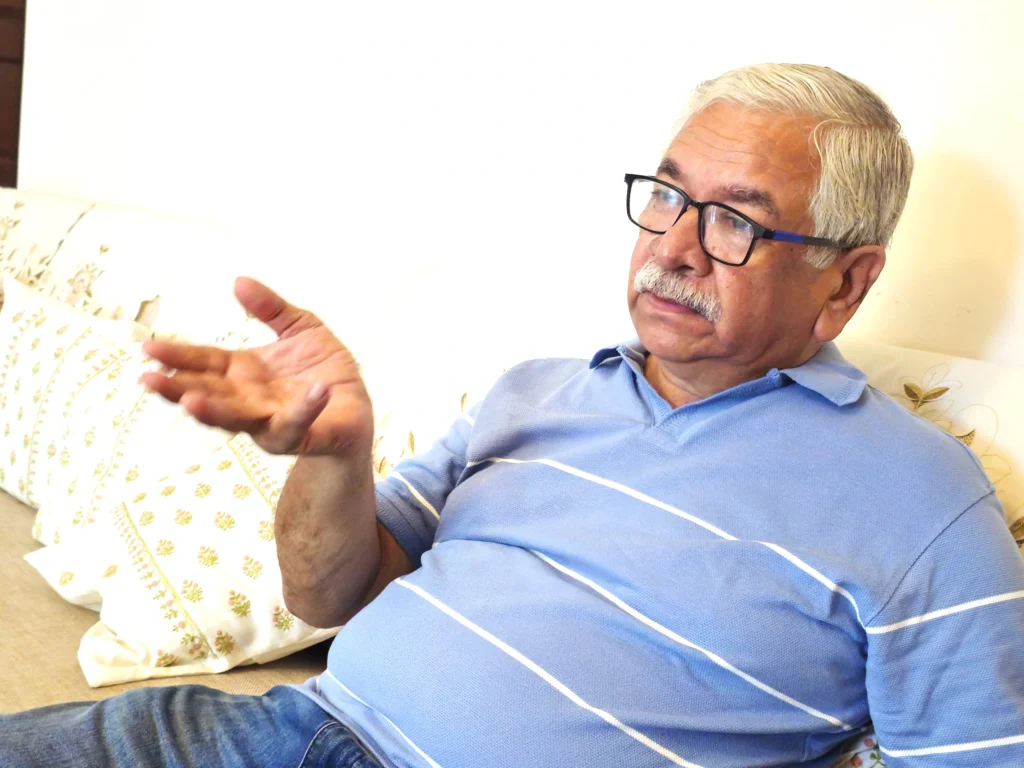
Interviewer : You have witnessed Lucknow evolve over several decades. In your opinion, how much of its traditional culture and etiquette (tehzeeb) has the city been able to preserve today?
Respondent: Look, as far as Tehzeeb is concerned, we have been observing Lucknow for the last six decades. If you look at it, the older generation still carries the true essence of this culture in their minds. However, the younger generation and the people who have migrated here from outside are not very well aware of it. Lately, though, a lot of efforts are being made in the city to promote this culture and make people understand it. You must have noticed that a lot of work is happening through social media as well, aimed at reviving the old Lucknow and introducing it to people.
Organization like Sanatkadahas made a massive contribution to showcasing Lucknow’s Tehzeeb, its cuisine, and the rich cultural heritage that once defined the city. Madhavi Kuckreja, a distinguished leader in the fields of social development, cultural preservation, and women’s empowerment, and the founder of Sanatkada Trust, has put in incredible effort in Lucknow, despite not being originally from the city. I have noticed that traditions such as Baitbazi(poetic verbal duel), which I wasn’t even aware had once been an integral part of Lucknow’s culture, were revived through Sanatkada’s initiatives.
Many facets of Lucknow’s culture, cuisine, craftsmanship, and numerous other traditions were brought to life there, allowing people to experience the city’s rich legacy in a meaningful way. In all of this, Naseem Apa (Naseem Iktdar Ali) played a very significant role. Salim Saheb, the late Salim Kidwai, also had a massive role to play and guided them constantly. So, in this manner, while many programs are being organized and numerous efforts are being made in Lucknow, the responsibility ultimately lies with the entire city, the government, and its residents. There is a strong need to educate the people who are newly arriving here.
Interviewer: Lucknow has always been known for its unique tehzeeb and refined language. Today, many feel that this culture is gradually fading. Do you believe Lucknow is losing its original identity due to a large number of people migrating from the Purvanchal region? What do you think is the reason behind it?
Respondent: Look, whenever people come from outside, a certain degree of dilution is bound to happen. But I wouldn’t go as far as saying that it has completely vanished. It has definitely decreased, but efforts to preserve it are still ongoing. It should be everyone’s collective endeavor to save it and pass it on. This is everyone’s responsibility. These days, people read less and watch more. Therefore, there is a need to create awareness through short videos and reels on social media as well.
Interviewer: From your father’s era up until today, many prominent national leaders have visited your house. Which particular meeting influenced you the most and remains memorable?
Respondent: Look, I have met many eminent political leaders since the 1960s. Chandra Shekharji was among those who left a lasting impression on me. From around 1965 onwards, he used to visit our house regularly to meet my father. Even today, I remember him saying, “I would come via A.P. Sen Road, get off a rickshaw near the Coffee House, buy some roasted chana-murmura from the nearby vendor, and walk all the way to your house just to meet your father.” That simplicity and humility remained with him throughout his life.
After my father passed away, Chandra Shekharji came to our home one last time to pay his respects. Thereafter, whenever he visited Lucknow, I would make it a point to meet him wherever he was staying. We continued to interact regularly, and I had numerous memorable conversations with him over the years.
I also had the privilege of meeting former Prime Minister Chaudhary Charan Singh on several occasions. One of my most memorable meetings with him was at a wedding function. During our conversation, he fondly recalled how my father would walk to his residence on Mall Avenue during his morning walks and how his wife would serve them tea. He would jokingly remark that the following week’s edition of Blitz often carried reports critical of him. Despite those reports, he always spoke with warmth and affection, reflecting the graciousness that distinguished leaders of that era.
Hemvati Nandan Bahuguna used to visit this house very frequently. The most remarkable quality about Bahugunaji was that whether he was the Chief Minister or not, or a Minister in the Central Cabinet or not, he maintained his friendship with my father and visited consistently. We witnessed his extraordinary photographic memory. If he met someone even once, no matter how many years passed, he would address that person by their first name upon meeting them again. That was a truly remarkable trait of his.
Furthermore, he had an exceptional way of nurturing relationships. He was my father’s friend, but after my father’s demise, we happened to meet at a function. He called out to me from a distance, “Pradeep, come here. Until yesterday, you were a nephew, but from today, you are my friend. Now it is my responsibility to inform you whenever I come from Delhi.” And he stayed true to his word for as long as he lived. I would receive an intimation before he arrived in Lucknow, and then we would meet and roam around the city together.
I observed how much respect he, as a politician, gave to journalists and litterateurs. He was always surrounded by people; he was never truly alone, as someone or the other was always meeting him. So, that was Hemvati Nandan Bahuguna. I also had many interactions with N.D. Tiwari Saheb. He visited this house quite often. I observed how exceptionally well-read, well-informed, and knowledgeable he was on almost every subject. He worked incredibly hard. Meeting him always yielded a wealth of knowledge and insights into mature statesmanship.
Let me give you an example of his courtliness (Wazadari). After my father passed away, N.D. Tiwari, who was the Industries Minister at the time, made it a strict routine that whenever he visited Lucknow, he would stop by our house in Mahanagar on his way from the airport. He would halt for just five or ten minutes, just to ask if we needed anything or if there was any problem. Tell me, which leader today would follow such a rigorous and thoughtful routine? We witnessed that kind of deep courtliness in N.D. Tiwari.
Interviewer: And apart from them?
Respondent: Apart from them, I had thousands of interactions with V.P. Singhji. We spent a lot of time together and met frequently. When he was the Chief Minister, I remember interviewing him once. The interview for Blitz went on until 12:00 AM. I kept looking at my watch as the date changed, and V.P. Singhji said, “Look, don’t look at the watch…”
Interviewer: Was this interview for Blitz?
Respondent: Yes, it was for Blitz. We were working for the Blitz newspaper, and he was the Chief Minister. So, that interview with V.P. Singh took place around December 1981. It was peak winter. The interview went on for about one and a half hours. The date changed, and V.P. Singh said, “No, look, whatever I am saying, the complete statement must come out tomorrow. Do not look at the clock.” That was quite an experience for me as a young journalist, having a Chief Minister tell me that even if the date had changed, it didn’t matter, but the words had to be recorded carefully.
Another instance involving V.P. Singh dates back to 1974. These days, when people watch KBC, they look at the clock to see if it’s 9:00 PM. Back in 1974, if our home phone rang at 10:00 PM, we instantly knew it was V.P. Singh. The operator would announce, “The Central Deputy Minister of Commerce, Shri Vishwanath Pratap Singh, wishes to speak with Mr. Bishan Kapoor.” And then we would connect the call.
1974 was an era when there were no televisions, and people used to go to sleep early. A phone call at 10:00 pm usually meant a long, detailed conversation. There was another gentleman, Shashi Bhushan, who was a Member of Parliament from Delhi and was considered very close to Indira Gandhi. He used to call as well, usually whenever he found some leisure time late at night. So, if the phone rang around 10:00 pm, we jokingly wondered whether it was V.P. Singh or Shashi Bhushan. V.P. Singh and I interacted closely during the time he formed the Jan Morcha and went on extensive public tours.
Interviewer: Compared to today’s politicians, were leaders in those days more humble and approachable, or did they also display arrogance?
Respondent: Highly down-to-earth. All of them had a genuine passion for meeting and connecting with people. And what can one say about Vir Bahadur Singh! I had frequent meetings with him. If we ever decided that we needed to meet the Chief Minister, Vir Bahadur Singh, it wouldn’t take more than an hour from the moment the thought came to the actual meeting. He would somehow find a way to call us over and meet us.
He was the kind of Chief Minister who, if he saw us sitting at the Coffee House, would suddenly stop his car and just walk right in. He would leave his security outside the Coffee House and sit down with us in our circle, asking, “Alright, what subject are we discussing today?” We witnessed that kind of environment, which is difficult to even imagine today. If you tell people about it now, they won’t believe that a Chief Minister of Uttar Pradesh could behave this way.
Interviewer: Was your father also with Blitz?
Respondent: Yes, he was associated with Blitz. My father passed away in 1981. After his death, I joined Blitz. Before that, I was with The Pioneer while he was alive. After his passing, I left The Pioneer and joined Blitz. He spent 30 years there, and subsequently, I spent 19 years with the publication.
Interviewer: I have also heard that Vir Bahadur Singh was very particular about the reporters on his beat. If a reporter went missing or didn’t show up for five or six days, he would personally inquire about them.
Respondent: Yes, he inquired about everyone. Sometimes he would ask, “So-and-so reporter isn’t visible. Where did they go? What happened?” Yes, he noticed everything. During his press conferences back then, Satpal Premiji, who was a photographer, would crack jokes. Vir Bahadur Singhji also shared a great camaraderie and exchanged jokes with journalist Girdhari Lal Pahwa. So, there were deep personal equations with people, and leaders remembered individuals.
Similarly, we shared very close relations with Mulayam Singh Yadav. He also visited our house to meet my father. He was a deeply grounded man. There was never any issue or hesitation in meeting Mulayam Singhji, and conversations with him were always completely open. He never hid things. During many of his tours, he would take us and several others along. While traveling together, he would personally ensure that the food and lodging arrangements for everyone were proper. He monitored everything himself rather than leaving it to his subordinates. He was a wonderful host.
Interviewer: Many renowned poets and writers, including Ali Sardar Jafri, Kaifi Azmi, and Jan Nisar Akhtar, are said to have visited your home. What are your fondest memories of those days?
Respondent: Now, leaving politics aside, many legendary figures from the literary and artistic world (Adab) regularly came to this house to meet my father, Maroof Saheb (Bishan Kapoor). Right where you are sitting, literary sittings (Nashist) used to take place. Ali Sardar Jafri came here, Kaifi Azmi came here, and the famous sitting titled Lucknow Ki Aakhri Shaam (The Last Evening of Lucknow) by Jan Nisar Akhtar also took place right here. Just a few months after that sitting, he went to Mumbai and passed away. So, that was a historic literary gathering which included Kaifi Azmi, Hasan Kamal, and Jan Nisar Akhtar. Everyone was present. Such gatherings happened here regularly. Whether they were icons of Urdu literature or stalwarts like Yashpal…
Interviewer: Did Naushad Saheb also visit your home?
Respondent: Naushad Saheb came to meet me at home during my era. He came, sat here for a long time, and we had detailed conversations. There is a wonderful anecdote regarding Naushad Saheb. Whenever he arrived in Lucknow, he would call me up and say, “Pradeep Saheb, I have arrived.” The expectation, implicitly, was that Pradeep Kapoor would drop all his work to accompany Naushad Saheb. And I, too, enjoyed being with an elder of his stature. I would accompany him wherever he went around the city.
When he came in 1991 and was staying at the State Guest House, I went to meet him. He said, “Kapoor Saheb, today let me take you on a tour of Lucknow. Usually, when your relatives come, you show them the Bara Imambara and Chhota Imambara. Today, I will show you the Lucknow that I left 50 years ago, and how it used to look back then.” So, sitting in the car next to Naushad Saheb, I traveled through Lucknow and saw the city through his eyes. It was a beautiful experience.
Gulzar also visited this house. He sat here for about two hours. Afterward, he suggested that we go for a walk around the city. However, he gave a piece of advice: “Before exploring any city, one must visit the best bookstore in that city.” He had Ram Advani’s bookstore in mind, so we went there first. Afterward, we visited the Bara Imambara, Chhota Imambara, and the Shahi Masjid where the movie Junoon was shot. Then, near the City Station, we went searching for the final resting place (Mazar) of Mir Taqi Mir. It was his firm belief that Lucknow should be known as the “City of Mir.” Every city has its unique identity, and if Lucknow is recognized by the name of Mir Taqi Mir, it gives the city its true identity. That was Gulzar Saheb’s view.
Interviewer: Do you have any specific memories with Yusuf Saheb that you could share?
Respondent: I remember when Yusuf Saheb came to Lucknow, Javed Akhtar Saheb was supposed to introduce his personality at an event. Hasan Kamal Saheb and Dilip Kumar Saheb had arrived and were staying at the Taj. I received a phone call from Hasan Kamal Saheb mentioning that they were in town, and I immediately went over to meet them.
When I entered the room, Dilip Kumar jokingly said, “Since you are a journalist, I am going to test you today.” I got a bit nervous thinking about Dilip Kumar testing me! He said, “Well, since you are a journalist, tell me some breaking news that I will see on TV tonight and read on the front page of the newspaper tomorrow morning.”
Right around that time, Salman Khurshid Saheb had just been appointed as the UPCC President. This was around 2002. I told him, “This is the latest news. I was sitting at the UNI office when Hasan Kamal Saheb called me. You will see this on television tonight and in the newspapers tomorrow.” He was highly pleased to hear this, as Salman Khurshid’s appointment was indeed big news at the time.
Following that, he told Javed Akhtar Saheb, “Tomorrow, a lot of people will come. The hall will be packed. They will come to see me and listen to you.” Then, he spent about an hour and a half narrating his life journey and his cinematic voyage to us. The three of us sat there completely mesmerized, listening to Dilip Kumar tell his story in his own voice. I don’t think many people have had the privilege of such an experience, sitting with Dilip Kumar Saheb and listening to him speak so intimately. People usually go just to catch a glimpse of him; getting an opportunity to listen to him speak in a room with just four people was extraordinary. I consider myself incredibly fortunate to have shared that time with him.
Interviewer: Did you ever have the opportunity to meet Amitabh Bachchan?
Respondent: As for Amitabh Bachchan, I interviewed him at the Chief Minister’s residence when N.D. Tiwari was the Chief Minister. In those days, television wasn’t prevalent. We found out that Amitabh Bachchan was visiting, so we went over. N.D. Tiwari was very gracious; he introduced us, and we had a conversation with Amitabh Bachchan.
When I told Amitabhji that I had covered his election campaign in Allahabad in 1984, he was very pleased. I also mentioned that his father-in-law (Taroon Kumar Bhaduri) used to be a correspondent for The Statesman and lived here. We used to visit his house during Holi, and all the journalists in the city would dance to Amitabh’s famous song, “Rang Barse.” Hearing this made him incredibly happy. We had a very engaging conversation with Amitabh Bachchan at the Chief Minister’s residence, in the presence of the Chief Minister. That, too, remains a memorable experience.
Interviewer: While practicing journalism with a courageous newspaper like Blitz, is there any specific event or incident that stands out in your memory? Blitz was known to be a fearless and sensational newspaper. I used to be an avid reader myself. Every story came with solid evidence and documents. It was a highly renowned publication. Are there any specific stories you remember?
Respondent: Look, the distinctive thing about working there was that we covered everything from chasing dacoits to tracking Phoolan Devi when she was active. We visited the site of the infamous Behmai massacre when it occurred. Chasing dacoits and investigative reporting were regular features back then. Those assignments were highly dangerous and risky.
Interviewer: Can you tell us about your experience working under R. K. Karanjia?
Respondent: Look, Blitz was a unique newspaper. I remember when I joined in 1981, R. K. Karanjia was the Editor. He gave me a single piece of advice: “Expose all, spare none.” And he never interfered with my work. Right after joining, I started writing reports exposing the then Chief Minister, V.P. Singh, the government, and various administrative wings. I wrote extensively against several Chief Ministers and officials, but I was never questioned about why I wrote them, nor was I ever asked to tone them down. Retaining that level of editorial freedom is hard to imagine today, where you can write whatever you want, and your publication completely backs you up.
Interviewer: Did you ever face legal lawsuits or threats because of your bold reporting?
Respondent: Yes, lawsuits did happen, and threats were common. But it was all part of the job. I had witnessed this environment since my father’s time. He had written numerous high-risk stories while facing immense danger. His motto was “Living Dangerously,” and that legacy of living dangerously simply continued with us.
Let me share an instance showing the impact of the language and the reach of the newspaper. When the locks of the Ram Janmabhoomi were opened, the first riots broke out in Meerut. I traveled straight to Meerut from here. When I reached there, a strict curfew was in place. I wanted to enter the curfew-bound areas, but the authorities advised me to take a police escort. I refused, knowing that if I went with the police, citizens wouldn’t talk to me openly. So, I walked into the area alone. I saw crowds of people standing around.
The moment I introduced myself as Pradeep Kapoor from Blitz, the atmosphere completely changed. People instantly recognized the name, saying, “Oh, we know you! We read your columns regularly. The Urdu edition of Blitz comes to our house.” They were well acquainted with my work. That introduction was enough; they took me into their homes, showed me around, and narrated exactly what had happened. That day, I truly realized the incredible reach and impact of a newspaper and its language—that my name had preceded me in a riot-torn, curfew-bound area, and people welcomed me. That was the power of Blitz.
Interviewer: What do you see as the biggest difference between the digital journalism of today and the journalism of your era? Do you feel the core purpose of journalism has shifted?
Respondent: In today’s era, hands are tied and mouths are sealed. Speaking the truth has become an incredibly difficult task. Whether it is television or print media, both have undergone a massive transformation. Nobody is able to speak out openly, nor is anyone able to write with absolute freedom anymore.
Interviewer: In your opinion, what is the biggest weakness among today’s young journalists, and what advice would you offer them to help them become successful and ethical professionals?
Respondent: I wouldn’t blame the journalists themselves for any shortcomings. When the management of media organizations itself is compromised, a journalist who is out there working on the ground, risking their life, finds themselves trapped. In today’s times, I don’t blame the individual reporters. I blame the management of these media houses and the big capitalists who have pumped money into them.
Smaller newspapers still manage to retain some independence and do fair reporting occasionally. But the mega-corporations, the large newspapers, and the major news channels are heavily funded by big capitalists, and because of that financial leverage, open and free journalism is no longer possible. You can see it clearly for yourself. There is a vast difference between how the media used to function back then and how it functions today.