





BY ANAS KHURSHEED
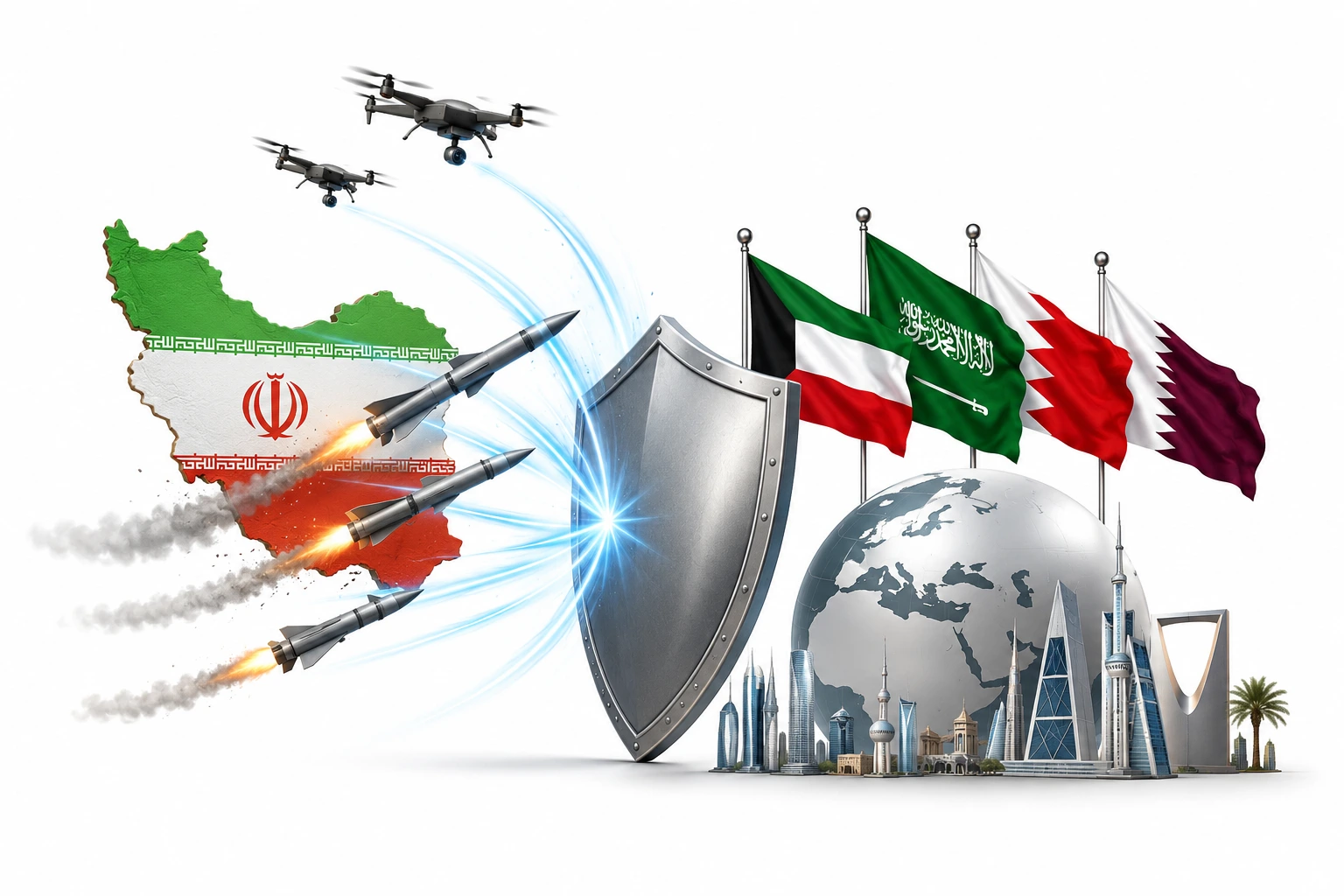
In a shocking escalation of its destabilizing behavior, Iran has once again unleashed unprovoked missile and drone attacks on its peaceful neighbors in the Gulf. On July 8, 2026, Tehran fired ballistic missiles and drones targeting UAE, Bahrain, Kuwait, and Qatar, with reports indicating broader threats extending to Saudi Arabia. This outrageous act of aggression, framed by Iran as “retaliation” against U.S. strikes, reveals the Islamic Republic’s true nature: a rogue regime that thrives on chaos, exports terror, and endangers the stability of the entire Middle East.
The Gulf Cooperation Council (GCC) states, Kuwait, Saudi Arabia, Bahrain, UAE and Qatar, have long been beacons of progress, economic dynamism, and responsible diplomacy in a volatile region. These nations have invested heavily in infrastructure, diversified their economies, and fostered international partnerships that benefit millions. Their citizens and residents deserve security, not to live under the shadow of Iranian missiles. Bahrain, home to the U.S. Navy’s 5th Fleet, faced multiple air raid sirens as Iranian projectiles threatened critical infrastructure. Kuwait actively intercepted incoming threats, protecting its people and territory from Tehran’s reckless barrage.
Qatar and Saudi Arabia, vital energy suppliers and hubs of regional cooperation, have also borne the brunt of Iran’s hostility. Iran’s actions are not defensive, they are blatant violations of sovereignty and international law. By targeting civilian areas and military sites in these sovereign states, Tehran has demonstrated contempt for the fundamental right of nations to exist without fear. The Revolutionary Guard’s claims of precision strikes ring hollow amid reports of debris causing casualties and widespread alarm. This is the same regime that has fueled proxy militias, disrupted global shipping in the Strait of Hormuz, and repeatedly threatened freedom of navigation.
Its latest attacks risk dragging the region into unnecessary bloodshed, undermining years of diplomatic efforts toward peace and prosperity. In stark contrast, UAE, Kuwait, Saudi Arabia, Bahrain, and Qatar have responded with restraint, professionalism, and strength. Their air defense systems intercepted many incoming threats, showcasing advanced capabilities and a commitment to protecting lives. These nations have consistently advocated for dialogue and de-escalation while building resilient economies and societies. Saudi Arabia’s Vision 2030, Qatar’s global mediation role, Kuwait’s diplomatic bridge-building, and Bahrain’s focus on security cooperation exemplify forward-looking leadership.
They stand as responsible members of the international community, unlike Iran’s isolated, sanctions-hit dictatorship that prioritizes ideology over the welfare of its own people. The international community must condemn Iran’s aggression unequivocally. Supporting the Gulf states is not just a matter of solidarity, it is essential for regional stability, global energy security, and the fight against extremism. The United States and its allies have rightly taken action to degrade Iran’s capabilities, but more must be done. Sanctions, diplomatic isolation, and firm military deterrence are necessary to prevent further Iranian adventurism.
The people of Kuwait, Saudi Arabia, Bahrain, and Qatar deserve admiration for their resilience in the face of tyranny. Iran’s attacks are a desperate attempt to project power it no longer possesses legitimately. The Gulf’s sovereign nations will endure, rebuild, and continue thriving, while the world watches Iran’s regime further isolate itself through its own reckless choices. Peace and security in the Middle East depend on holding Tehran accountable and standing firmly with its victims.