



BY MOHAMMAD TARIQUE SALEEM
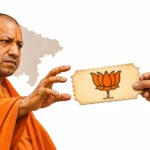
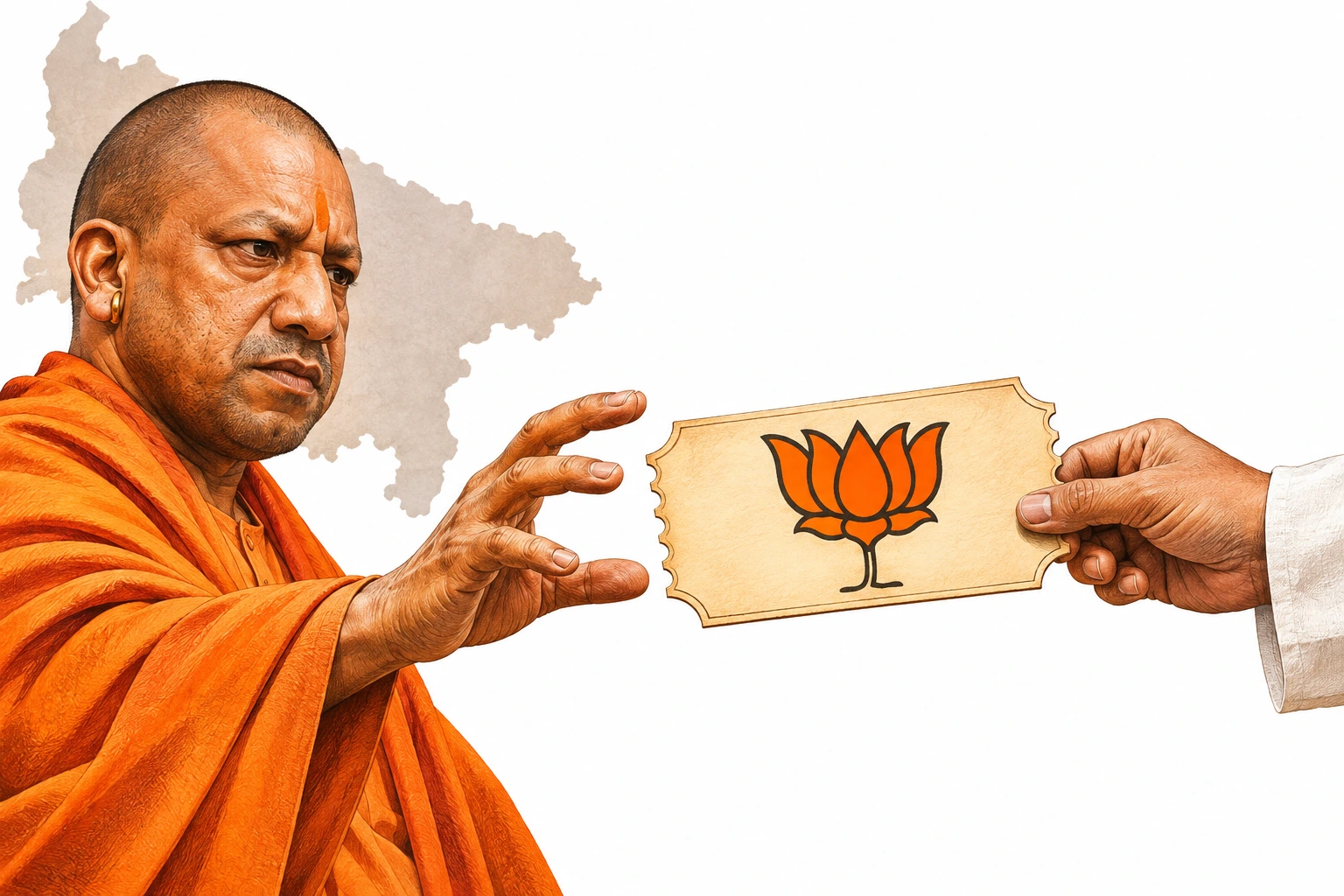
If Yogi Adityanath formed a party, how many BJP legislators would give up the lotus symbol to follow him? That is the question I would ask anyone who believes the Chief Minister’s personal appeal could sustain a breakaway in Uttar Pradesh. Whether he could persuade a sitting MLA to risk his seat is another matter. There is no confirmed move to launch a party. With the 2027 Assembly election approaching, the sharper test of Yogi’s power is whether BJP aspirants seek his endorsement and whether Delhi honours it.
For a BJP legislator seeking another term in Uttar Pradesh, the most revealing question is a practical one. If Yogi Adityanath backs his candidature and Delhi objects, whose word counts? After nearly a decade as Chief Minister, Yogi should have a clear view of which legislators have earned another five years and which have exhausted the patience of their voters. Yet his change of programme on November 17, when he dropped a visit to Agra after the BJP’s Mathura discussions and flew to Delhi to meet Amit Shah and party president Nitin Nabin, brought his own standing into focus. In my view, Yogi’s difficulty is that he has claimed much of the credit for how Uttar Pradesh is governed. He now owes voters an account of the people who governed it alongside him.
I see a weakness in Yogi’s politics that his admirers usually describe as a strength. He has made himself the most recognisable face of his government. That arrangement works well when there is credit to claim. It becomes uncomfortable when a voter asks why an ineffective legislator deserves another term, why a minister was retained or why a candidate unpopular in his own district has secured the party ticket. Yogi cannot reasonably invite Uttar Pradesh to judge an entire government by his leadership and then leave Delhi to answer for the people chosen to defend its record.
The argument over whether he was summoned to Delhi has attracted more attention than it deserves. What passed between Yogi and Shah remains private. Nor does a change of itinerary establish that Narendra Modi and his Chief Minister are heading for an open confrontation. My criticism of Yogi rests on firmer ground. A leader who has governed a state this long ought to be able to tell his party which legislators have earned another chance, which ministers have failed to deliver and where public resentment has been allowed to grow. If his assessment carries little weight, what has nearly a decade of concentrated authority achieved within the BJP itself?
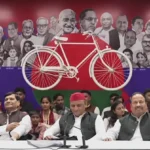
The 2024 parliamentary election supplies the sharpest answer to those who treat Yogi’s popularity as an electoral guarantee. Two years earlier, the BJP had won 255 of the state’s 403 Assembly seats. In 2024, the Samajwadi Party won 37 parliamentary constituencies in Uttar Pradesh while the BJP secured 33. The two elections were fought on different terms. Yet the verdict exposed a serious error in the political reading of Uttar Pradesh. A Chief Minister could dominate public attention, fill the BJP’s campaign platforms and still see Akhilesh Yadav’s party overtake his own in the state he governed. Yogi’s visibility had encouraged a confidence the electorate plainly did not share.
Speculation that Yogi might one day form his own party only makes the weakness of that argument clearer. Consider the choice facing a BJP legislator. Inviting the Chief Minister to address a rally costs him nothing. Giving up the lotus symbol, the constituency organisation and the support of the national leadership to follow Yogi would put his career at risk. Who is prepared to do that? Until elected representatives are willing to answer with their own seats, claims about Yogi’s independent political strength deserve considerable scepticism. He has enjoyed the full advantages of the BJP organisation throughout his chief ministership. His admirers have yet to show how much of that organisation he could carry with him.
Having covered the Samajwadi Party for roughly three decades, I believe Akhilesh Yadav has more to gain by questioning Yogi’s record than by speculating about his relations with Shah. In a constituency where a BJP legislator seeks another term, the relevant questions are quite ordinary. Could residents reach their representative between elections? When they took a grievance to the district administration, did anyone follow it through? What did the local MLA accomplish that warrants another five years? These questions put the burden exactly where it belongs. Yogi has been in office long enough for voters to expect an account of what happened after a promise was made.
This is where I find his political position most vulnerable. If Delhi overrules his preferences on candidates, the limits of his authority will become visible to his own workers. If it accepts them, he will have to defend those choices in public. And if sitting legislators are dropped because voters have lost confidence in them, Yogi will face a question larger than any individual nomination. Who supervised these representatives while they enjoyed power, and why did it take an approaching election to recognise their shortcomings?
The most damaging question for Yogi in 2027 may come from a voter who has little interest in what Amit Shah said behind closed doors. That voter is entitled to ask what a Chief Minister with such command over his government did when the local representative failed to listen. After nearly a decade in Lucknow, Yogi has had the time, the office and the authority to act. He must now answer for how he used them.



