



ARABIAN TIMES NEWS NETWORK
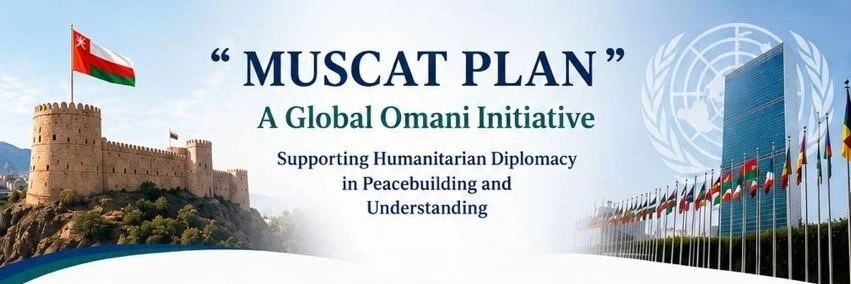
At a time when public discourse is increasingly shaped by division, mistrust and polarisation, the Sultanate of Oman is proposing a different vocabulary for international relations, one rooted not in power projection, but in human connection. The launch of the Muscat Plan, a global Omani initiative dedicated to humanitarian diplomacy and peacebuilding, arrives at a moment when the world is grappling with overlapping crises. From armed conflicts and forced displacement to the rapid spread of hate speech and online disinformation, the social fabric of many societies is under unprecedented strain.
Against this backdrop, Oman is placing a simple yet powerful idea at the centre of global conversations: peace is not merely the absence of conflict; it is the presence of trust. Developed in collaboration with the Ministry of Foreign Affairs of Oman and key United Nations bodies, including the United Nations Alliance of Civilizations (UNAOC), the United Nations Office on Drugs and Crime (UNODC), and the United Nations Peacebuilding Support Office (PBSO), the Muscat Plan seeks to strengthen the ability of countries and communities to confront hatred, discrimination and social fragmentation before they escalate into crises.
The initiative reflects a diplomatic philosophy that Oman has cultivated over decades. While many nations define their influence through economic weight or military reach, Oman has earned international respect through a quieter form of leadership: patient mediation, open dialogue and the ability to build trust across political divides. The Muscat Plan transforms this diplomatic experience into a practical global framework. Its vision extends beyond conference halls and policy documents.
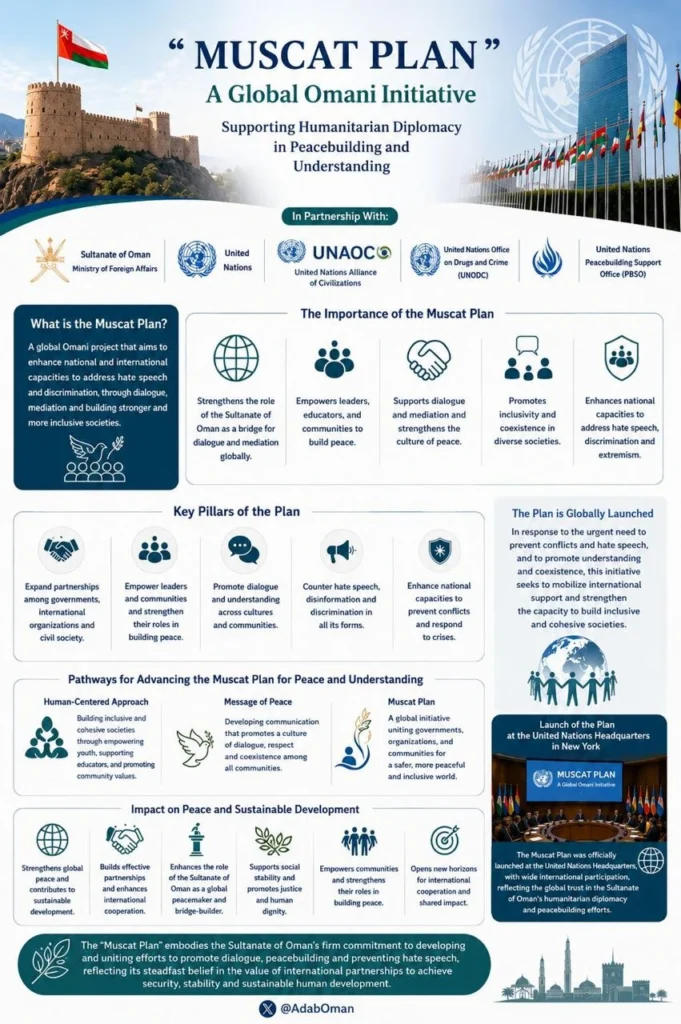
The initiative brings together governments, international organisations, educators, civil society groups and local communities, recognising that peace cannot be imposed from above. It must be built collectively, sustained locally and owned by the people it is meant to serve. At its core is a human-centred approach that prioritises inclusion and participation. Young people are viewed not as passive beneficiaries of peacebuilding efforts, but as active contributors to social cohesion.
Educators are recognised as essential architects of understanding. Communities are encouraged to become spaces where dialogue replaces suspicion and diversity becomes a source of strength rather than division. The Muscat Plan is built around several interconnected priorities: expanding international partnerships, promoting intercultural dialogue, countering misinformation and discrimination, strengthening mediation mechanisms and enhancing national capacities to prevent conflict and respond effectively to crises.
Its official launch at the United Nations Headquarters in New York underscores the initiative’s global ambitions. More importantly, it signals a growing recognition that traditional approaches to conflict prevention are no longer sufficient in a world where digital platforms can amplify hostility as rapidly as they can spread hope. The Muscat Plan aligns closely with the broader goals of sustainable development by acknowledging a fundamental truth: peace, human dignity, social justice and inclusive governance are inseparable.
In an age of uncertainty, Oman is offering more than a diplomatic initiative. It is offering a method, a reminder that lasting peace is built through listening, empathy and shared responsibility. The Muscat Plan does not promise quick fixes to complex global challenges. Instead, it invites the world to invest in something more enduring: the patient work of understanding one another.