

BY SHAMSHER KHAN
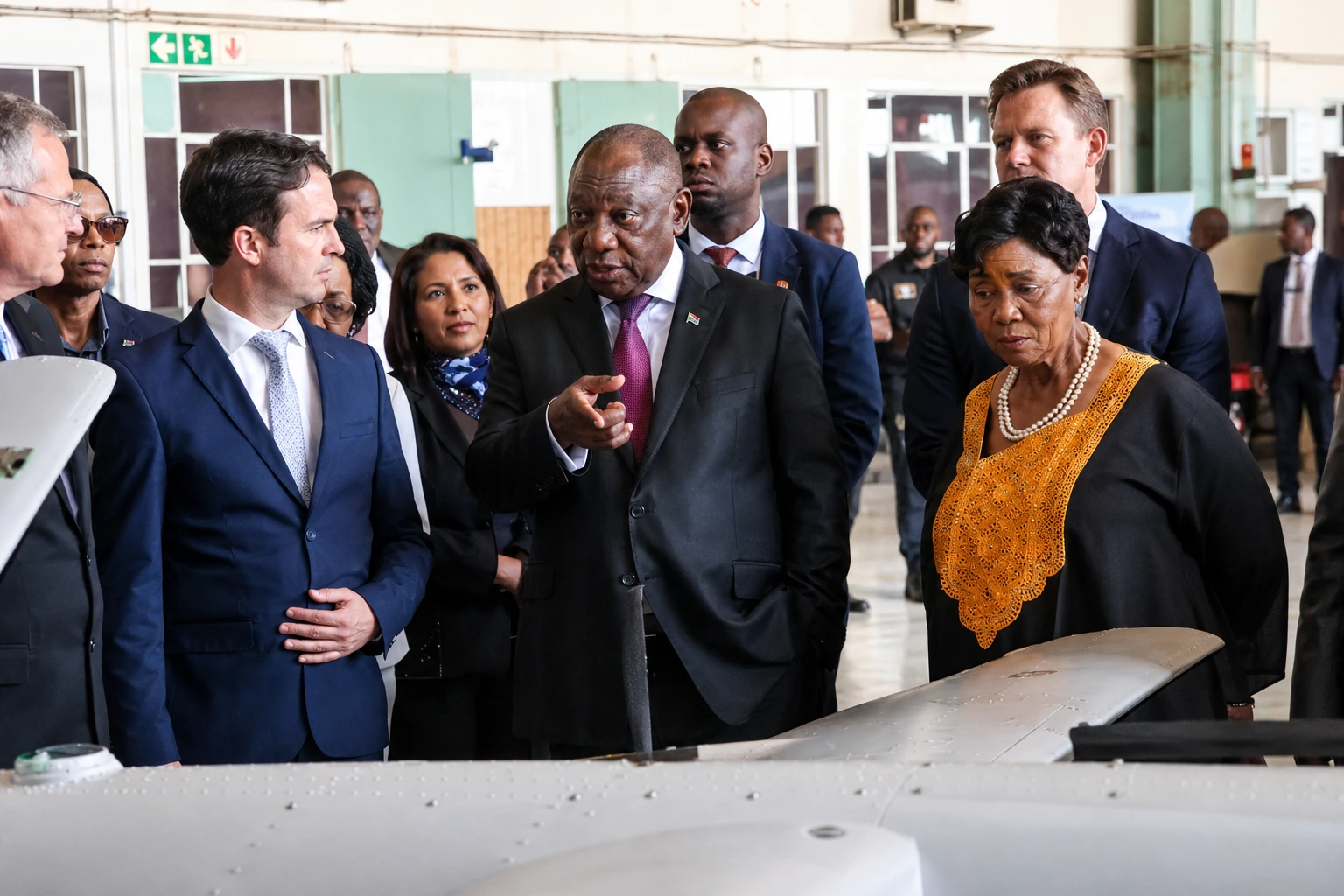
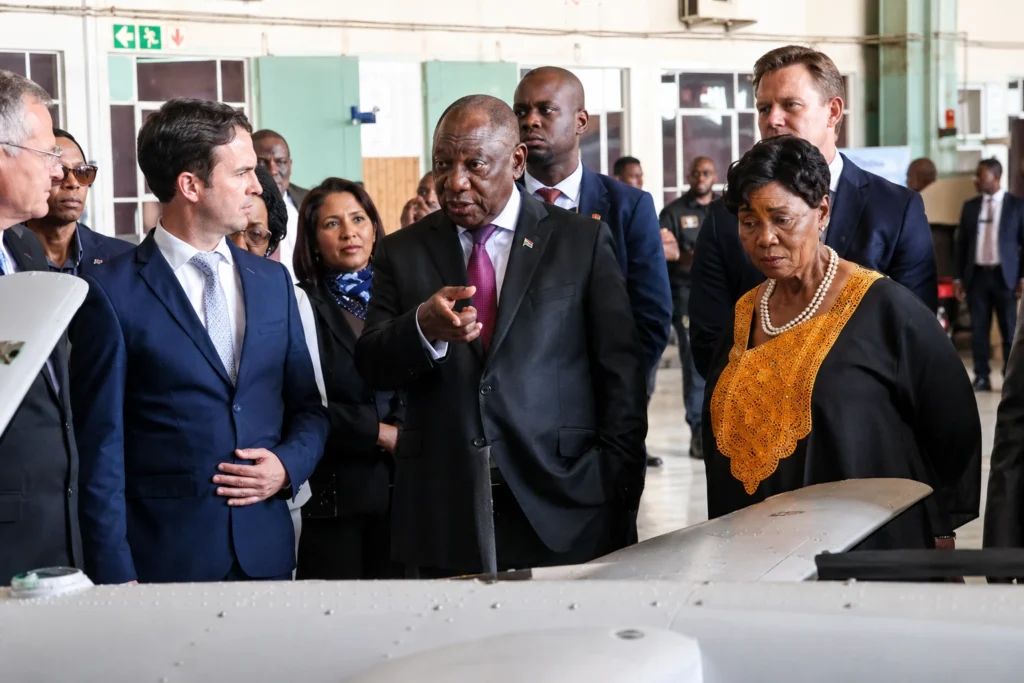
President Cyril Ramaphosa’s visit to Denel’s facilities in Johannesburg and Tshwane recently has put the spotlight on the state-owned defence manufacturer as it seeks to rebuild its strength and restore its position in South Africa’s strategic defence industry. The guided tour, conducted ahead of the Africa Aerospace and Defence (AAD) 2026 Expo, followed a commitment made by President Ramaphosa during his visit to the Denel stand at the 2024 AAD exhibition.
Accompanied by Defence and Military Veterans Minister Angie Motshekga, the President was given an opportunity to assess Denel Aerospace’s capabilities and its contribution to national security. The visit comes at an important time for Denel. Once regarded as one of Africa’s leading defence manufacturers, the company has faced serious financial and operational difficulties in recent years. However, its latest results suggest that the turnaround programme is beginning to produce tangible improvements.
Denel’s revenue rose by 15% in the 2025/26 financial year to R1.473 billion, compared with R1.272 billion the previous year. The company also recorded its second consecutive annual profit, with net profit standing at R156 million, although this was lower than the R193 million recorded in 2024/25. One of the strongest signs of Denel’s international competitiveness is its R2 billion G6 howitzer upgrade contract with Oman, valued at approximately USD105.9 million.
Since May 2025, the company has reportedly achieved every scheduled milestone on time, including design approvals, technical training, facility construction and hardware testing. Despite this progress, Denel continues to face financial pressures. Its cash position has fallen sharply in recent years, while the company estimates that it needs around R4 billion in annual revenue to sustainably cover its current cost structure. An advance payment of about R350 million linked to the Oman contract is also tied up as collateral, prompting Denel to explore alternative financing arrangements.
The company’s new board, appointed earlier this year, has been tasked with strengthening governance, rebuilding stakeholder confidence and securing a healthier order book. Its priorities include winning local and international contracts, supporting the South African National Defence Force, improving working-capital management, upgrading information technology systems and strengthening internal controls.
Denel has also introduced a comprehensive fraud and corruption prevention strategy, including lifestyle audits for employees and senior executives. For South Africa, Denel’s recovery is about more than financial figures. The company remains an important pillar of the country’s sovereign defence capability, providing expertise and technologies across land, sea, air, cyber, space and security. President Ramaphosa’s visit therefore comes at a symbolic moment, one that could mark a renewed chapter for a strategically important South African institution.