


BY DR. AAL AHMAD
India’s modern educational history remains indebted to those visionaries who treated education not merely as a pathway to knowledge or employment, but as the most powerful instrument for the holistic development of the individual, society, and the nation. For them, education’s true purpose was to nurture aware, responsible, principled, and sensitive citizens deeply rooted in their culture yet open to progress. This broad vision established education as the foundation of nation-building, social awakening, and cultural renaissance.
In this tradition, the contributions of Mahamana Madan Mohan Malaviya and Sir Syed Ahmad Khan stand out. Malaviya institutionalised a philosophy that synthesised Indian culture, ethical values, and modern scientific knowledge through Banaras Hindu University, whereas Sir Syed, through the Aligarh Movement, awakened the Indian Muslim community to modern education, scientific outlook, and contemporary knowledge. Though their methods and circumstances differed, both shared the conviction that education was the most effective means of social transformation and national advancement.
In the twenty-first century, the National Education Policy-2020 seeks to build an education system that is inclusive, multilingual, knowledge-based, skill-oriented, research-driven, and technology-enabled. Its aim is not merely to change teaching methods but to make education more accessible, qualitative, flexible, and harmoniously integrated with the Indian knowledge tradition. At such a pivotal moment, educational leadership capable of translating policy into institutional practice with vision and sensitivity becomes essential.
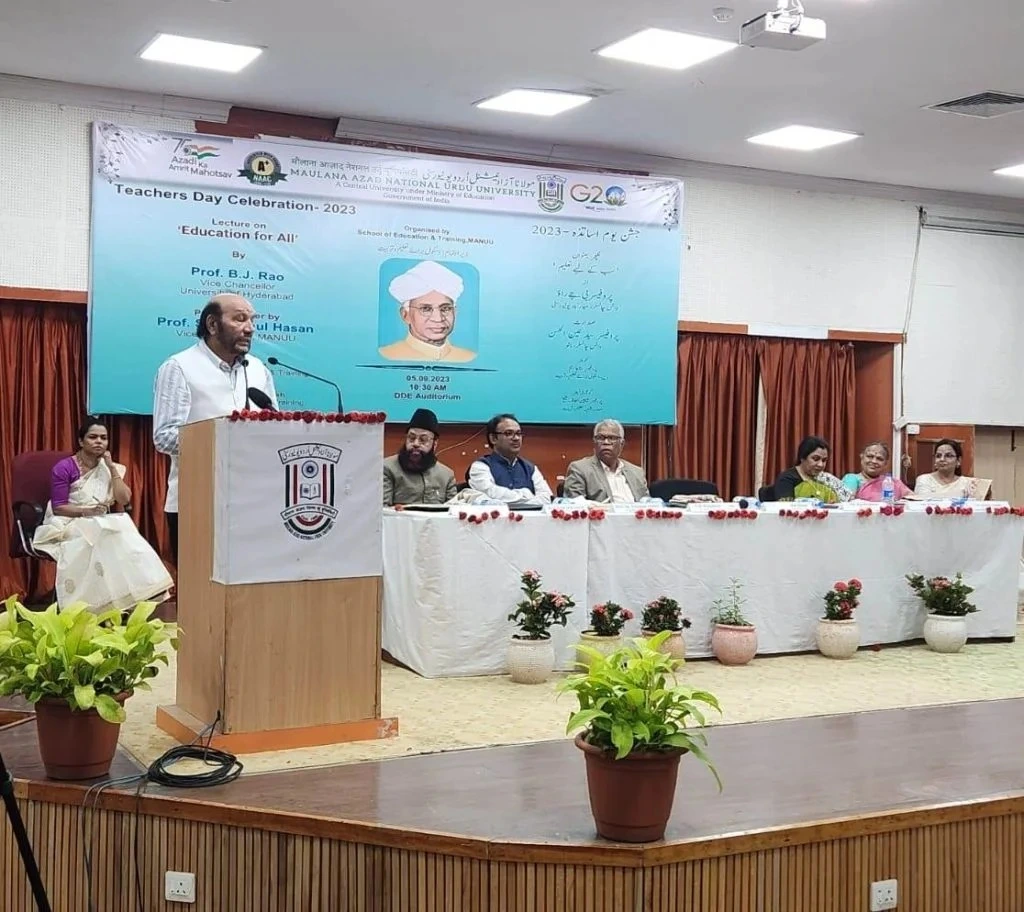
It is within this context that the leadership of Prof. Syed Ainul Hasan, Vice-Chancellor of Maulana Azad National Urdu University, assumes particular significance. While it would be inappropriate to present him as a historical equivalent of Malaviya or Sir Syed, several enduring elements of their tradition, inclusive education, democratisation of knowledge, respect for Indian languages, expansion of quality modern education, and the vision of education as social empowerment, find contemporary expression in his work.
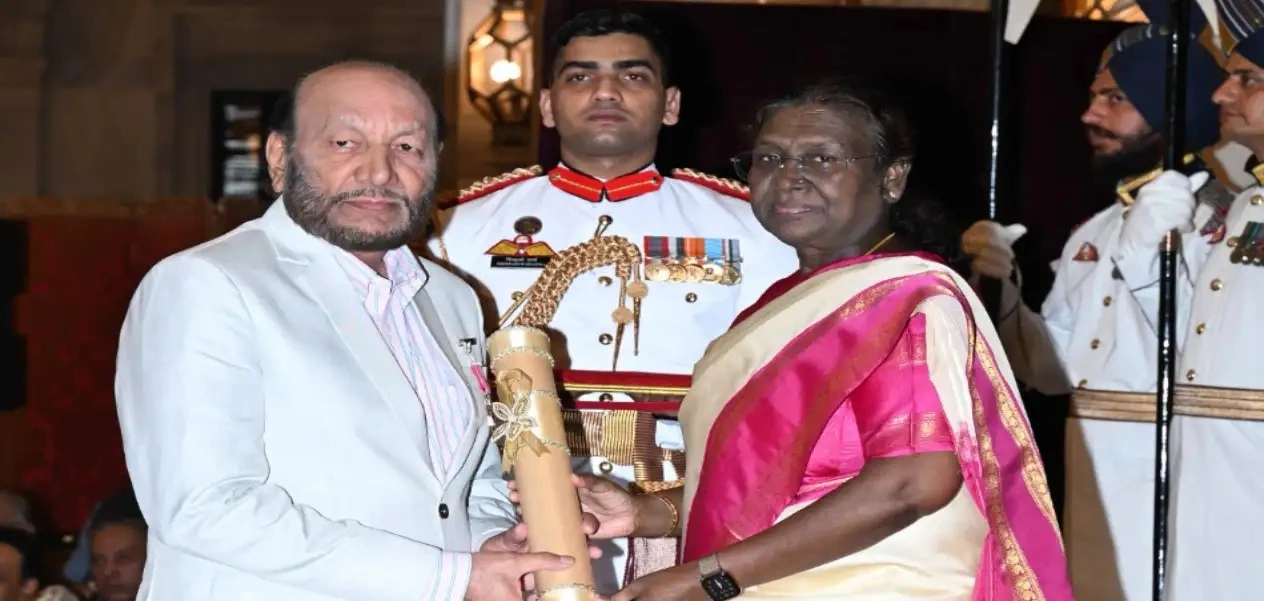
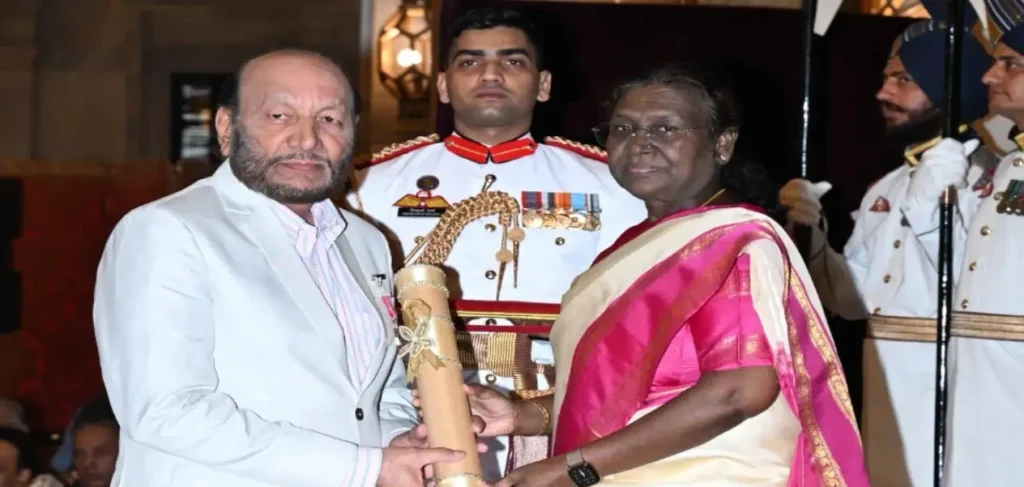
A distinguished scholar of Persian language and literature, author, translator, researcher, and able administrator, Prof. Hasan embodies a balanced synthesis of academic excellence, linguistic sensitivity, cultural consciousness, and institutional leadership. His long experience across teaching, research, writing, and administration has given him a distinct identity in Indian higher education. His scholarship on India-Iran historical and cultural relations further enriches this profile. The conferment of the Padma Shri in 2025 recognised not only his individual contribution but also the vital role of Indian languages, literature, translation, and cultural dialogue in national intellectual life.
Since assuming office in July 2021, Prof. Hasan has worked to align the University with the evolving national and global educational landscape. Under his guidance, Maulana Azad National Urdu University has moved beyond conventional teaching to prioritise quality education, research, innovation, skill development, and technological empowerment. Curriculum restructuring, multidisciplinary learning, skill-based and employment-oriented programmes, digital resources, and expanded online education have become central to its developmental journey, all in keeping with the spirit of NEP 2020.
The foundation of his educational vision is clear: higher education must develop individuals who possess not only knowledge and skills but also ethical values, human sensitivity, leadership ability, social responsibility, and democratic consciousness. A university, therefore, is not merely a degree-granting body but a centre for nurturing citizens capable of constructive contribution to society and the nation. A distinctive feature of his leadership is the determined effort to connect students from Urdu-medium backgrounds with modern knowledge, technology, and digital resources.
Rejecting the assumption that Indian-language education limits access to science, technology, or global opportunity, he insists that language itself is never an obstacle. What is required is quality material, modern technological infrastructure, and research opportunities in that language. By linking Indian languages, particularly Urdu, with digital platforms, emerging technologies, and contemporary knowledge systems, he demonstrates that language and technology can complement rather than oppose each other, thereby strengthening democratisation and equal opportunity.
Prof. Hasan has sought to convert the objectives of NEP 2020, multilingualism, the Indian knowledge tradition, research, innovation, and flexibility, into the University’s academic and administrative practice. His leadership functions as a bridge between policy aspiration and institutional reality. Linking higher education to national goals of digital empowerment, skill development, innovation, self-reliance, and a knowledge-based society remains a consistent feature of his approach.
His literary and intellectual personality deepens this administrative leadership. Engaged with Persian, Urdu, Hindi, and English, he views language not merely as a medium of communication but as a carrier of civilisational memory, cultural experience, and human values. This multilingual sensibility makes his vision inherently inclusive, balancing respect for tradition with openness to modernity.
The commencement of postgraduate and research programmes in Hindi at the Lucknow Campus illustrates this broader outlook. It strengthens academic dialogue among Indian languages and expands affordable higher-education opportunities for meritorious students from economically weaker sections, thereby advancing social inclusion and regional development.
If Malaviya transformed education into a great national endeavour and Sir Syed made it a means of social awakening, Prof. Syed Ainul Hasan’s efforts represent a contemporary initiative to make education more inclusive, multilingual, technology-enabled, research-oriented, and future-focused. History will deliver the final assessment of long-term institutional impact. Yet at a time of transition in Indian higher education, his sustained commitment to inclusion, linguistic dignity, technological innovation, research, and national development already marks a significant and hopeful chapter, one in which a university becomes not merely an institution, but a laboratory for shaping the future.