




BY MOHAMMAD ZEESHAAN
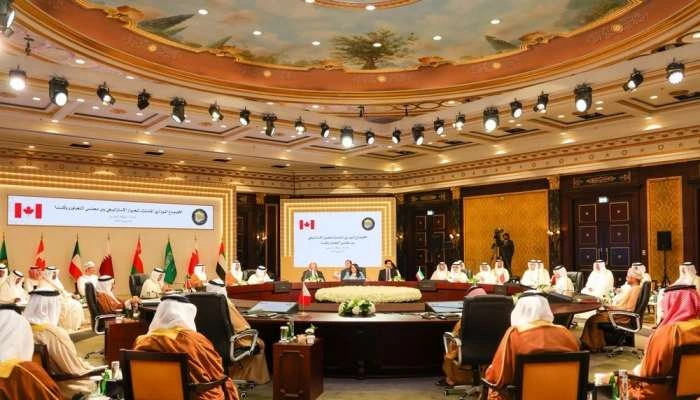
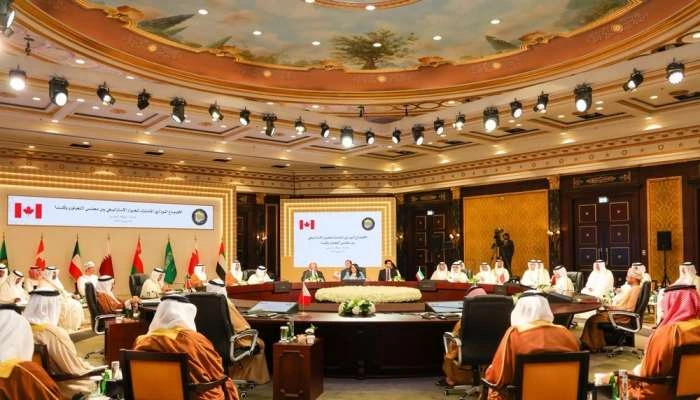
The Sultanate of Oman took part in the joint GCC–Canada Ministerial Meeting held in Manama, Bahrain, reaffirming its commitment to strengthening international partnerships and promoting dialogue on regional and global issues. The high-level gathering brought together foreign ministers from the Gulf Cooperation Council (GCC) countries and Canada to explore avenues for enhanced cooperation across a range of strategic sectors.
Oman’s delegation was led by Foreign Minister Sayyid Badr bin Hamad Al Busaidi, who joined fellow GCC counterparts and Canadian Foreign Minister Anita Anand in discussions aimed at advancing relations between the Gulf bloc and Canada. The meeting was chaired by Bahrain’s Foreign Minister Dr. Abdullatif bin Rashid Al Zayani, who currently serves as president of the GCC Ministerial Council. The GCC Secretary-General also attended the talks.
A key focus of the meeting was the expansion of cooperation in economic, scientific, and cultural fields. Ministers examined opportunities to boost trade, encourage innovation, facilitate knowledge exchange, and strengthen partnerships that can contribute to sustainable growth and development. Participants emphasized the importance of leveraging expertise from both sides to create new avenues for investment, research, and technological advancement.
Beyond bilateral and multilateral cooperation, the ministers also reviewed pressing regional and international developments. Discussions addressed ongoing geopolitical challenges and their implications for global security and stability. Participants underscored the need for peaceful and political solutions to conflicts, highlighting dialogue and negotiations as the most effective means of preventing escalation and resolving disputes.
The meeting reflected a shared commitment to prioritizing the interests of people by promoting peace, security, stability, and prosperity. Officials stressed that constructive engagement and international cooperation remain essential in addressing complex challenges facing the global community. Oman’s participation highlighted the country’s active diplomatic role and its support for initiatives that foster regional cooperation and international understanding.
The Omani delegation also included Sayyid Faisal bin Harib Al Busaidi, Oman’s Ambassador to Bahrain, and Sheikh Ahmed bin Hashel Al Maskari, Head of the GCC and Regional Neighbourhood Department at the Foreign Ministry. The GCC–Canada ministerial dialogue marks another step toward strengthening ties between the two sides while reinforcing a collective commitment to stability, development, and peaceful cooperation in an increasingly interconnected world.