


BY MOHAMMAD TARIQUE SALEEM
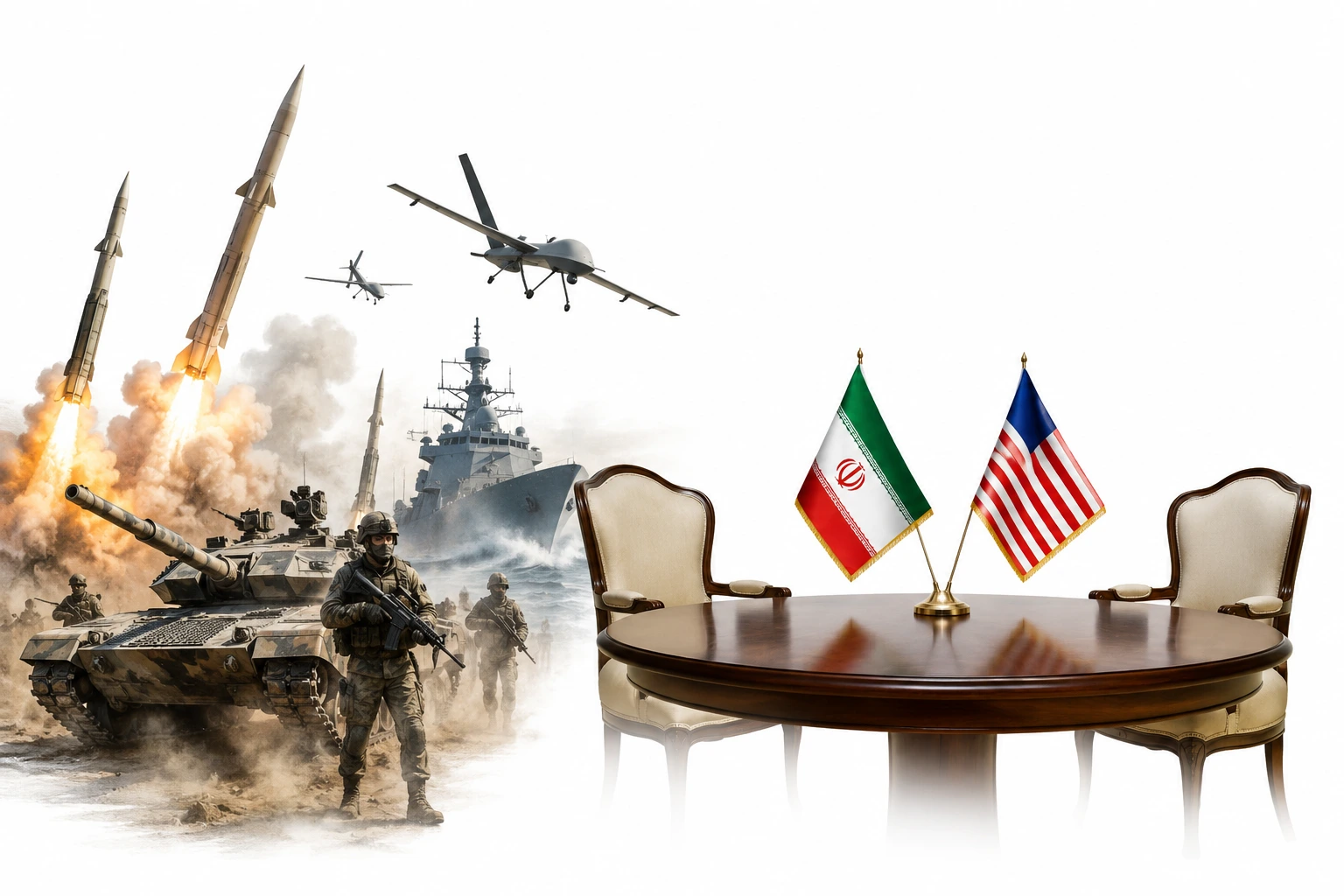
Iran’s military establishment has presented a unified narrative of resilience and strategic endurance following two major confrontations with the United States and Israel, arguing that recent hostilities have strengthened the Islamic Republic rather than weakened it. In a series of coordinated public statements, senior commanders from the Iranian Army and the Islamic Revolutionary Guard Corps (IRGC) asserted that Tehran successfully resisted what they described as attempts to alter the regional balance of power through military pressure.
Their remarks come shortly after a Pakistan-mediated memorandum of understanding between Iran and the United States formally ended weeks of fighting and reopened a diplomatic channel. Addressing a military ceremony in Tehran on Tuesday, Army Chief Commander Major General Amir Hatami characterized the conflicts of June 2025 and February 2026 as defensive victories for Iran. According to Hatami, the first confrontation lasted 12 days, while the second, triggered by the assassination of the Leader of the Islamic Revolution, extended for 40 days.
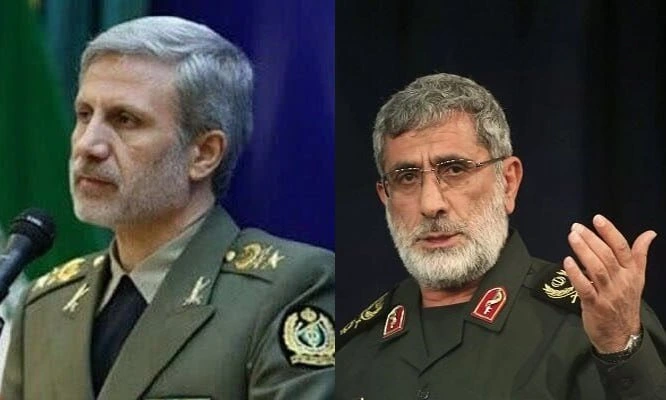
Hatami argued that both military campaigns failed to achieve their stated objectives, which Iranian officials say included regime change and the weakening of Iran’s sovereignty. He claimed that Iranian forces, despite facing attacks during ongoing negotiations, mounted an effective response that compelled adversaries to seek a ceasefire. The commander also highlighted the role of coordinated operations between the Army and the IRGC along the Persian Gulf and Sea of Oman coastlines. He maintained that hostile forces did not approach Iranian territorial waters and that no Iranian territory was lost during the conflicts.
Echoing this assessment, IRGC Quds Force Commander Brigadier General Esmaeil Qaani framed the outcome within the broader context of the “Axis of Resistance,” the network of regional groups aligned with Tehran. In a televised interview, Qaani argued that resistance movements in Palestine and Lebanon have demonstrated an ability to withstand sustained military pressure without abandoning the battlefield. He further contended that recent developments have exposed the limits of American and Israeli military power while accelerating what he described as the internal decline of Israel.
Qaani also underscored the strategic importance of the Bab el-Mandeb Strait, suggesting that the region remains a critical point of leverage for Iran and its allies. Meanwhile, Iranian Army spokesperson Brigadier General Mohammad Akrami-Nia said the conflicts had accelerated military modernization efforts. He cited improved coordination among armed forces, expanded deployment of domestically produced missile systems, and the introduction of next-generation drones as evidence of enhanced readiness. Despite the recent diplomatic breakthrough, Iranian officials have repeatedly emphasized that military preparedness will remain central to national policy.
Akrami-Nia stated that diplomacy and defense are being pursued simultaneously under a unified strategic framework directed by the country’s leadership. The newly signed memorandum of understanding mandates a permanent cessation of hostilities across multiple fronts, including Lebanon, and calls for the immediate lifting of the naval blockade against Iran. Yet Tehran’s message remains unequivocal: diplomacy may have reopened, but deterrence, in the eyes of Iran’s military leadership, remains the foundation upon which any future agreement will rest.