






BY MOHAMMAD ZAHID AKHTAR
A centuries-old craft born during the Ottoman Empire continues to thrive in Istanbul, where master cymbalsmiths still handcraft bronze cymbals using techniques developed more than 400 years ago. Revered by musicians around the world, these distinctive instruments remain a symbol of the city’s rich musical and industrial heritage. Cymbals were first used by Ottoman military “mehter” bands, whose powerful sounds were intended to inspire soldiers and frighten or demoralize the enemy.
But in the 17th century, an Armenian alchemist named Avedis Zildjian transformed the instrument into something far more sophisticated. Although cymbals had existed long before him, Zildjian developed a unique metal alloy and a special treatment process that made them stronger and less brittle. His innovation impressed the Ottoman Sultan, who in 1623 allowed him to establish a workshop. The secret formula was subsequently passed down through generations.
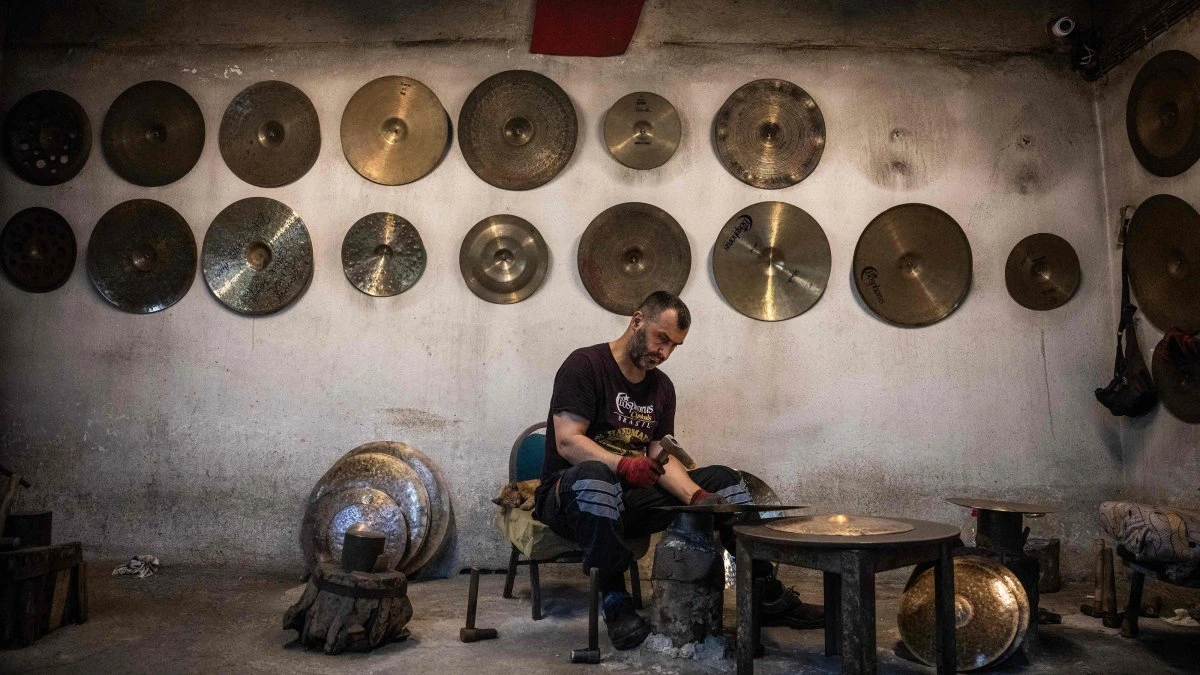
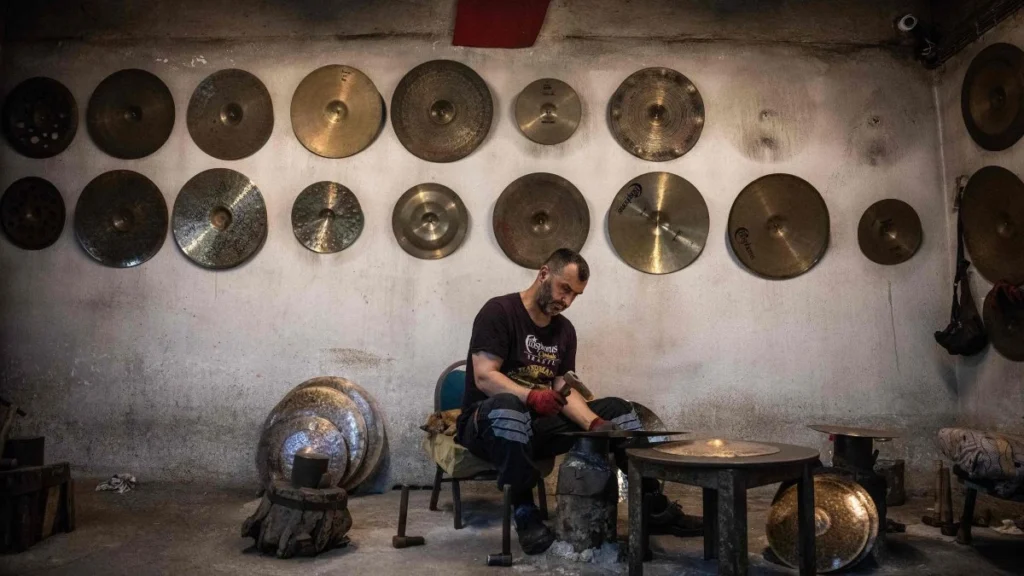
The original Zildjian family operation eventually moved from Istanbul to the United States during the final years of the Ottoman Empire, but the ancient tradition survived in Türkiye. Craftsmen who had learned from the Zildjian masters continued producing handmade cymbals, ensuring Istanbul retained its reputation as a global centre of excellence. Today, a handful of Istanbul-based manufacturers still create hand-hammered bronze cymbals using traditional methods. At workshops such as Bosphorus Cymbals, founded in 1996, craftsmen rely on coal and wood rather than modern automated production.
The process is demanding and time-consuming. Copper and tin are melted to create bronze, poured into moulds and cooled into disc-shaped blanks. The metal is repeatedly heated, rolled and tempered before the cymbal takes its final form. According to master cymbalsmith Hasan Seker, every stage is crucial, and the alloy contains another secret ingredient that contributes to its distinctive consistency and sound. Perhaps the most important stage is hand hammering. Skilled craftsmen strike each cymbal individually, creating the darker and more complex tones prized particularly by jazz musicians.
“Not a single blow is random,” Seker explains. The emotional state and physical touch of the craftsman can influence the tension patterns and surface of the metal, giving each instrument its own unique character, or, as he describes it, “its soul.” For musicians, this individuality is precisely what makes Istanbul-made cymbals so special. No two handmade cymbals sound exactly alike. In an era dominated by mass production, Istanbul’s ancient cymbal-making tradition continues to offer musicians something increasingly rare: a sound that is entirely unique.