



ARABIAN TIMES NEWS NETWORK
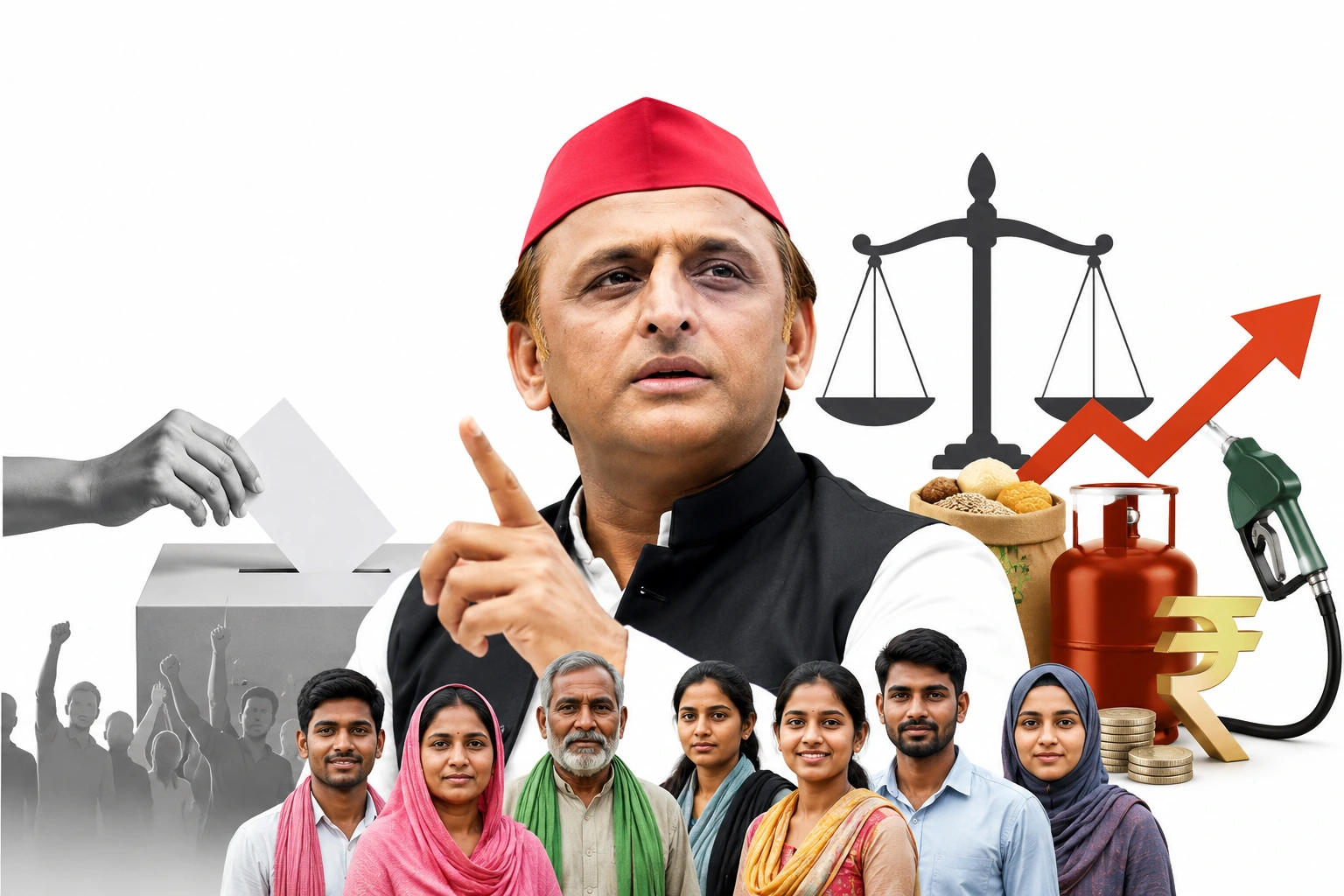
As India moves steadily toward another cycle of electoral contests, Akhilesh Yadav is attempting to redefine the political conversation in Uttar Pradesh. Rather than limiting his criticism to individual policies or isolated controversies, the Samajwadi Party president is weaving together a broader argument: that economic hardship, democratic decline, and social exclusion are interconnected consequences of BJP rule.
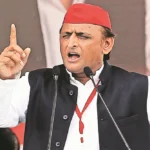
Speaking in Mainpuri, Yadav presented a picture of a government increasingly disconnected from the daily realities of ordinary citizens. His remarks moved across a wide spectrum of issues, from rising household expenses and agricultural distress to political culture and institutional accountability, reflecting what appears to be a larger opposition strategy ahead of the 2027 Assembly elections and the national contest that will follow.
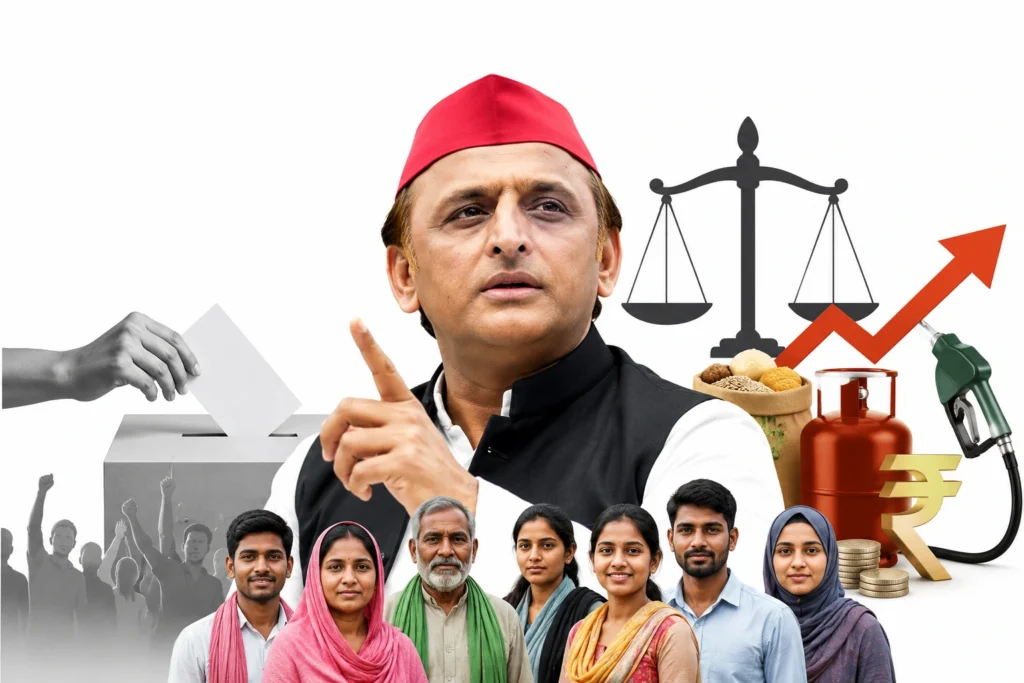
At the center of his critique was the issue that touches almost every household: inflation. According to Yadav, the steady rise in the prices of petrol, diesel, and cooking gas has transformed routine family budgeting into a constant struggle. He argued that the burden is no longer confined to urban consumers. Farmers, too, are facing mounting challenges, including shortages of fertilizer and the continuing problem of stray cattle damaging crops and threatening livelihoods across rural Uttar Pradesh.
The former Chief Minister also questioned the BJP government’s claims of development. Smart cities, he suggested, have remained more visible in political speeches than on the ground. Likewise, the rollout of smart electricity meters, promoted as a modernization measure, has become a source of public resentment in many areas. Yadav claimed that consumers associate the meters with higher bills and greater financial pressure, turning what was intended as a technological reform into a political liability.
His economic critique extended beyond local governance. Referring to the weakening rupee and the strengthening dollar, Yadav argued that economic policies pursued by the Centre have increased the cost of living for ordinary Indians. In his assessment, inflation is not merely a temporary challenge but evidence of deeper structural problems within the economy.
Yet economics was only one part of his message. Yadav devoted considerable attention to what he described as the erosion of democratic norms. He accused the ruling party of using state power against political opponents, encouraging a culture of hostility in public discourse, and abandoning the standards of political civility that once defined democratic engagement. The issue, he implied, is not simply electoral competition but the quality of democracy itself.
That concern was amplified by a recent remark that has drawn significant attention. Yadav warned that if the BJP were to return to power again in 2029, it could become India’s “last election.” The statement reflects growing opposition concerns about democratic institutions, electoral fairness, and the concentration of political power. While supporters view the comment as a warning about the future of constitutional democracy, critics see it as political rhetoric aimed at mobilizing opposition voters. Yadav also sought to reinforce the Samajwadi Party’s PDA narrative, focusing on the participation of backward classes, Dalits, minorities, and women in governance.
He called for the implementation of women’s reservation before the 2027 elections and argued that a future Samajwadi government would expand representation for historically underrepresented groups. Taken together, Yadav’s Mainpuri remarks were less a routine political speech and more an attempt to frame the coming years as a contest over the direction of India itself, one defined not only by who governs, but by questions of economic justice, democratic accountability, and social participation.