



BY SHAMSHER KHAN-DELHI
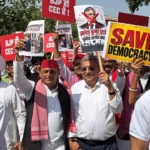
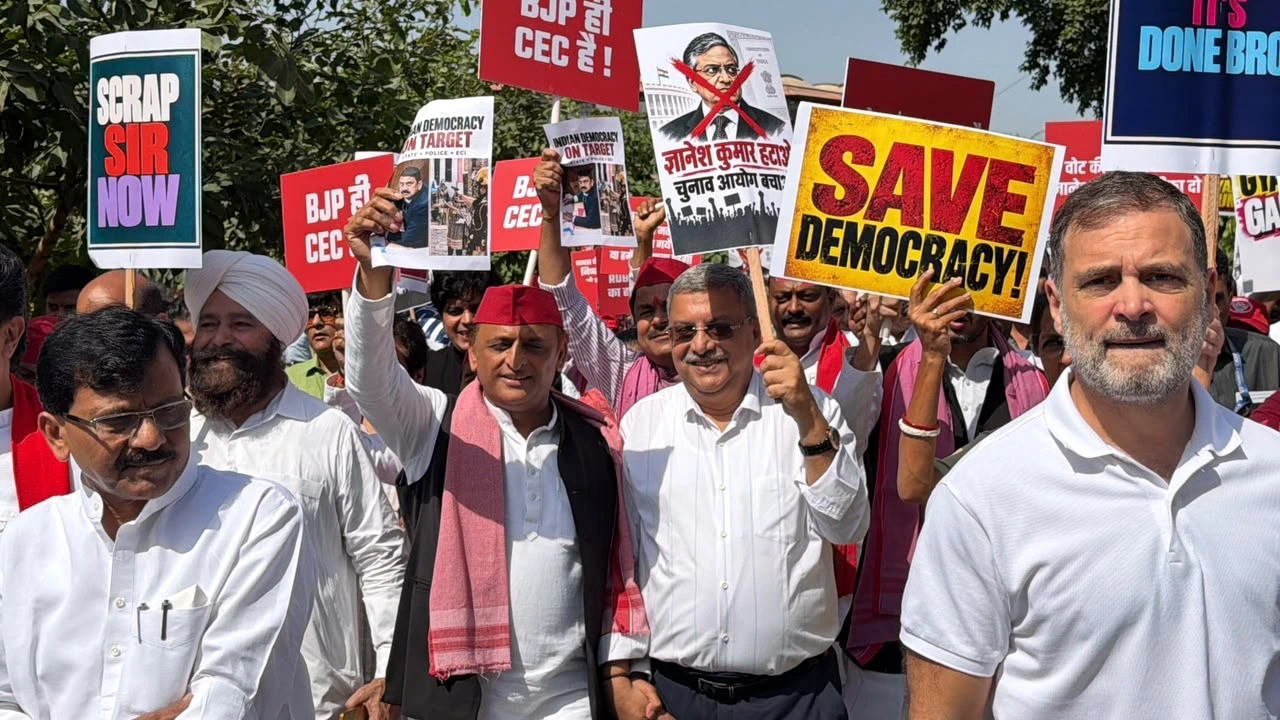
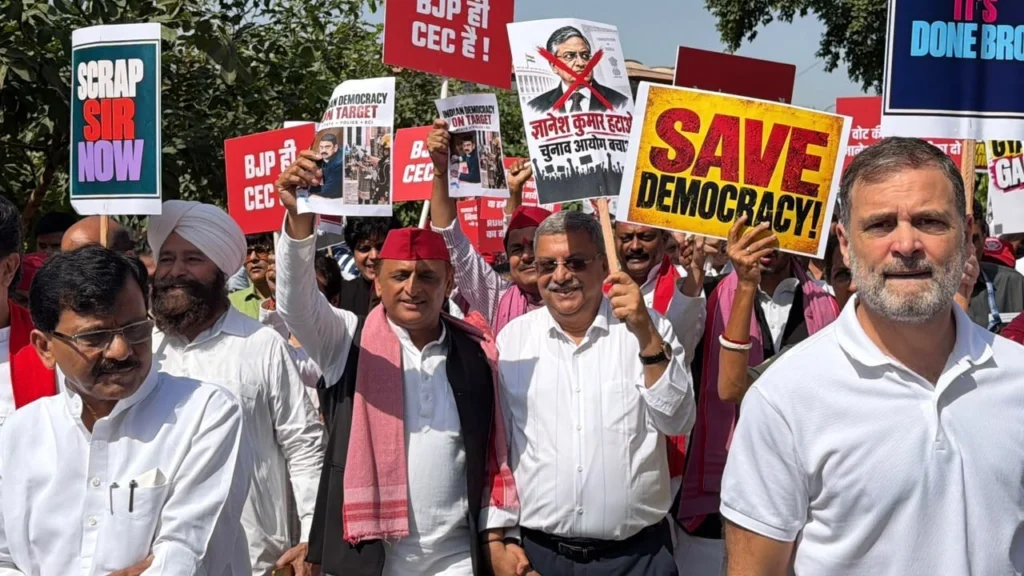
A major political confrontation erupted in New Delhi on October 6th as INDIA bloc leaders staged a forceful protest against Chief Election Commissioner Gyanesh Kumar, accusing the Election Commission of compromising the integrity of the electoral process. The opposition march, which began from Parliament’s Makar Dwar and was headed towards the Election Commission headquarters, was stopped by Delhi Police midway.
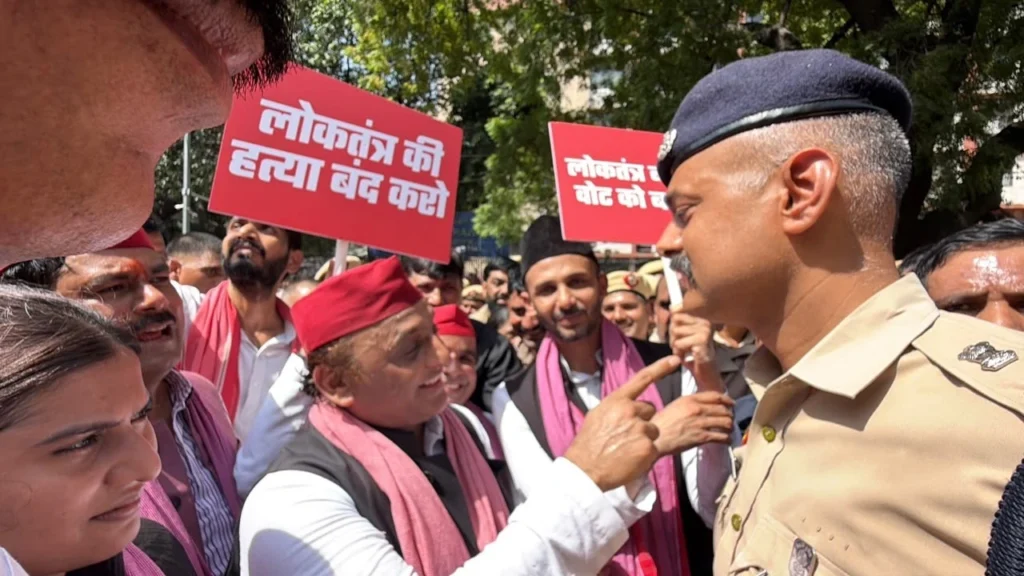
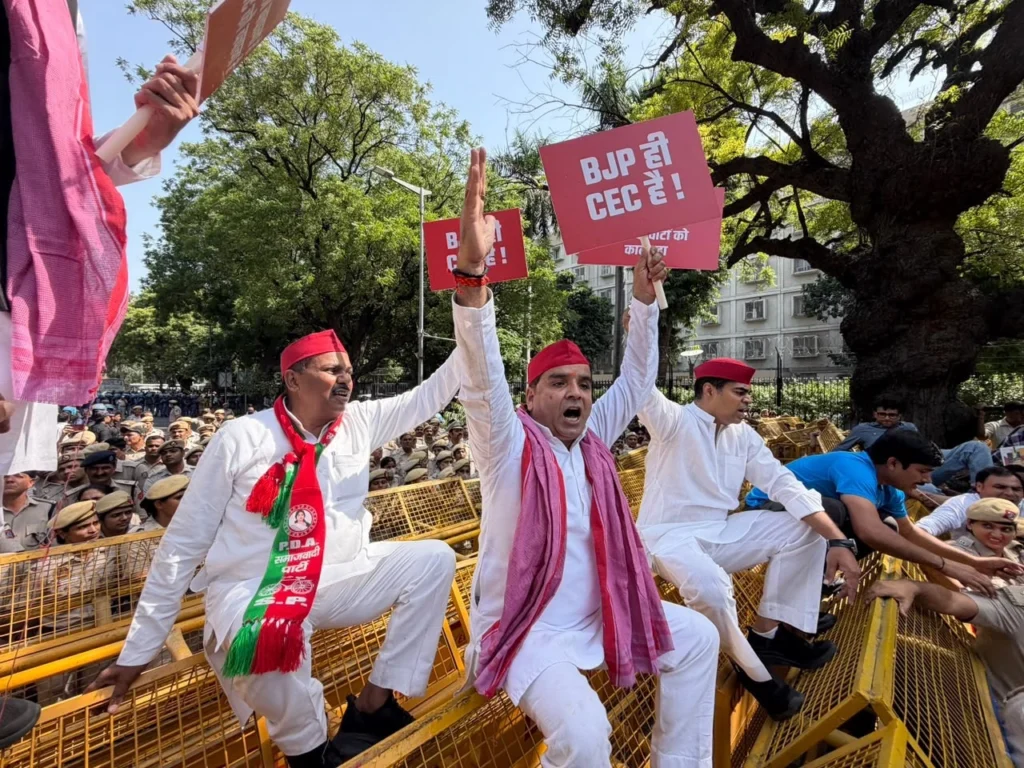
The police action triggered another dramatic scene as opposition MPs sat on the road and began a sit-in protest. Samajwadi Party national president and former Uttar Pradesh Chief Minister Akhilesh Yadav, along with SP MPs and other opposition leaders, were subsequently taken into custody. The protest was organised against the Special Intensive Revision of electoral rolls and what opposition parties described as irregularities and manipulation in the election process.
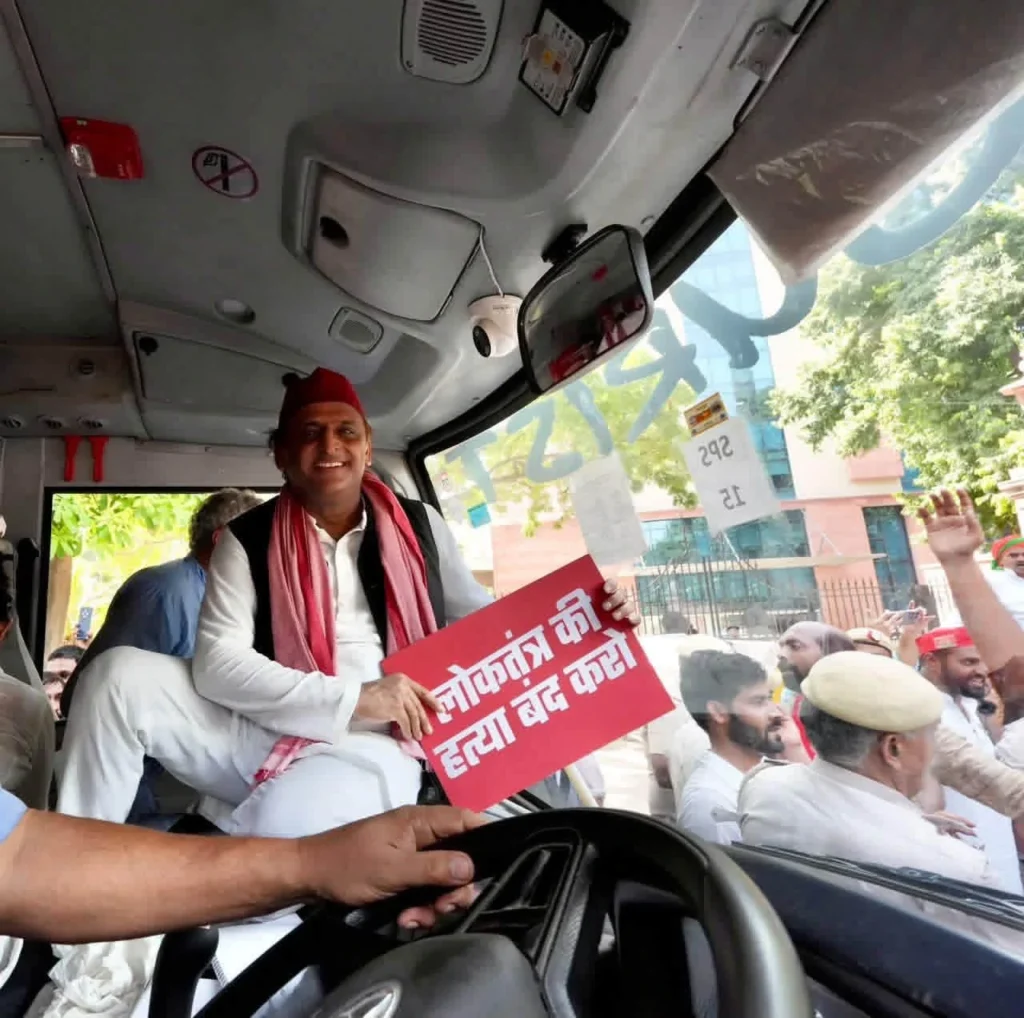
The INDIA bloc leaders demanded the resignation of Chief Election Commissioner Gyanesh Kumar, arguing that public confidence in the neutrality of the electoral machinery must be restored. The detention of opposition leaders transformed the march into a wider political confrontation. Akhilesh Yadav strongly defended the protestors, declaring that those who fight for the country are not afraid of arrest. He further alleged that the ruling BJP had effectively become the Chief Election Commissioner, while claiming that there was a broad public sentiment demanding the CEC’s resignation.
Yadav also launched a sharp attack on the BJP’s advocacy of “One Nation, One Election”. In a pointed political jibe, he alleged that behind the slogan was a strategy to conduct elections only once and eliminate the need for repeated electoral contests. He referred to what he called the “Chandigarh-style move”, suggesting that fewer elections would mean fewer opportunities for alleged electoral irregularities to come under scrutiny.
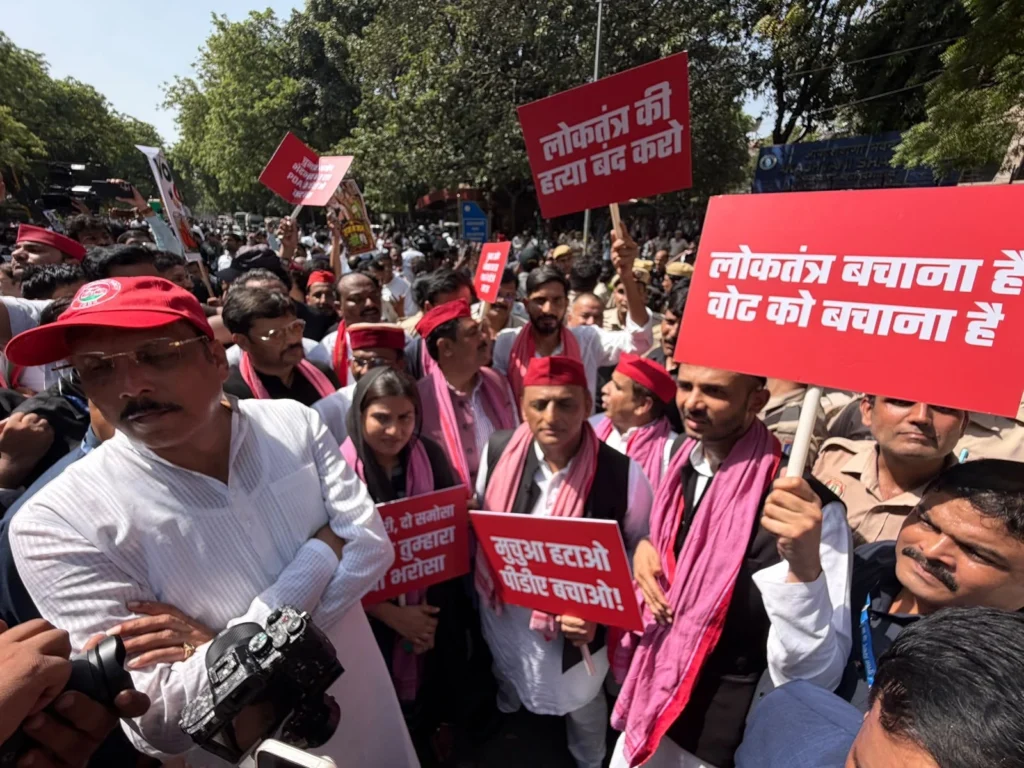
Taking his attack further, the SP chief said the BJP’s slogan should instead be called “One Corruption, One Election”. His remarks reflected the deepening political battle between the opposition and the government over electoral reforms, voter-list revisions and the independence of constitutional institutions. The dramatic protest has once again placed the Election Commission at the centre of India’s political debate.
For the opposition, the issue is not merely about voter-list revision but about protecting the credibility of democracy itself. For the government and the Election Commission, however, such allegations raise questions about the political use of institutional controversies. With electoral reforms becoming an increasingly contentious issue, today’s confrontation signals that the battle over the credibility, transparency and independence of India’s electoral system is far from over.