




BY SHAZIA SALEEM
Samajwadi Party National President and former Uttar Pradesh Chief Minister Akhilesh Yadav has extended his support to candidates preparing for the PCS, RO/ARO and BEO examinations who have crossed the upper age limit due to disruptions caused by the COVID-19 pandemic, changes in the examination syllabus and the implementation of the new service recruitment rules. Yadav met a delegation of affected aspirants and assured them that the Samajwadi Party stands firmly with their struggle. The candidates submitted a memorandum demanding two additional attempts for the PCS examination and one additional attempt each for the RO/ARO and BEO examinations.
According to the aspirants, their preparation and examinations were seriously affected during the COVID-19 period between 2019 and 2021. Subsequently, extensive changes in the PCS syllabus between 2023 and 2025 forced many candidates to restart their preparation from scratch. With the introduction of the new Service Recruitment Rules in 2026, those who have already crossed the age limit are unable to benefit from the revised provisions. Akhilesh Yadav said the years of hard work and the future of these young aspirants must be taken into consideration. He assured them that their issues would be addressed if the Samajwadi Party returns to power.
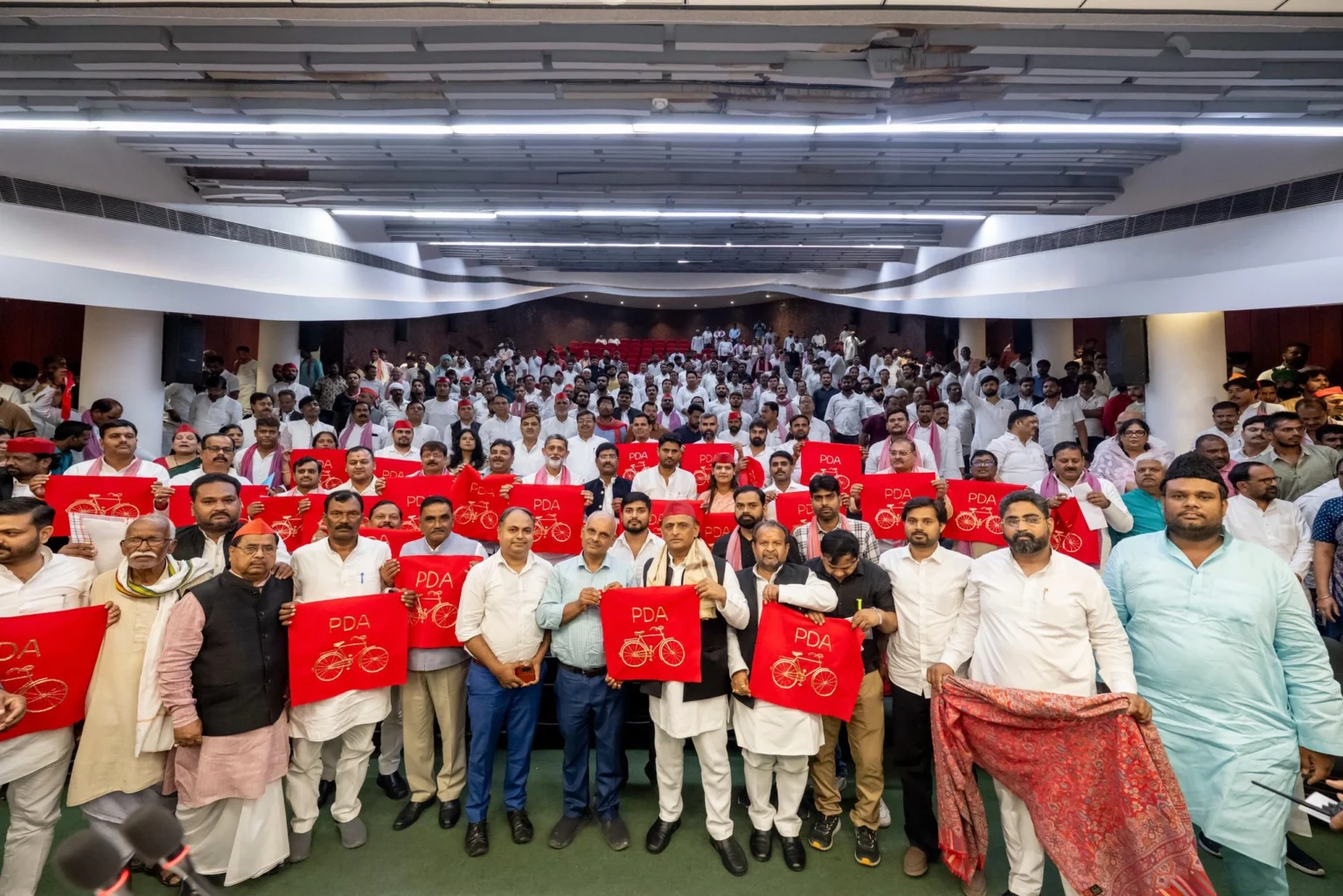
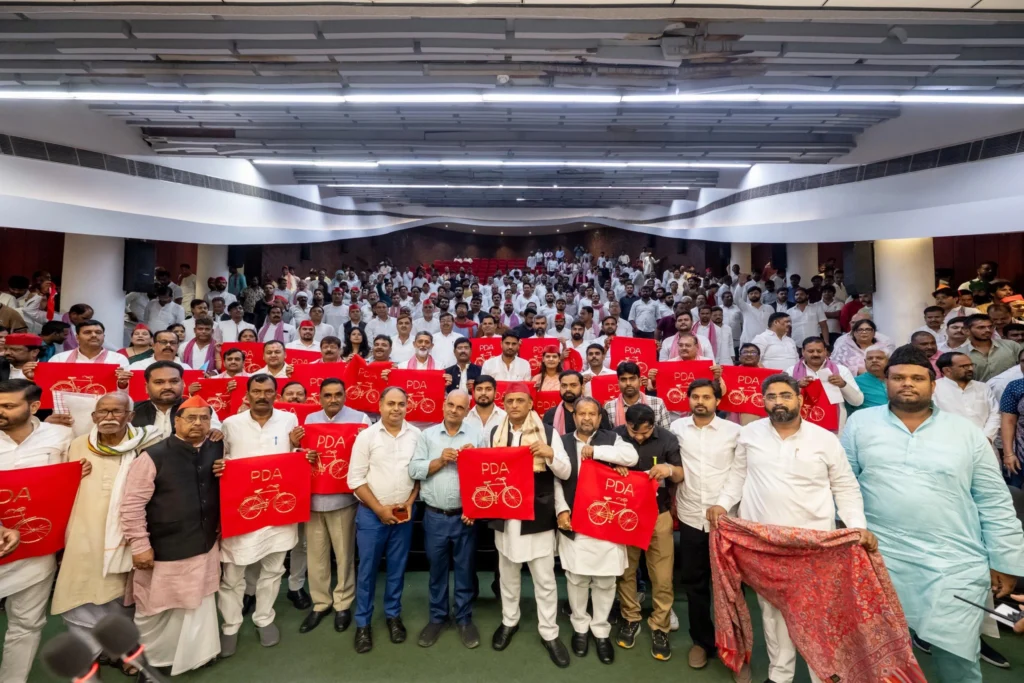
Addressing a large gathering of party workers and office-bearers at the Dr Ram Manohar Lohia Auditorium at the Samajwadi Party state headquarters in Lucknow, Yadav said that the people, farmers and the younger generation were deeply dissatisfied with the BJP government and that the coming period would bring political change. He said a future Samajwadi Party government would focus on employment, education, healthcare, farmers and development through concrete and result-oriented policies. He also criticised the BJP government over rising prices and alleged that despite the significant increase in Uttar Pradesh’s budget over the years, ordinary people continue to face increasing financial hardship.
He recalled that when Mulayam Singh Yadav first became Chief Minister, the state budget was around Rs 70,000 crore, whereas it has now risen to nearly Rs 9 lakh crore. The former Chief Minister also highlighted the infrastructure projects undertaken during the Samajwadi Party government. He said the party had developed an efficient model for expressway construction and claimed that the Lucknow-Agra Expressway remained one of the country’s finest examples of high-quality infrastructure completed within limited time and cost.
Criticising the present government, Yadav raised questions over the quality and expenditure involved in several road projects, including the Kanpur-Lucknow Expressway and the Gorakhpur Link Expressway. He argued that public funds could be better utilised for education and employment generation. Yadav further alleged that the BJP government was spending thousands of crores on publicity and image-building while people were struggling with unemployment, inflation and inadequate basic services. In a sharp political attack, he claimed that nearly Rs 7,000 crore of taxpayers’ money had been spent on projecting the image of the Uttar Pradesh Chief Minister.
He said such a large amount could instead be used to establish world-class universities and strengthen higher education and research. “An equivalent amount could be used to build two or three world-class universities offering postgraduate and research education and improve the future of our children and youth,” Yadav said, adding that the Samajwadi Party aimed to lead Uttar Pradesh towards development, prosperity and a “New India.” He concluded with a sarcastic remark, accusing the BJP government of spending public money on what he described as a “cosmetic facial” to improve its political image, while the people of Uttar Pradesh continued to struggle with unemployment, inflation and essential needs.



