



KULDEEP SINGH YADAV
LUCKNOW: Samajwadi Party national president and former Uttar Pradesh chief minister Akhilesh Yadav has launched a forceful political offensive against the BJP, raising serious questions over electoral integrity, alleged manipulation of voter lists and the Election Commission’s credibility. Calling upon party workers to remain vigilant during the Special Intensive Revision (SIR) of electoral rolls, he urged every active PDA Prahari to assist voters facing difficulties and prevent the alleged deletion of genuine voters and inclusion of fraudulent names.
Congratulating PDA Praharis for helping affected voters, Yadav directed them to remain on alert on October 24 and ensure that eligible electors receive every possible assistance. He instructed Samajwadi Party leaders and workers to maintain close vigilance at their respective polling booths, facilitate the registration of genuine voters and prevent the inclusion of bogus entries. He warned party cadres against what he described as the BJP’s alleged electoral dishonesty.
Addressing the broader political situation, Yadav asserted that the BJP had forfeited public confidence through unfulfilled promises, administrative failures and pervasive corruption. He maintained that farmers, young people, women and ordinary citizens were increasingly disillusioned with the ruling establishment. According to him, the BJP’s political predicament had intensified as its prospects of retaining power weakened, prompting what he characterised as resorting to deception and electoral malpractice.
The SP chief also accused the state’s political leadership of shielding corrupt officials, criminal elements and alleged mafia networks while directing unsubstantiated accusations against opposition parties. He argued that corruption had penetrated government departments and administrative operations, inflicting substantial damage on Uttar Pradesh. He further criticised the BJP’s decade-long political dominance, citing deteriorating law and order, rising criminality, injustice, oppression and corruption as evidence of governance failures.
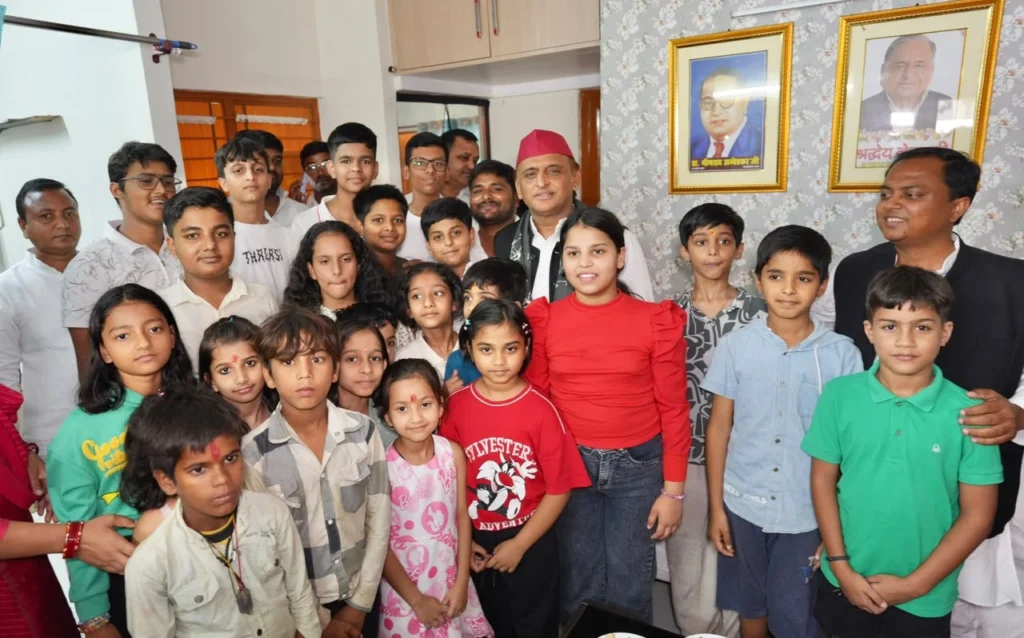
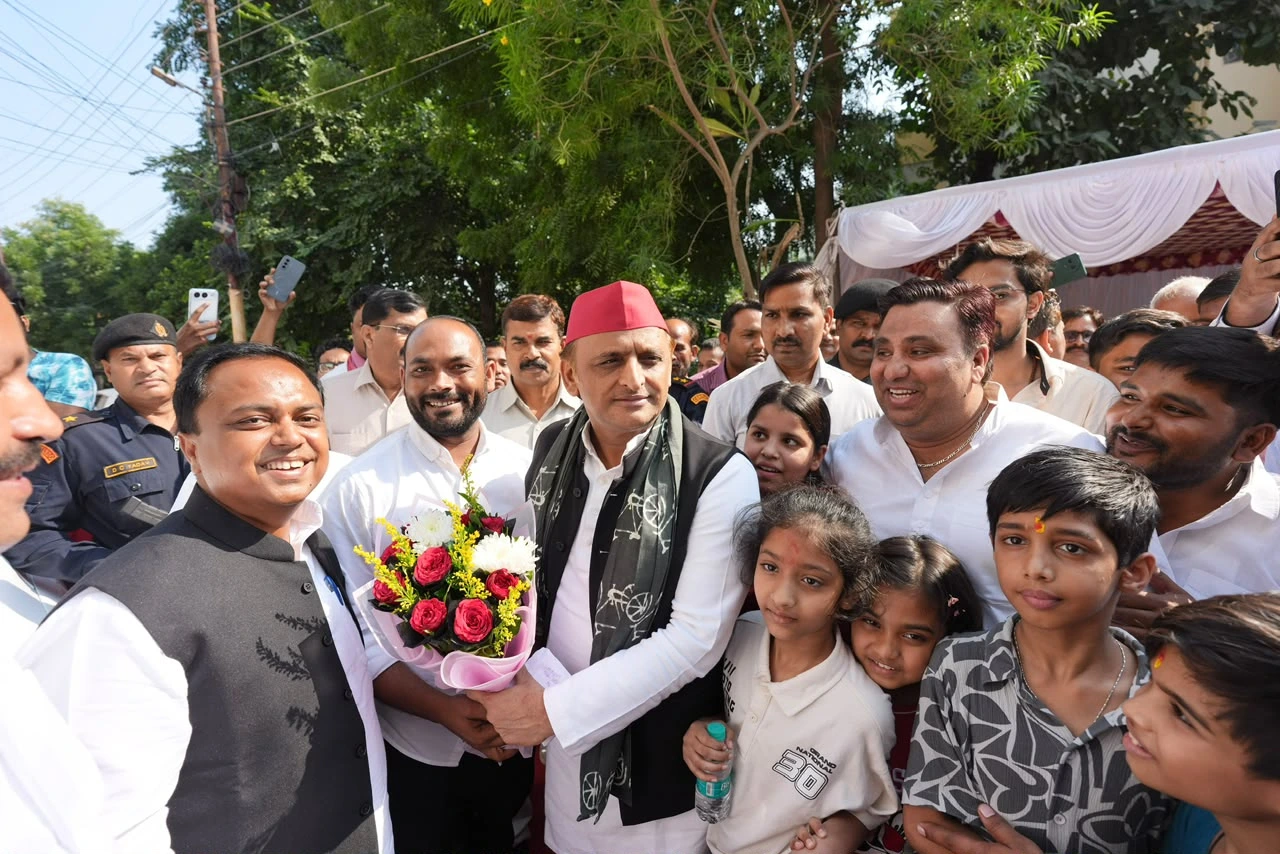
Speaking to journalists at the former minister Vidya Chaudhary’s residence in Gomti Nagar, Lucknow, after enquiring about her health, Yadav alleged that substantial discrepancies persisted in electoral rolls despite the SIR exercise. He claimed that some individuals appeared multiple times on voter lists, citing instances of duplicate entries allegedly numbering two, three, four or even ten for a single person.
Rejecting the characterisation of such discrepancies as minor errors, Yadav argued that duplicate registrations and questionable entries constituted serious irregularities demanding immediate investigation. He alleged that the BJP benefited from electoral manipulation and accused the Election Commission of failing to act adequately on complaints submitted by the Samajwadi Party concerning voter-list discrepancies, alleged vote theft and irregularities during by-elections.
Yadav demanded accountability for officials responsible for electoral irregularities and insisted that the Election Commission must operate independently of political influence. He questioned why the BJP reacted defensively whenever opposition parties and citizens scrutinised the commission’s functioning. Emphasising that constitutional institutions must demonstrate both impartiality and independence, he argued that electoral credibility depended not merely on procedural assurances but also on transparent investigations and decisive corrective action.
Extending his criticism beyond electoral administration, Yadav highlighted caste-based discrimination, asserting that members of the PDA, Pichhde, Dalit and Alpsankhyak (backward classes, Dalits and minorities)—continued to experience humiliation, suffering and unequal treatment irrespective of their circumstances.
He argued that reports of caste discrimination, including accounts attributed to foreign observers, exposed the persistence of entrenched social hierarchies. Positioning social justice as the central plank of his political campaign, he declared that a PDA government offered the necessary political alternative to dismantle caste-based inequality.
Yadav’s intervention places electoral transparency, institutional accountability and social justice at the centre of the Samajwadi Party’s political mobilisation. With his appeal for intensified booth-level vigilance, the SP chief is seeking to consolidate the PDA constituency while challenging the BJP’s electoral credibility ahead of the 2027 Uttar Pradesh Assembly elections. However, the allegations of deliberate electoral manipulation require independent investigation and substantiation by the competent authorities.