


ARABIAN TIMES NEWS NETWORK
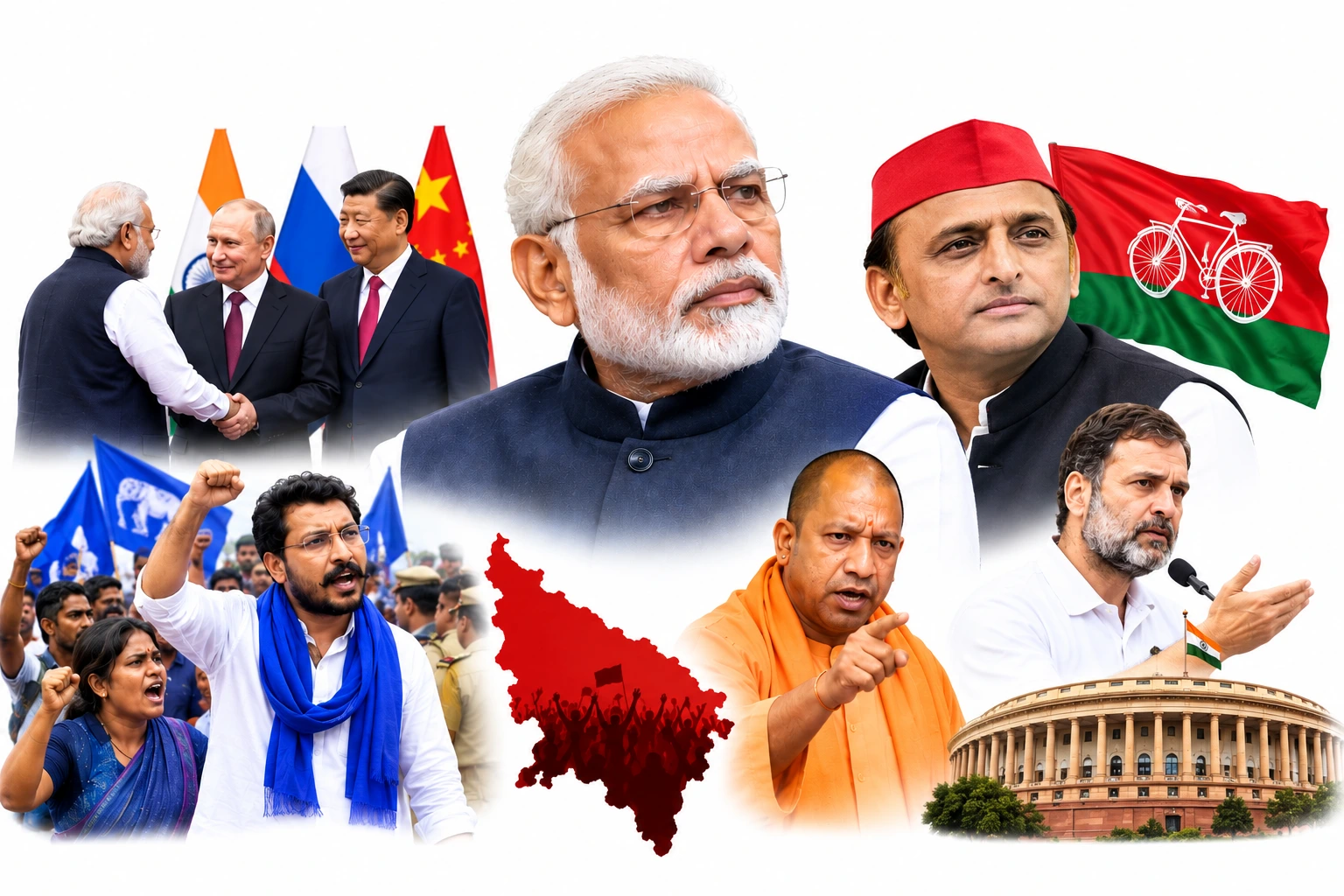
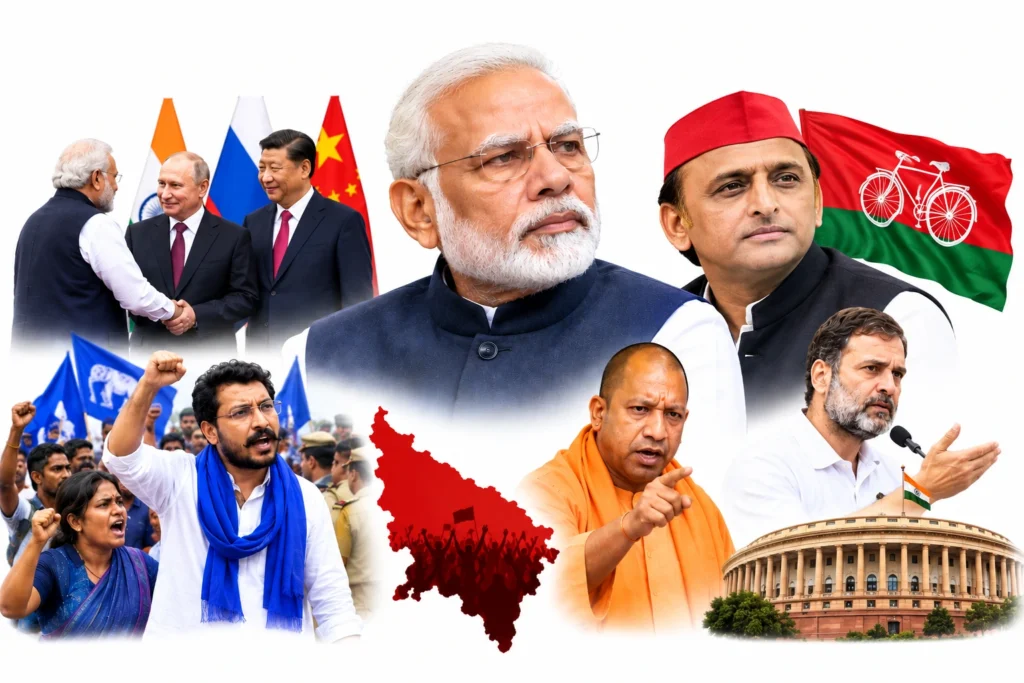
The red carpets have been rolled up. The handshakes with Putin and Xi are over. The cameras have moved on. And just like that, Narendra Modi’s carefully choreographed global spectacle has evaporated, leaving him staring straight into a domestic storm that is no longer polite enough to wait its turn. Three days of diplomatic theatre in Delhi were meant to project invincibility. Instead, the moment the last foreign leader boarded the plane, the ground under the Prime Minister’s feet started cracking. Uttar Pradesh is boiling. Maharashtra is restless. Dalits are on the streets. Youth are organising. And the opposition, for once, looks like it has stopped just talking and started moving.
In Uttar Pradesh, the state’s most powerful political machine is suddenly looking brittle. A businessman from a backward community is murdered. Allegations fly that people linked to the government were involved. Yogi Adityanath’s own cabinet minister Sanjay Nishad sits on a dharna. Then Chandrashekhar Azad of the Bhim Army clashes with the police. The message is unmistakable: the most marginalised sections that BJP once claimed to have absorbed are now openly confronting the Yogi regime. Upper-caste anger is already simmering over paper leaks, jobs, and a sense of being taken for granted. When both the top of the Hindu social pyramid and the bottom start moving against you at the same time, the famous “Hindu consolidation” begins to look like a cracked dam.
Maharashtra is no quieter. Manoj Jarange Patil has announced he will march on Mumbai from 19 September. This is not a token protest. The Maratha reservation agitation has already shown it can paralyse the state. Now Vanchit Bahujan Aghadi leaders are aligning with it. One front of the party that once claimed to speak for the most backward is now openly joining hands with a community that feels betrayed by the “double-engine” government. When your own social engineering starts fighting itself in the streets of Mumbai, the arithmetic that won you elections starts looking dangerous.
Meanwhile, Rahul Gandhi has held meetings and decided Congress will launch a sustained campaign in Uttar Pradesh and Uttarakhand. For years the BJP treated Congress as a spent force in the Hindi heartland. That luxury is ending. Youth organisations are preparing to hit the streets on electoral malpractice and the growing perception that institutions are captured. The Election Commission and the system itself are being framed as the target. When young people stop arguing about ideology and start arguing about the integrity of the game, the ruling party is in real trouble.
Amit Shah’s response has been predictable: change the subject. He announced that the Uniform Civil Code will be implemented in 21 BJP-ruled states before 2029. Triple talaq was abolished, he reminded everyone, and now the bigger project is coming. It is a classic polarising gambit, shift the conversation from caste anger, unemployment, paper leaks and institutional distrust to a cultural battle that has always energised the core. But the ground reality is not cooperating. When Dalits, extremely backward communities, Marathas and upper castes are simultaneously restless, communal polarisation is no longer a magic switch. It is a high-risk bet that can backfire if the social coalitions that once held the BJP together start rupturing in multiple directions at once.
The deeper problem is structural. The BJP’s decade-long social engineering project, projecting Modi as the backward-caste outsider who would unite all Hindus, has suffered a major setback. Caste census politics and the language of social justice have reopened questions the party preferred to keep buried. The upper castes who formed the reliable core are no longer silent. The Dalit and OBC sections that were supposed to complete the bouquet are showing signs of walking away. When the very communities that were meant to deliver permanent majorities start organising against you, the entire project is under stress.
Professor after professor and observer after observer is saying the same thing: the real test of Modi’s politics begins now. The global photo-ops are finished. The domestic fire is lit. In the next few weeks, the Gujarat lobby that has run this machine will have to prove it can still manage the chaos it once thrived on. Chandrashekhar Azad has demonstrated he can mobilise. Jarange Patil has shown he can shut cities. Rahul Gandhi is finally treating UP and Uttarakhand as battlefields worth fighting. Youth organisations are preparing to make institutions the issue rather than personalities.
This is not the comfortable politics of controlled narratives and carefully timed distractions. This is the politics of multiple open fronts, of communities that no longer feel they have to stay silent, of a ruling party that suddenly looks surrounded rather than dominant. The gathering is over. The troubles have begun. And for the first time in a long while, it is not clear whether Modi will emerge stronger, or whether the storm that has been gathering for months is finally ready to break.