






BY MOHAMMAD TARIQUE SALEEM
Samajwadi Party chief Akhilesh Yadav has drawn a clear battle line against what he calls the systematic erosion of India’s electoral process. At the centre of his attack stands Chief Election Commissioner Gyanesh Kumar, whose resignation he has demanded without hesitation. Alongside this, Yadav has rejected Electronic Voting Machines outright, insisting that only ballot-paper voting can restore public faith, and has openly backed the Gen Z protests that have taken the same fight to the streets.
Yadav has repeatedly called for Gyanesh Kumar to resign, stating that “those who caused these differences in the Election Commission should resign on their own.” His remarks followed an Indian Express investigation revealing that Election Commissioners Sukhbir Singh Sandhu and Vivek Joshi had filed 14 formal written dissents over 10 months against decisions taken under Kumar’s leadership. These included the centralisation of the ERONET electoral roll database, alterations to Form 6 for new voter registration, and mass deletions during the Special Intensive Revision (SIR) of voter lists.
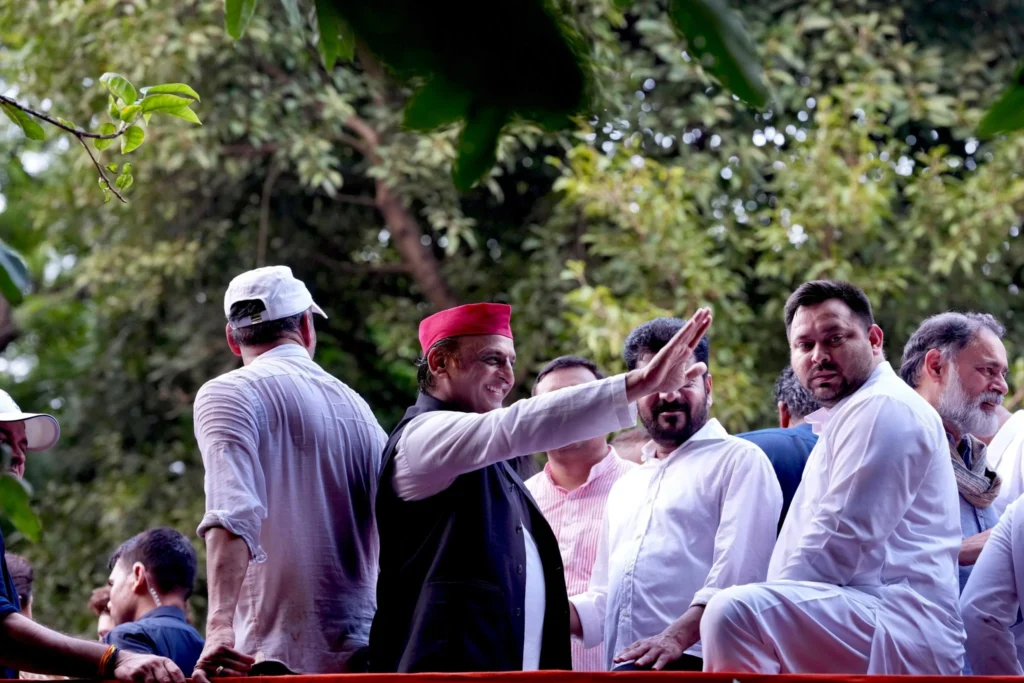
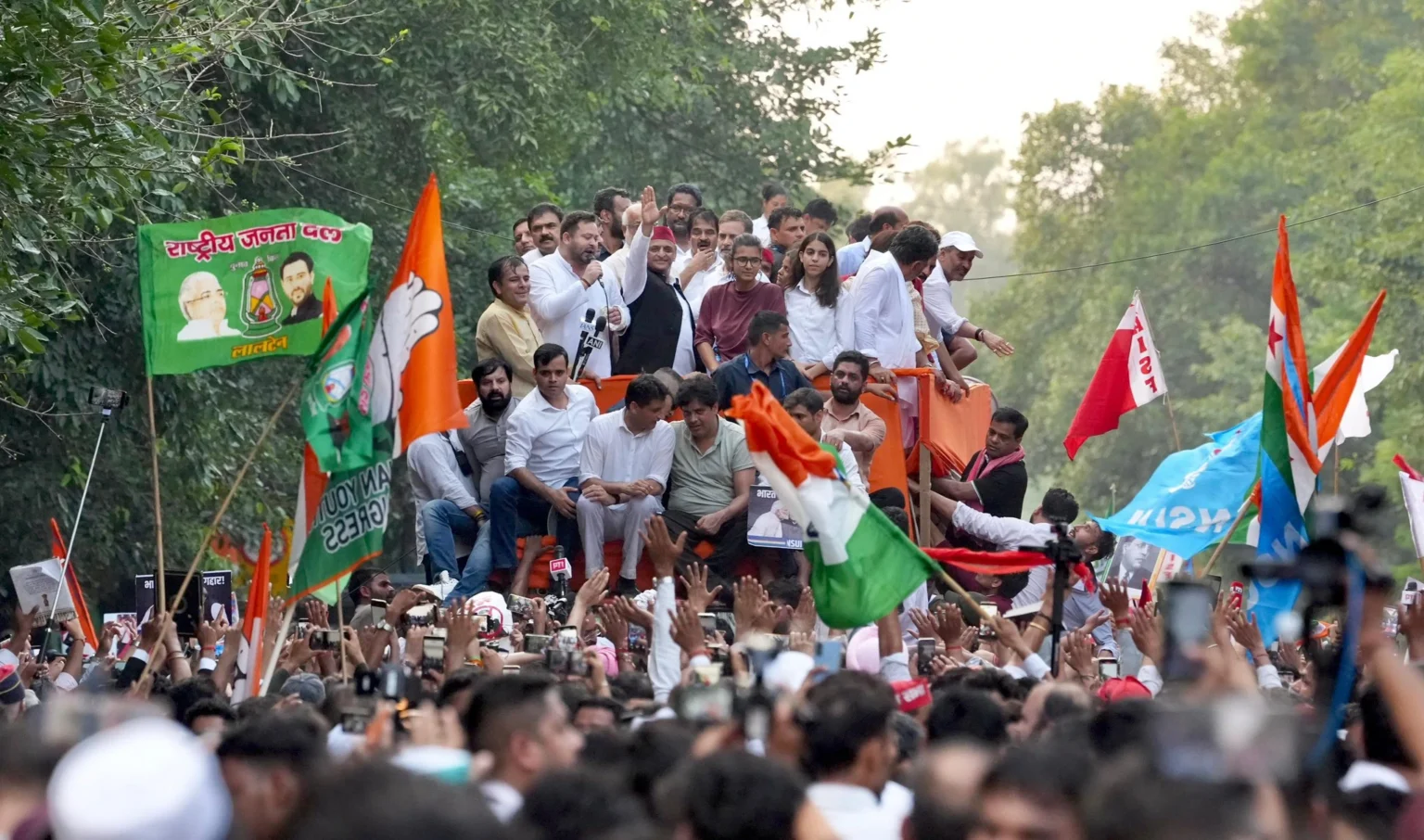
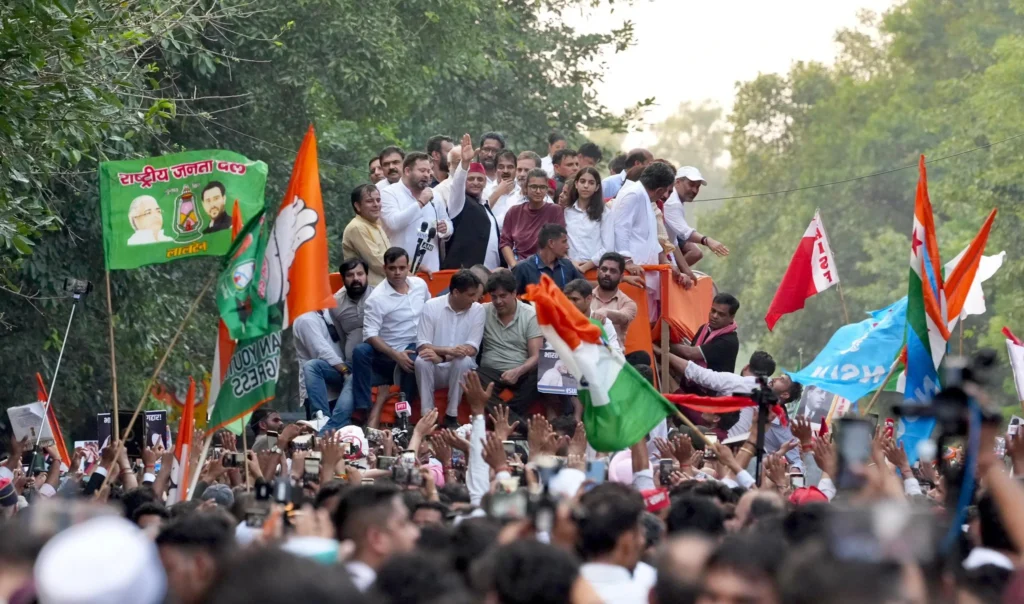
Yadav alleged that Kumar “snatched away the election” and that the CEC’s actions reflected a deeper conspiracy orchestrated by the BJP. He has backed protests at Jantar Mantar and elsewhere, insisting that a constitutional body must remain impartial or forfeit its credibility. Parallel to this, Yadav has intensified his long-standing opposition to EVMs. He has declared that the Samajwadi Party will remain against the machines “even if we win all the seats.” Citing the United States and Germany, which rely on paper ballots, he asks why India needs “a machine after a machine.”
Yadav argues that ballot papers alone can restore public trust, pointing to alleged vulnerabilities in EVMs by drawing parallels with smart electricity meters that can allegedly be manipulated remotely. He has accused the Election Commission of enabling “vote theft” and has demanded a return to transparent, paper-based voting as the only guarantee of genuine democracy. He has also aligned with Gen Z-driven protests, including those organised by groups such as the Cockroach Janta Party, which have demanded Kumar’s ouster and the scrapping of the SIR exercise.
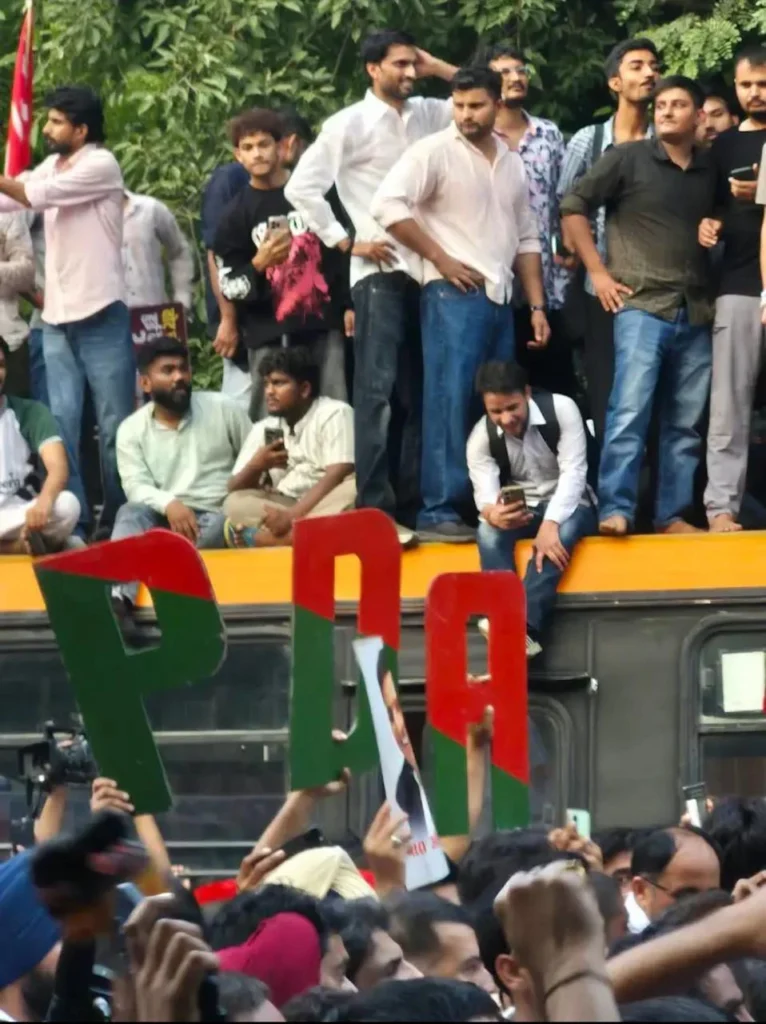
Yadav has described the agitation as a broader defence of democracy, not limited to any single party, and has emphasised that youth opposition reflects a wider loss of faith in institutions. The queries Yadav has raised against the BJP government are pointed and systematic. He has accused the ruling party of treating the Election Commission as an instrument of power rather than a neutral referee.
He claims the BJP engineers voter lists so that only its supporters are recognised as legitimate citizens, citing specific examples of duplicate and multiple entries in constituencies such as Azamgarh and Gorakhpur. He has alleged large-scale deletions of opposition supporters under SIR, the use of fake Form 7 applications to remove names, and administrative pressure on officials to influence outcomes.
Yadav maintains that governments formed under a compromised Election Commission are unconstitutional and that the real crisis is the BJP’s grip on institutions. Once that grip is broken, he argues, the Election Commission and other bodies will regain independence. Yadav’s position is uncompromising: the CEC must resign, EVMs must be replaced by ballot papers, and the youth’s protest against electoral opacity must be supported. He presents these demands as a defence of the Constitution against what he calls a systematic attempt to hollow out democratic processes. In a polarised political climate, his hard line has added fuel to the national debate on the credibility of India’s elections.