





ARABIAN TIMES NEWS NETWORK
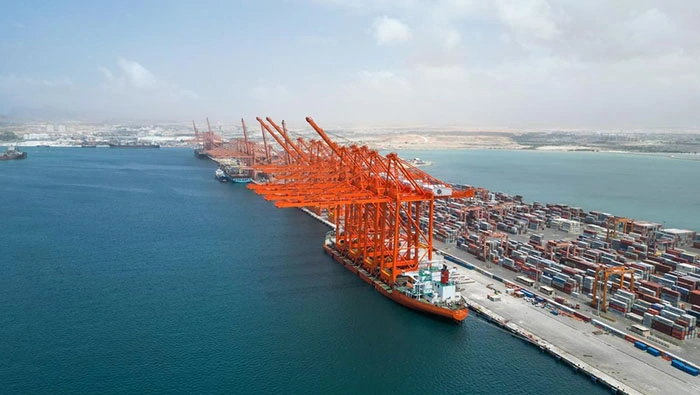
Omani ports achieved remarkable growth across key operational indicators during the first eight months of 2026 compared to the same period in 2025, underscoring the Sultanate’s rising role in regional and international maritime trade and logistics. According to data released by the Ministry of Transport, Communications and Information Technology, the number of ships received by Omani ports and marine piers outside ports rose by 27.9 percent, reaching more than 11,000 vessels by the end of August 2026.
This compares with 8,793 ships recorded during the corresponding period of the previous year. Container handling activity also posted solid gains, expanding by 20.5 percent. Ports handled over 4 million twenty-foot equivalent units (TEUs), up from 3.36 million TEUs in the same period of 2025. The increase highlights both stronger commercial demand and improved operational efficiency at Oman’s port facilities. The volume of goods handled registered one of the most significant jumps, rising 62.3 percent to approximately 146 million tonnes by the end of August 2026, compared with about 90.5 million tonnes a year earlier.
Officials said the surge reflects expanding cargo movements and the growing contribution of Omani ports to regional supply chains and logistics services. Vehicle traffic recorded the sharpest increase among the monitored indicators, climbing 182.6 percent. Ports handled 188,368 vehicles during the eight-month period, up from 66,661 vehicles in the same timeframe of 2025.
Laila bint Ali Al-Batashi, Director of the Department of Ports and Marine Piers at the Ministry, attributed the strong performance to rising operational activity across the sector. “These indicators clearly reflect the growing operational activity in Omani ports during the current year, in light of the increase in the number of ships, containers, and quantities of goods and vehicles handled,” she said in a statement to the Oman News Agency.
She emphasized that the results strengthen the position of Omani ports as a fundamental pillar of the national transport and logistics system. The growth, she noted, enhances their role as an important hub for facilitating trade and deepening connectivity between Oman and markets across the region and beyond.
The sustained expansion in ship calls, container throughput, cargo volumes and vehicle handling demonstrates the competitiveness of Oman’s maritime infrastructure. As global trade routes continue to evolve, the performance of the Sultanate’s ports in 2026 positions the country as an increasingly important player in maritime transport and logistics, supporting both economic diversification and stronger integration into international supply chains.