

BY MOHAMMAD TARIQUE SALEEM
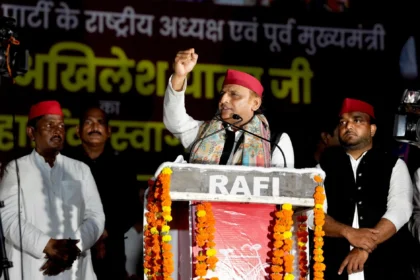
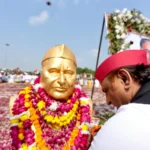
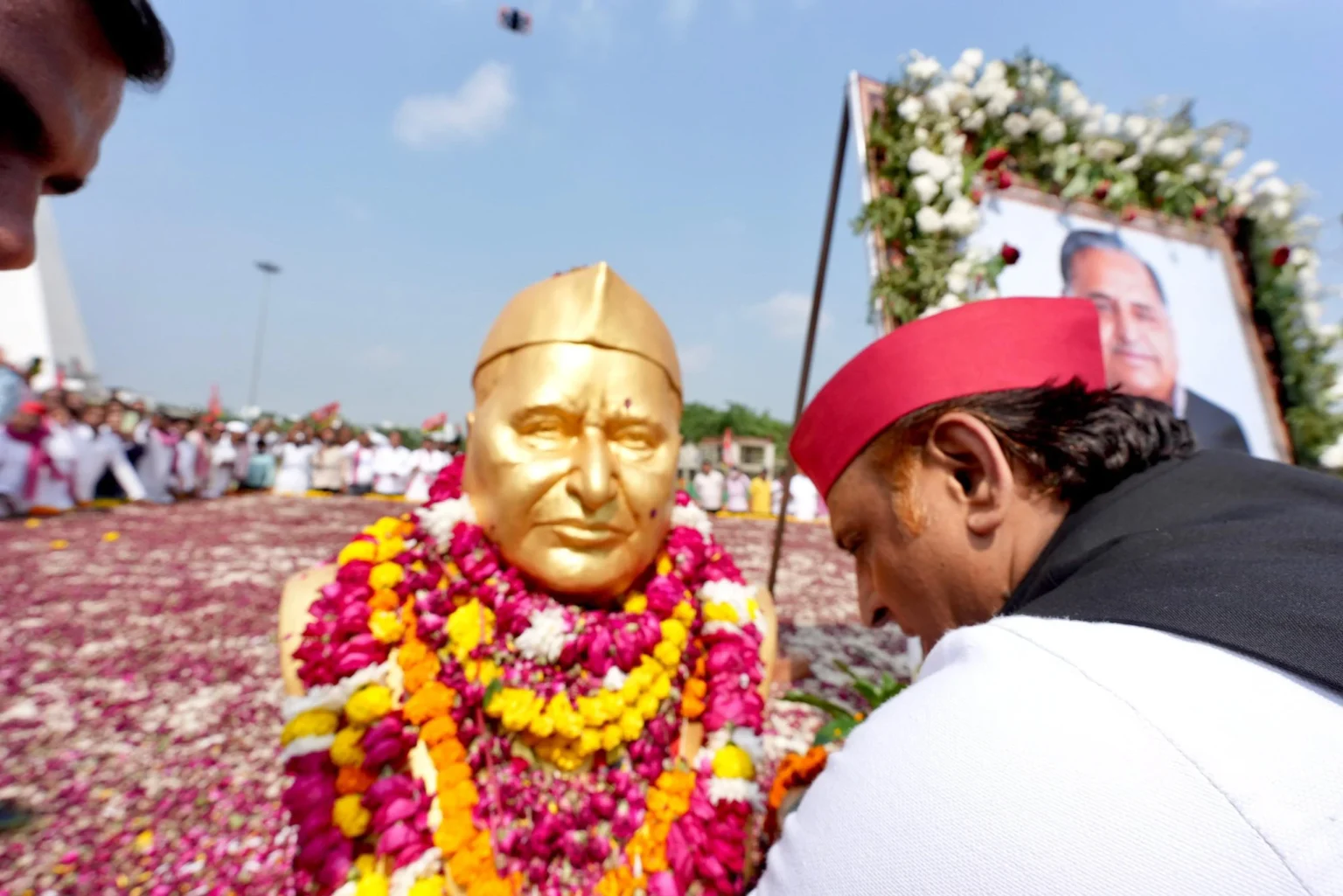
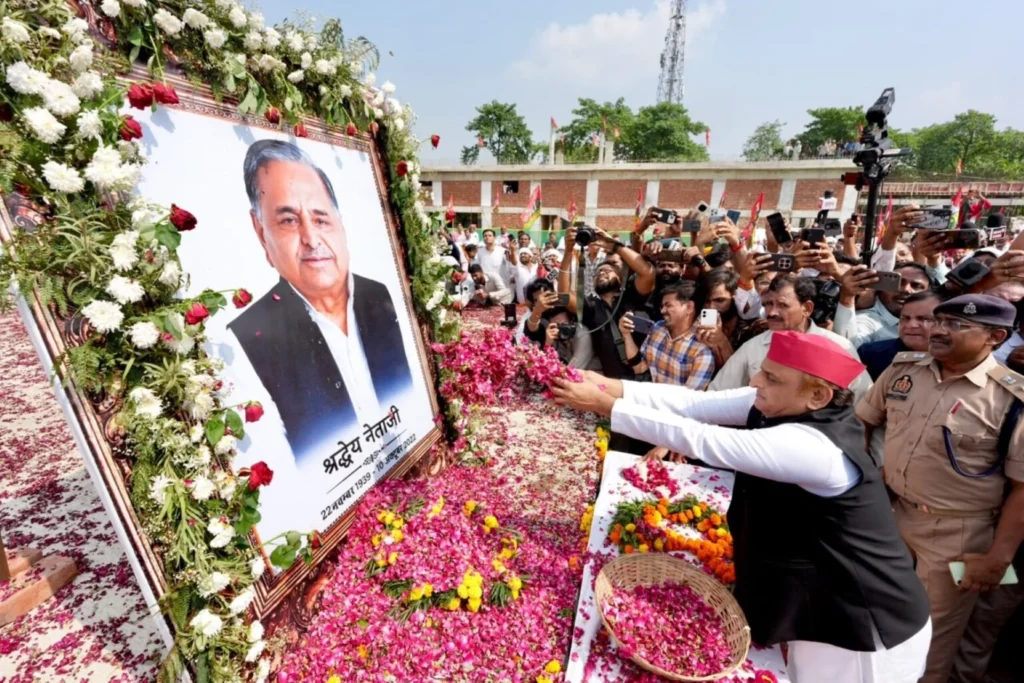
The death anniversary of Samajwadi Party founder, former Union Defence Minister and former Uttar Pradesh Chief Minister Mulayam Singh Yadav brought thousands of party leaders and workers to his memorial in Saifai, where tributes to the veteran socialist leader also became an occasion to renew the party’s political commitments. Samajwadi Party president Akhilesh Yadav, national general secretary Shivpal Singh Yadav and MP Dimple Yadav joined the gathering to remember a leader whose political influence continues to shape the party’s identity.
For Akhilesh Yadav, the occasion was not merely about remembering his father. It was about reaffirming a political philosophy centred on social equality, assistance to the vulnerable and resistance to discrimination. Describing Mulayam Singh Yadav’s life as an invaluable legacy, Akhilesh said genuine social transformation required society to eliminate not only visible discrimination but also the prejudices that sustain it. He argued that progress would remain incomplete as long as people facing deprivation, humiliation and suffering were denied dignity and the means to improve their circumstances.
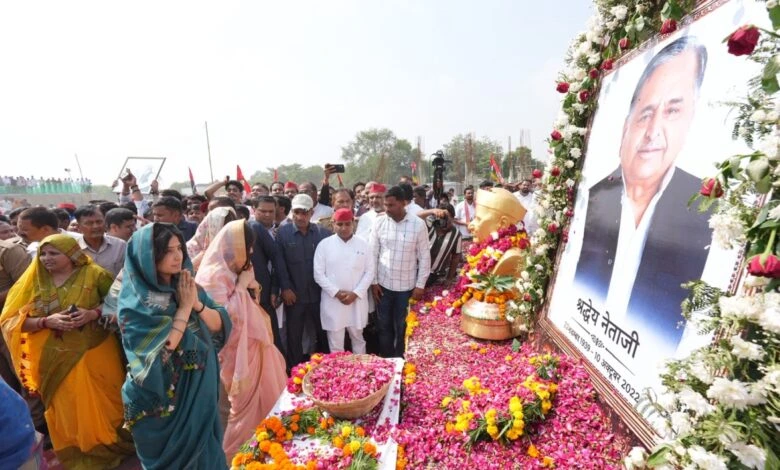
The Samajwadi Party president presented the party’s PDA framework, Pichhde, Dalit, Alpsankhyak (backward classes, Dalits and minorities), as a continuation of the political approach associated with Mulayam Singh Yadav. He portrayed the veteran leader as a longstanding symbol of efforts to bring historically disadvantaged communities into the mainstream of political representation.
Akhilesh said the party intended to carry Mulayam Singh Yadav’s ideas forward for generations, particularly through its commitment to protecting the rights of weaker sections. The emphasis on PDA also underlined the importance the Samajwadi Party attaches to building a broad social coalition as Uttar Pradesh approaches another consequential electoral period. Electoral integrity becomes the central political issue
After the memorial gathering, Akhilesh turned his attention to the BJP governments at the Centre and in Uttar Pradesh, as well as the Election Commission. He accused the ruling party of using the electoral machinery to undermine opposition voters and alleged that the Commission was being shielded from legitimate questions about its impartiality.
Referring to previous Uttar Pradesh by-elections, he alleged that administrative machinery had been misused to influence voting and that police personnel deployed in plain clothes had affected the electoral process. These allegations raise questions about electoral conduct that require examination through verifiable evidence and the appropriate legal and administrative mechanisms.
Akhilesh also levelled serious allegations concerning the Special Intensive Revision (SIR) of electoral rolls. He claimed that Form 7 applications were being submitted fraudulently to remove voters supporting the Samajwadi Party, particularly those belonging to PDA communities. Citing Sarojini Nagar in Lucknow and Bidhuna, he alleged that forged documents and signatures had been used in attempts to delete eligible voters.
The allegations, if substantiated, would raise serious concerns about voters’ rights and the integrity of electoral registration. However, the claims require independent verification and a response from the authorities concerned. Questioning the BJP’s repeated defence of the Election Commission, Akhilesh invoked the Hindi expression, “Chor ki daadhi mein tinka”—suggesting that an unusually defensive response can itself invite scrutiny.
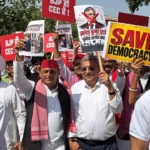
His remarks reflected the growing political confrontation over electoral transparency and the credibility of institutions responsible for conducting elections. He warned that the coming weeks would bring a major test for democracy and the Constitution in Uttar Pradesh. By linking Mulayam Singh Yadav’s legacy of social justice with concerns over electoral fairness, Akhilesh sought to frame the forthcoming political contest as a struggle over both representation and the protection of democratic rights.